• 文献检索
  • 文档翻译
  • 深度研究
  • 学术资讯
  • Suppr Zotero 插件Zotero 插件
  • 邀请有礼
  • 套餐&价格
  • 历史记录
应用&插件
Suppr Zotero 插件Zotero 插件浏览器插件Mac 客户端Windows 客户端微信小程序
定价
高级版会员购买积分包购买API积分包
服务
文献检索文档翻译深度研究API 文档MCP 服务
关于我们
关于 Suppr公司介绍联系我们用户协议隐私条款
关注我们

Suppr 超能文献

核心技术专利:CN118964589B侵权必究
粤ICP备2023148730 号-1Suppr @ 2026

文献检索

告别复杂PubMed语法,用中文像聊天一样搜索,搜遍4000万医学文献。AI智能推荐,让科研检索更轻松。

立即免费搜索

文件翻译

保留排版,准确专业,支持PDF/Word/PPT等文件格式,支持 12+语言互译。

免费翻译文档

深度研究

AI帮你快速写综述,25分钟生成高质量综述,智能提取关键信息,辅助科研写作。

立即免费体验

轻度创伤性脑损伤后儿童脑震荡后症状与创伤后应激障碍症状之间的关系。

Relationships among post-concussive symptoms and symptoms of PTSD in children following mild traumatic brain injury.

作者信息

Hajek Christine A, Yeates Keith Owen, Gerry Taylor H, Bangert Barbara, Dietrich Ann, Nuss Kathryn E, Rusin Jerome, Wright Martha

机构信息

Department of Psychology, The Ohio State University, Columbus, OH, USA.

出版信息

Brain Inj. 2010 Feb;24(2):100-9. doi: 10.3109/02699050903508226.

DOI:10.3109/02699050903508226
PMID:20085447
原文链接:https://pmc.ncbi.nlm.nih.gov/articles/PMC2829882/
Abstract

PRIMARY OBJECTIVE

To investigate the occurrence of post-concussive symptoms (PCS) and symptoms of post-traumatic stress disorder (PTSD) in children following mild traumatic brain injuries (TBI).

RESEARCH DESIGN

Longitudinal study comparing the outcomes of mild TBI and orthopaedic injuries (OI) in children aged 8-15.

METHODS AND PROCEDURES

One hundred and eighty-six children with mild TBI and 99 with OI were recruited prospectively. Parents rated children's PCS and symptoms of PTSD at 2 weeks, 3 months and 12 months post-injury. One hundred and sixty-seven with mild TBI and 84 with OI completed all assessments.

MAIN OUTCOMES AND RESULTS

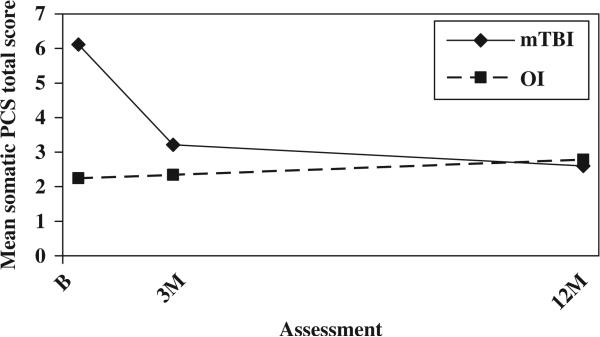
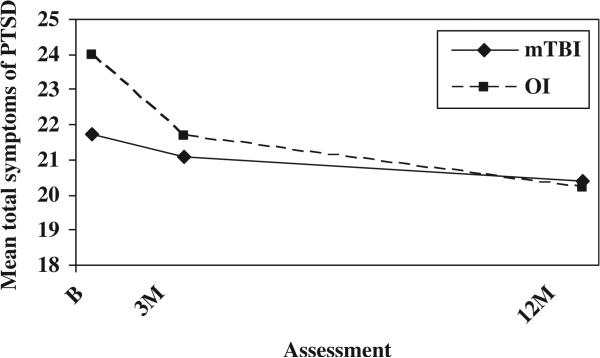
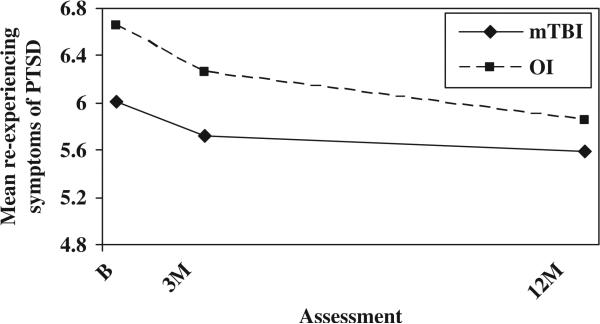
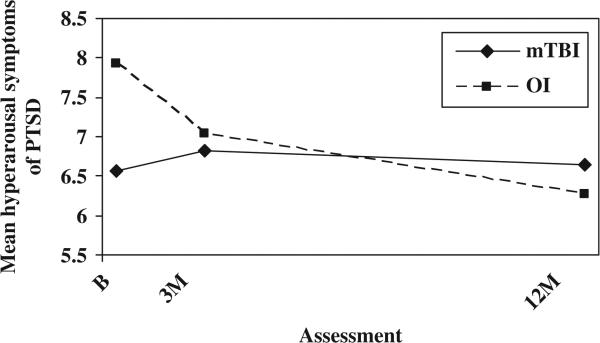
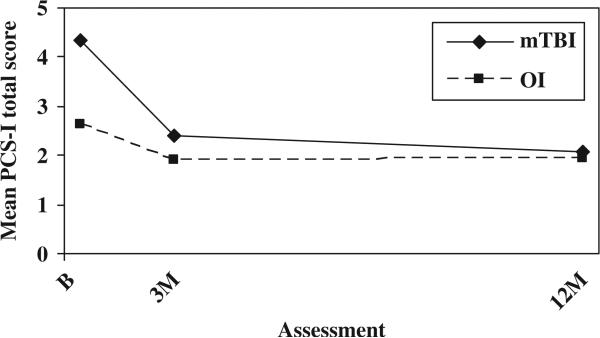
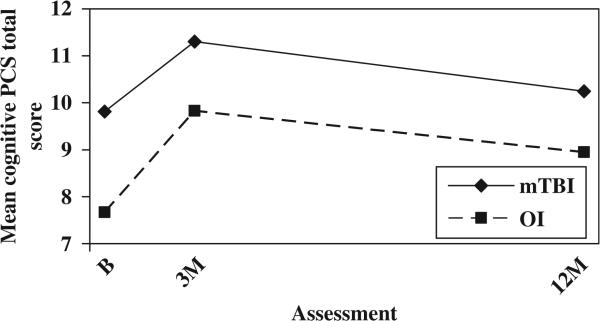
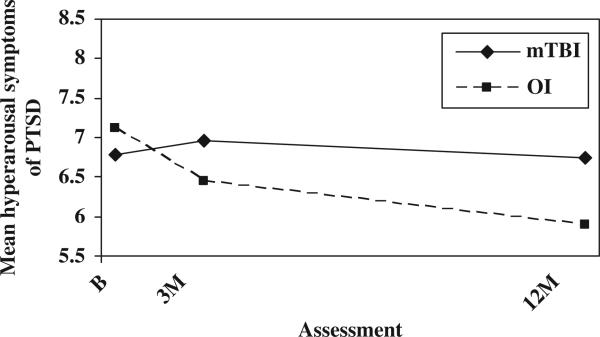
Controlling for symptoms of PTSD, the mild TBI group demonstrated more PCS than the OI group, although the magnitude of group differences diminished with time. Controlling for PCS, the OI group displayed more symptoms of PTSD than the mild TBI group at baseline, but not thereafter. Symptoms of PTSD and PCS were correlated significantly, but more highly in the OI group than the mild TBI group.

CONCLUSIONS

Although PCS and symptoms of PTSD are correlated, children with mild TBI are more distinguishable from children with OI based on PCS than on symptoms of PTSD. The latter symptoms, moreover, do not account for increased PCS following mild TBI in children.

摘要

主要目的

调查轻度创伤性脑损伤(TBI)后儿童脑震荡后症状(PCS)和创伤后应激障碍(PTSD)症状的发生情况。

研究设计

纵向研究,比较8至15岁儿童轻度TBI和骨科损伤(OI)的结果。

方法和程序

前瞻性招募了186名轻度TBI儿童和99名OI儿童。父母在受伤后2周、3个月和12个月对儿童的PCS和PTSD症状进行评分。167名轻度TBI儿童和84名OI儿童完成了所有评估。

主要结果

在控制PTSD症状的情况下,轻度TBI组的PCS比OI组更多,尽管组间差异的幅度随时间减小。在控制PCS的情况下,OI组在基线时的PTSD症状比轻度TBI组更多,但此后并非如此。PTSD症状和PCS显著相关,但OI组的相关性高于轻度TBI组。

结论

尽管PCS和PTSD症状相关,但基于PCS,轻度TBI儿童比OI儿童更具可区分性,而不是基于PTSD症状。此外,后一种症状并不能解释儿童轻度TBI后PCS的增加。
https://cdn.ncbi.nlm.nih.gov/pmc/blobs/9c3e/2829882/a29448801f77/nihms-179550-f0007.jpg
https://cdn.ncbi.nlm.nih.gov/pmc/blobs/9c3e/2829882/f7eb5acf8dbd/nihms-179550-f0001.jpg
https://cdn.ncbi.nlm.nih.gov/pmc/blobs/9c3e/2829882/acd3f108c6a7/nihms-179550-f0002.jpg
https://cdn.ncbi.nlm.nih.gov/pmc/blobs/9c3e/2829882/8f706ab35cbf/nihms-179550-f0003.jpg
https://cdn.ncbi.nlm.nih.gov/pmc/blobs/9c3e/2829882/495722a1ea95/nihms-179550-f0004.jpg
https://cdn.ncbi.nlm.nih.gov/pmc/blobs/9c3e/2829882/2975d981a167/nihms-179550-f0005.jpg
https://cdn.ncbi.nlm.nih.gov/pmc/blobs/9c3e/2829882/0bff275a276f/nihms-179550-f0006.jpg
https://cdn.ncbi.nlm.nih.gov/pmc/blobs/9c3e/2829882/a29448801f77/nihms-179550-f0007.jpg
https://cdn.ncbi.nlm.nih.gov/pmc/blobs/9c3e/2829882/f7eb5acf8dbd/nihms-179550-f0001.jpg
https://cdn.ncbi.nlm.nih.gov/pmc/blobs/9c3e/2829882/acd3f108c6a7/nihms-179550-f0002.jpg
https://cdn.ncbi.nlm.nih.gov/pmc/blobs/9c3e/2829882/8f706ab35cbf/nihms-179550-f0003.jpg
https://cdn.ncbi.nlm.nih.gov/pmc/blobs/9c3e/2829882/495722a1ea95/nihms-179550-f0004.jpg
https://cdn.ncbi.nlm.nih.gov/pmc/blobs/9c3e/2829882/2975d981a167/nihms-179550-f0005.jpg
https://cdn.ncbi.nlm.nih.gov/pmc/blobs/9c3e/2829882/0bff275a276f/nihms-179550-f0006.jpg
https://cdn.ncbi.nlm.nih.gov/pmc/blobs/9c3e/2829882/a29448801f77/nihms-179550-f0007.jpg

相似文献

1
Relationships among post-concussive symptoms and symptoms of PTSD in children following mild traumatic brain injury.轻度创伤性脑损伤后儿童脑震荡后症状与创伤后应激障碍症状之间的关系。
Brain Inj. 2010 Feb;24(2):100-9. doi: 10.3109/02699050903508226.
2
Injury versus noninjury factors as predictors of postconcussive symptoms following mild traumatic brain injury in children.损伤与非损伤因素对儿童轻度创伤性脑损伤后脑震荡后症状的预测作用。
Neuropsychology. 2013 Jan;27(1):1-12. doi: 10.1037/a0031370.
3
Post-acute white matter microstructure predicts post-acute and chronic post-concussive symptom severity following mild traumatic brain injury in children.急性后期白质微观结构可预测儿童轻度创伤性脑损伤后急性后期和慢性脑震荡后症状的严重程度。
Neuroimage Clin. 2020;25:102106. doi: 10.1016/j.nicl.2019.102106. Epub 2019 Dec 13.
4
Post-Concussion and Post-Traumatic Stress Symptoms after Pediatric Traumatic Brain Injury: Shared Vulnerability Factors?儿童创伤性脑损伤后 concussion 和创伤后应激症状:共同的脆弱性因素?
J Neurotrauma. 2021 Sep 15;38(18):2600-2609. doi: 10.1089/neu.2020.7541. Epub 2021 Jun 23.
5
Post-Acute Cortical Thickness in Children with Mild Traumatic Brain Injury versus Orthopedic Injury.儿童轻度创伤性脑损伤与骨科损伤后的皮质厚度变化。
J Neurotrauma. 2020 Sep 1;37(17):1892-1901. doi: 10.1089/neu.2019.6850. Epub 2020 May 11.
6
Acute S100B in serum is associated with cognitive symptoms and memory performance 4 months after paediatric mild traumatic brain injury.小儿轻度创伤性脑损伤4个月后,血清中急性S100B蛋白与认知症状及记忆表现相关。
Brain Inj. 2015;29(13-14):1667-73. doi: 10.3109/02699052.2015.1075250. Epub 2015 Oct 26.
7
Agreement between parents and children on ratings of post-concussive symptoms following mild traumatic brain injury.父母和孩子对轻度创伤性脑损伤后脑震荡后症状评分的一致性。
Child Neuropsychol. 2011;17(1):17-33. doi: 10.1080/09297049.2010.495058. Epub 2010 Aug 2.
8
Coping strategies as a predictor of post-concussive symptoms in children with mild traumatic brain injury versus mild orthopedic injury.应对策略对儿童轻度创伤性脑损伤与轻度骨科损伤后脑震荡症状的预测作用。
J Int Neuropsychol Soc. 2011 Mar;17(2):317-26. doi: 10.1017/S1355617710001700. Epub 2011 Jan 18.
9
[Mild traumatic brain injury and postconcussive syndrome: a re-emergent questioning].[轻度创伤性脑损伤与脑震荡后综合征:一个重新出现的问题探讨]
Encephale. 2012 Sep;38(4):329-35. doi: 10.1016/j.encep.2011.07.003. Epub 2011 Aug 31.
10
Cognitive reserve as a moderator of postconcussive symptoms in children with complicated and uncomplicated mild traumatic brain injury.认知储备对伴有和不伴有复杂症状的儿童轻度创伤性脑损伤后症状的调节作用。
J Int Neuropsychol Soc. 2010 Jan;16(1):94-105. doi: 10.1017/S1355617709991007. Epub 2009 Oct 19.

引用本文的文献

1
The journey back to normality: Support systems and posttrauma needs following exposure to single-incident trauma among children and adolescents.回归正常生活的旅程:儿童和青少年单次创伤暴露后的支持系统和创伤后需求。
J Trauma Stress. 2023 Feb;36(1):218-229. doi: 10.1002/jts.22902. Epub 2023 Jan 2.
2
Structural connectome differences in pediatric mild traumatic brain and orthopedic injury.儿童轻度创伤性脑损伤和骨科损伤的结构连接组差异。
Hum Brain Mapp. 2022 Feb 15;43(3):1032-1046. doi: 10.1002/hbm.25705. Epub 2021 Nov 8.
3
Three-Month Psychiatric Outcome of Pediatric Mild Traumatic Brain Injury: A Controlled Study.

本文引用的文献

1
Post-concussive symptoms in children with mild traumatic brain injury.儿童轻度创伤性脑损伤后的脑震荡后症状。
Neuropsychology. 2010 Mar;24(2):148-59. doi: 10.1037/a0018112.
2
Longitudinal trajectories of postconcussive symptoms in children with mild traumatic brain injuries and their relationship to acute clinical status.轻度创伤性脑损伤儿童脑震荡后症状的纵向轨迹及其与急性临床状态的关系。
Pediatrics. 2009 Mar;123(3):735-43. doi: 10.1542/peds.2008-1056.
3
Dimensions of postconcussive symptoms in children with mild traumatic brain injuries.
儿童轻度创伤性脑损伤的三个月精神科预后:一项对照研究。
J Neurotrauma. 2021 Dec;38(23):3341-3351. doi: 10.1089/neu.2021.0324.
4
Challenges and opportunities for neuroimaging in young patients with traumatic brain injury: a coordinated effort towards advancing discovery from the ENIGMA pediatric moderate/severe TBI group.创伤性脑损伤年轻患者神经影像学的挑战与机遇:ENIGMA 儿科中重度 TBI 组推进发现的协同努力。
Brain Imaging Behav. 2021 Apr;15(2):555-575. doi: 10.1007/s11682-020-00363-x.
5
ENIGMA brain injury: Framework, challenges, and opportunities.ENIGMA 脑损伤:框架、挑战与机遇。
Hum Brain Mapp. 2022 Jan;43(1):149-166. doi: 10.1002/hbm.25046. Epub 2020 Jun 1.
6
Longitudinal Neuroimaging in Pediatric Traumatic Brain Injury: Current State and Consideration of Factors That Influence Recovery.小儿创伤性脑损伤的纵向神经影像学:现状及影响恢复因素的考量
Front Neurol. 2019 Dec 13;10:1296. doi: 10.3389/fneur.2019.01296. eCollection 2019.
7
Lifelong consequences of brain injuries during development: From risk to resilience.发育期脑损伤的终身后果:从风险到弹性。
Front Neuroendocrinol. 2019 Oct;55:100793. doi: 10.1016/j.yfrne.2019.100793. Epub 2019 Sep 24.
8
Collaborative care model for treatment of persistent symptoms after concussion among youth (CARE4PCS-II): Study protocol for a randomized, controlled trial.青少年脑震荡后持续性症状治疗的协作护理模式(CARE4PCS-II):一项随机对照试验的研究方案。
Trials. 2019 Sep 18;20(1):567. doi: 10.1186/s13063-019-3662-3.
9
A Multidimensional Approach to Post-concussion Symptoms in Mild Traumatic Brain Injury.一种针对轻度创伤性脑损伤后震荡症状的多维方法。
Front Neurol. 2018 Dec 19;9:1113. doi: 10.3389/fneur.2018.01113. eCollection 2018.
10
Orthopedic Injured versus Uninjured Comparison Groups for Neuroimaging Research in Mild Traumatic Brain Injury.骨科损伤与未损伤比较组在轻度创伤性脑损伤的神经影像学研究中的应用。
J Neurotrauma. 2019 Jan 15;36(2):239-249. doi: 10.1089/neu.2017.5513. Epub 2018 Oct 10.
轻度创伤性脑损伤患儿脑震荡后症状的维度
J Int Neuropsychol Soc. 2009 Jan;15(1):19-30. doi: 10.1017/S1355617708090188.
4
Neuropsychology and clinical neuroscience of persistent post-concussive syndrome.持续性脑震荡后综合征的神经心理学与临床神经科学
J Int Neuropsychol Soc. 2008 Jan;14(1):1-22. doi: 10.1017/S135561770808017X.
5
Management of pediatric mild traumatic brain injury: a neuropsychological review from injury through recovery.小儿轻度创伤性脑损伤的管理:从损伤到康复的神经心理学综述
Clin Neuropsychol. 2008 Sep;22(5):769-800. doi: 10.1080/13854040701543700. Epub 2007 Sep 1.
6
One-year follow-up of patients with mild traumatic brain injury: occurrence of post-traumatic stress-related symptoms at follow-up and serum levels of cortisol, S-100B and neuron-specific enolase in acute phase.轻度创伤性脑损伤患者的一年随访:随访时创伤后应激相关症状的发生情况以及急性期皮质醇、S-100B和神经元特异性烯醇化酶的血清水平
Brain Inj. 2006 Jun;20(6):613-20. doi: 10.1080/02699050600676982.
7
Amnesia, traumatic brain injury, and posttraumatic stress disorder: a methodological inquiry.失忆、创伤性脑损伤与创伤后应激障碍:一项方法学探究
Behav Res Ther. 2005 Oct;43(10):1383-9. doi: 10.1016/j.brat.2004.11.001.
8
Neurobehavioural outcomes of mild head injury in children and adolescents.儿童和青少年轻度头部损伤的神经行为后果
Pediatr Rehabil. 2005 Jan-Mar;8(1):5-16. doi: 10.1080/13638490400011199.
9
Assessment and screening tools for trauma in children and adolescents: a review.儿童和青少年创伤的评估与筛查工具:综述
Trauma Violence Abuse. 2005 Jan;6(1):55-78. doi: 10.1177/1524838004272559.
10
Incidence and associations of parental and child posttraumatic stress symptoms in pediatric patients.儿科患者中父母及儿童创伤后应激症状的发生率及相关性
J Child Psychol Psychiatry. 2003 Nov;44(8):1199-207. doi: 10.1111/1469-7610.00201.