Division of Clinical Immunology, Rudbeck Laboratory, Uppsala University, Uppsala, Sweden.
PLoS One. 2010 Jan 27;5(1):e8916. doi: 10.1371/journal.pone.0008916.
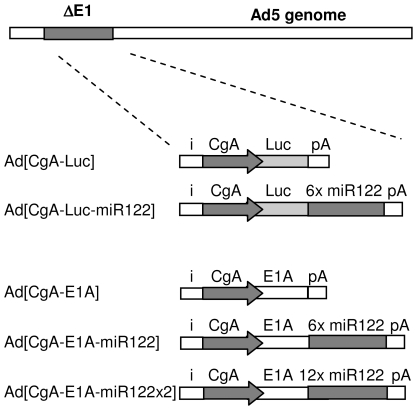
We have previously developed an oncolytic serotype 5 adenovirus (Ad5) with chromogranin-A (CgA) promoter-controlled E1A expression, Ad[CgA-E1A], with the intention to treat neuroendocrine tumors, including carcinoids. Since carcinoids tend to metastasize to the liver it is important to fully repress viral replication in hepatocytes to avoid adenovirus-related liver toxicity. Herein, we explore miRNA-based regulation of E1A expression as a complementary mechanism to promoter-based transcriptional control.
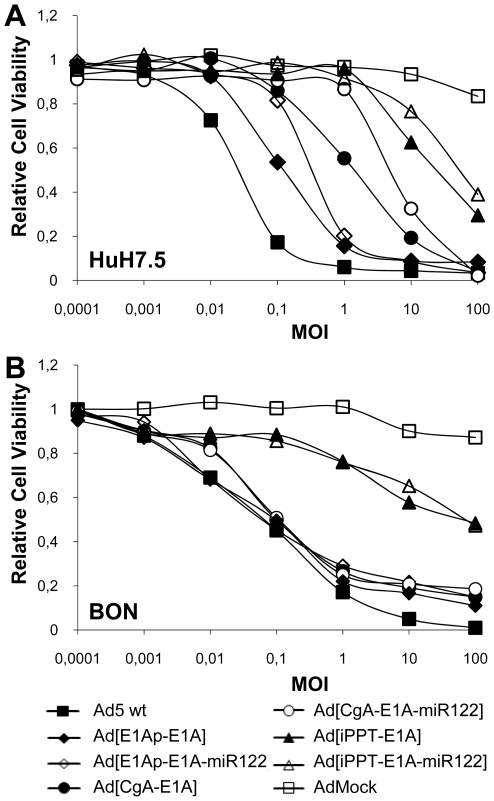
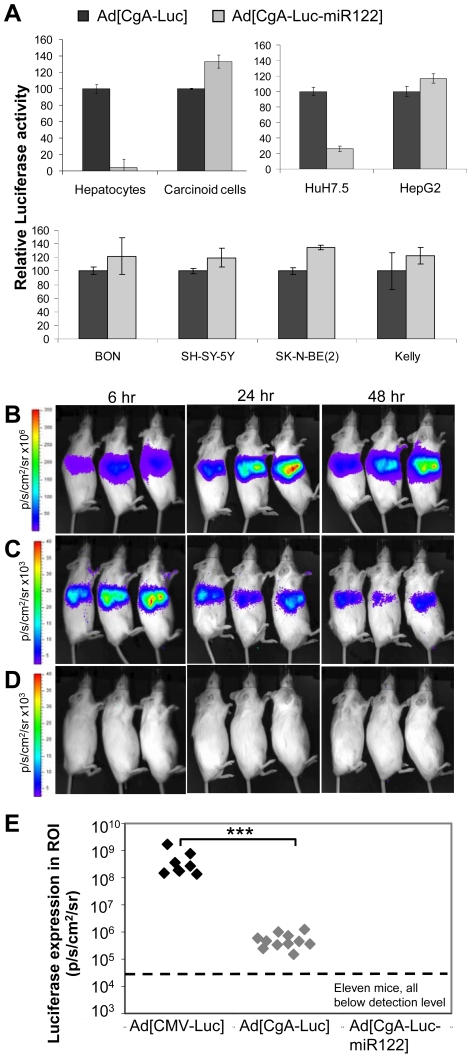
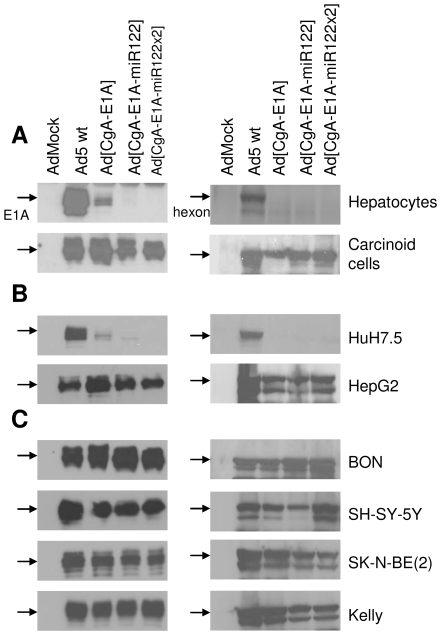
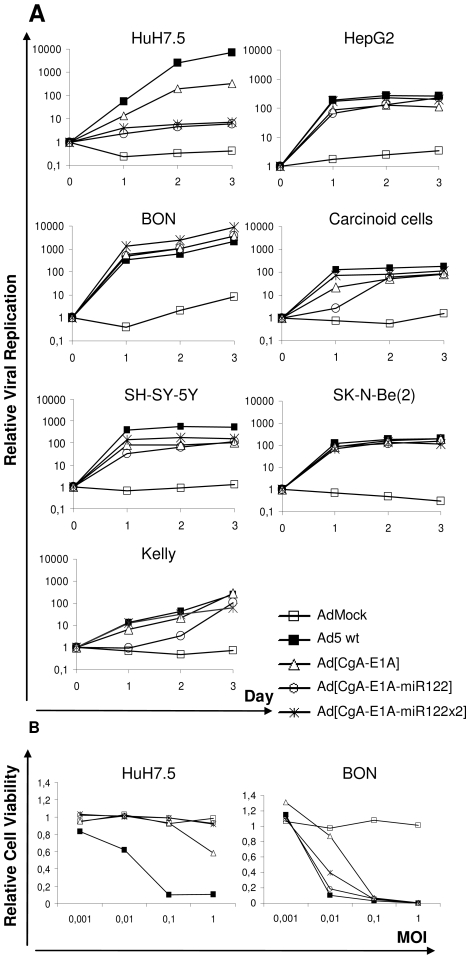
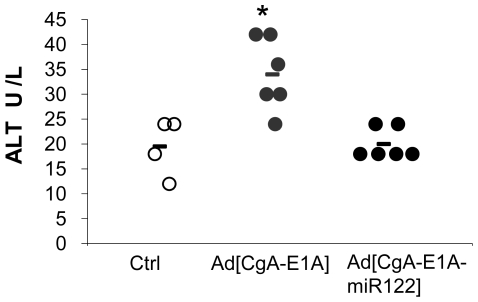
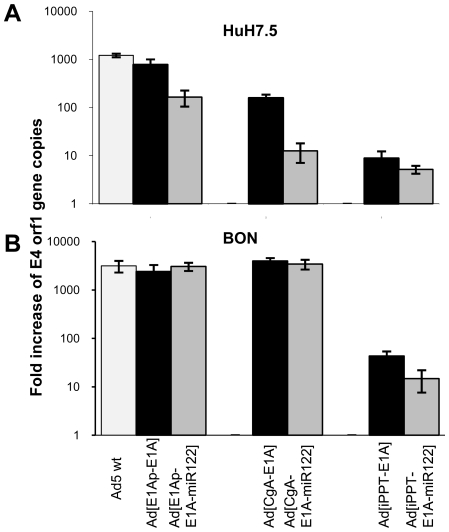
METHODOLOGY/PRINCIPAL FINDINGS: Ad[CgA-E1A-miR122], where E1A expression is further controlled by six tandem repeats of the target sequence for the liver-specific miR122, was constructed and compared to Ad[CgA-E1A]. We observed E1A suppression and replication arrest of the miR122-detargeted adenovirus in normal hepatocytes, while the two viruses killed carcinoid cells to the same degree. Repeated intravenous injections of Ad[CgA-E1A] induced liver toxicity in mice while Ad[CgA-E1A-miR122] injections did not. Furthermore, a miR122-detargeted adenovirus with the wild-type E1A promoter showed reduced replication in hepatic cells compared to wild-type Ad5 but not to the same extent as the miR122-detargeted adenovirus with the neuroendocrine-selective CgA promoter.
CONCLUSIONS/SIGNIFICANCE: A combination of transcriptional (promoter) and post-transcriptional (miRNA target) regulation to control virus replication may allow for the use of higher doses of adenovirus for efficient tumors treatment without liver toxicity.
我们之前开发了一种具有嗜铬粒蛋白 A(CgA)启动子控制 E1A 表达的溶瘤血清 5 型腺病毒(Ad5),即 Ad[CgA-E1A],旨在治疗神经内分泌肿瘤,包括类癌。由于类癌往往转移到肝脏,因此重要的是要完全抑制肝细胞中的病毒复制,以避免腺病毒相关的肝毒性。在此,我们探索基于 miRNA 的 E1A 表达调控作为启动子转录控制的补充机制。
方法/主要发现:构建了进一步受六个串联重复的肝脏特异性 miR122 靶序列控制的 E1A 表达的 Ad[CgA-E1A-miR122],并将其与 Ad[CgA-E1A]进行比较。我们观察到 miR122 靶向腺病毒在正常肝细胞中抑制 E1A 并阻止其复制,而这两种病毒对类癌细胞的杀伤程度相同。重复静脉注射 Ad[CgA-E1A]会在小鼠中引起肝毒性,而注射 Ad[CgA-E1A-miR122]则不会。此外,与野生型 E1A 启动子的 miR122 靶向腺病毒相比,具有野生型 E1A 启动子的 miR122 靶向腺病毒在肝细胞中的复制减少,但不及神经内分泌选择性 CgA 启动子的 miR122 靶向腺病毒。
结论/意义:转录(启动子)和转录后(miRNA 靶)调控的组合可控制病毒复制,从而可以使用更高剂量的腺病毒进行有效的肿瘤治疗,而不会产生肝毒性。