Department of Epidemiology, Colorado School of Public Health, University of Colorado Denver, 13001 E 17th, Box B119, Aurora, CO 80045, USA.
Pediatr Pulmonol. 2010 Mar;45(3):291-300. doi: 10.1002/ppul.21179.
Airway secretion clearance therapies are a cornerstone of cystic fibrosis care, however longitudinal comparative studies are rare. Our objectives were to compare three therapies [postural drainage and percussion: (postural drainage), flutter device (FD), and high frequency chest wall oscillation: (vest)], by studying (1) change in pulmonary function; (2) time to need for intravenous (IV) antibiotics, (3) use of pulmonary therapies, (4) adherence to treatment, (5) treatment satisfaction, and (6) quality of life.
Participants were randomly assigned to one of three therapies twice daily. Clinical outcomes were assessed quarterly over 3 years.
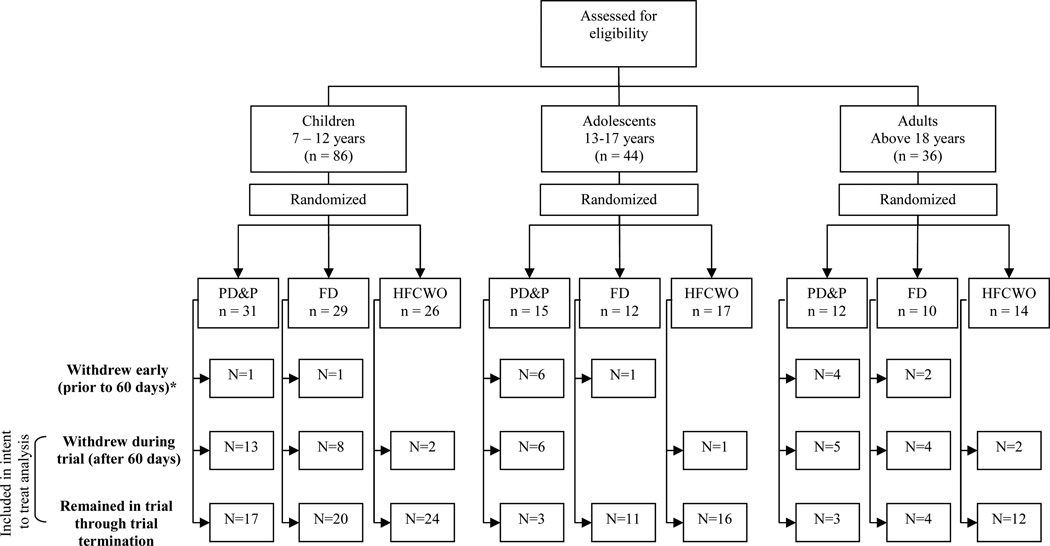
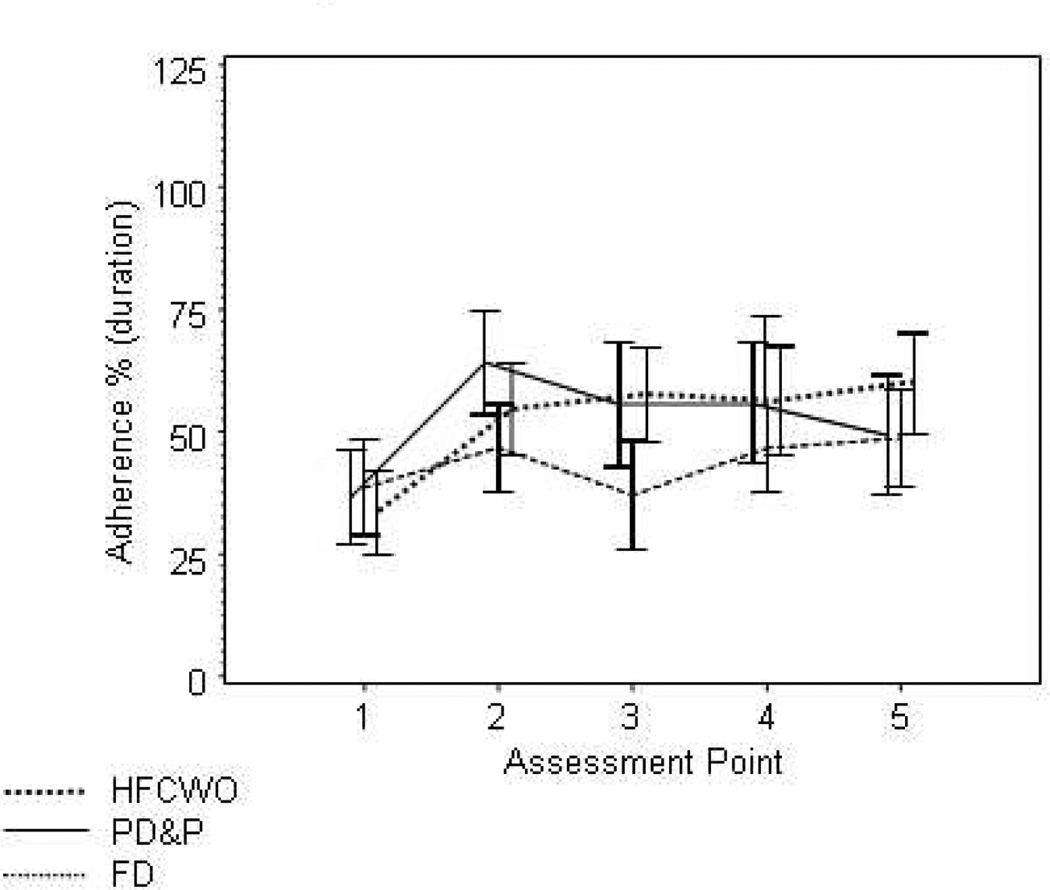
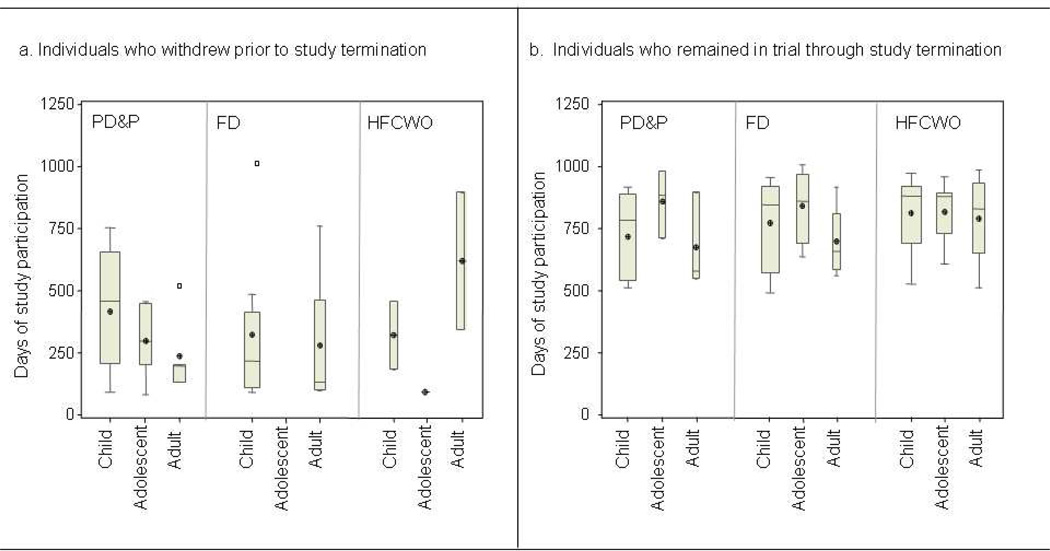
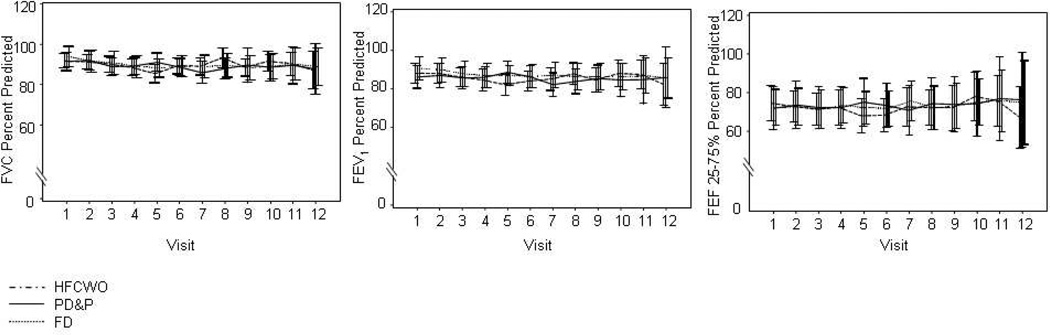
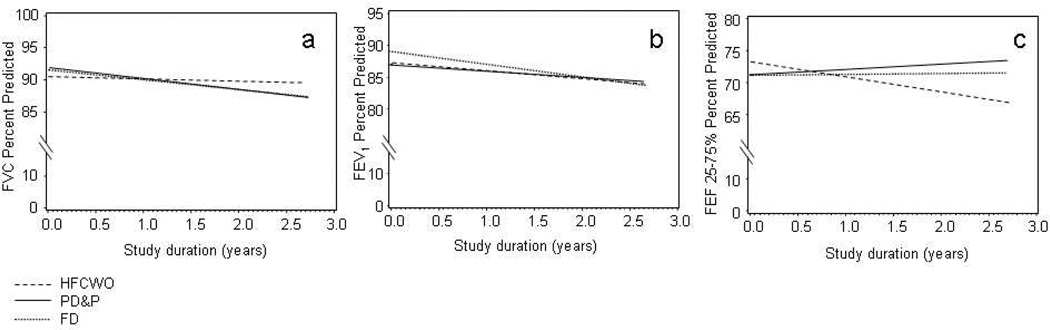
Enrollment goals were not met, and withdrawal rates were high, especially in postural drainage (51%) and FD (26%), compared to vest (9%), resulting in early termination. FEV(1) decline, time to need IV antibiotics, and other pulmonary therapies were not different. The annual FEF(25-75%) predicted rate of decline was greater in those using vest (P = 0.02). Adherence was not significantly different (P = 0.09). Overall treatment satisfaction was higher in vest and FD than in postural drainage (P < 0.05). Health-related quality of life was not different. The rate of FEV(1) decline was 1.23% predicted/year.
The study was ended early due to dropout and smaller than expected decline in FEV(1). Patients were more satisfied with vest and FD. The longitudinal decline in FEF(25-75%) was faster in vest; we found no other difference in lung function decline, taken together this warrants further study. The slow decline in FEV(1) illustrates the difficulty with FEV(1) decline as a clinical trial outcome.
气道分泌物清除疗法是囊性纤维化治疗的基石,但纵向比较研究很少。我们的目的是通过研究(1)肺功能的变化;(2)需要静脉(IV)抗生素的时间;(3)使用肺部治疗的情况;(4)治疗的依从性;(5)治疗满意度;(6)生活质量,比较三种治疗方法[体位引流和叩击:(体位引流)、FD 装置(FD)和高频胸壁振荡:(背心)]。
参与者被随机分配到三种治疗方法中的一种,每天两次。在 3 年内每季度评估临床结果。
未达到入组目标,退出率较高,尤其是体位引流(51%)和 FD(26%),而背心(9%)的退出率较高,导致早期终止。FEV1 下降、需要 IV 抗生素的时间以及其他肺部治疗方法没有差异。使用背心时,FEF(25-75%)预计年下降率更大(P = 0.02)。依从性没有显著差异(P = 0.09)。背心和 FD 的总体治疗满意度高于体位引流(P < 0.05)。健康相关生活质量没有差异。FEV1 下降率为每年预测值的 1.23%。
由于辍学和 FEV1 预计下降幅度低于预期,该研究提前结束。患者对背心和 FD 更满意。FEF(25-75%)的纵向下降速度在背心更快;我们没有发现肺功能下降的其他差异,综合来看,这需要进一步研究。FEV1 的缓慢下降表明 FEV1 下降作为临床试验结果的困难。