Feldman Michael B, Terry Daniel S, Altman Roger B, Blanchard Scott C
Nat Chem Biol. 2010 Mar;6(3):244. doi: 10.1038/nchembio0310-244c.
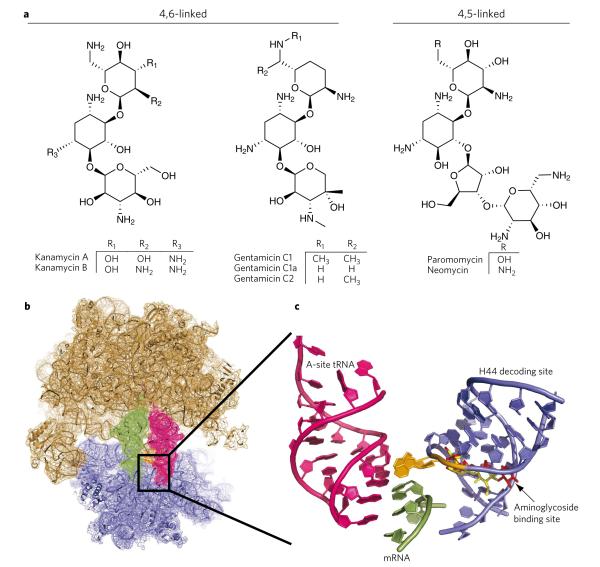
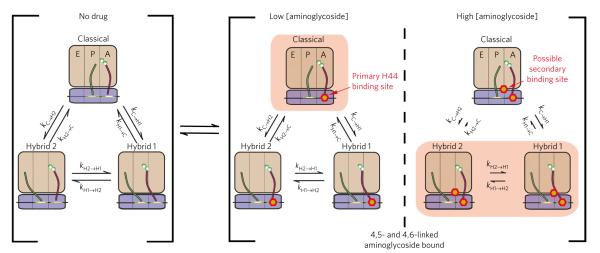
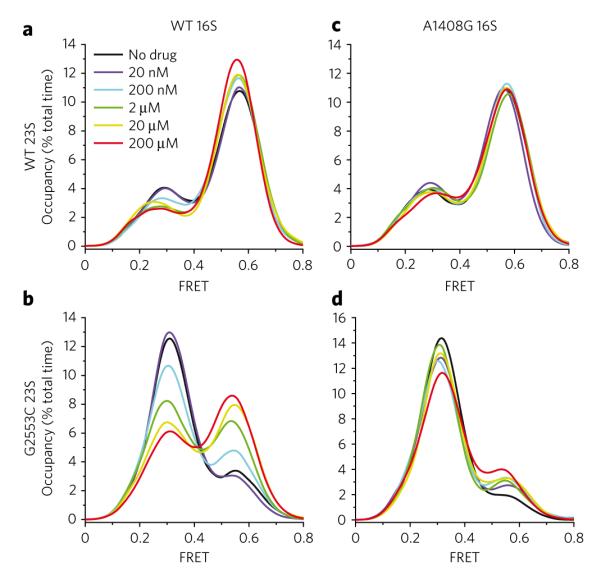
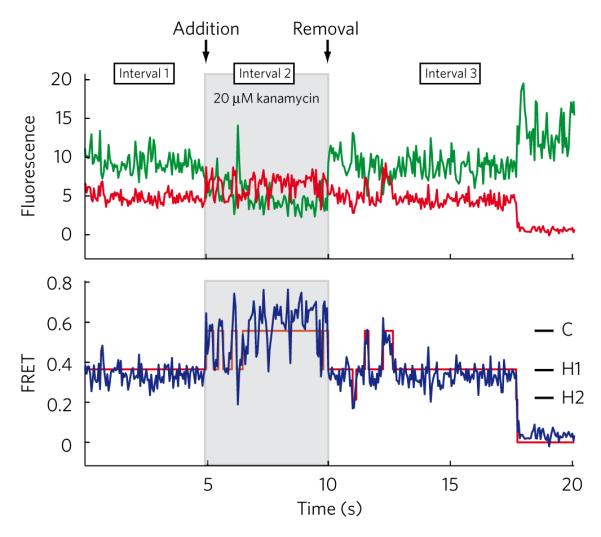
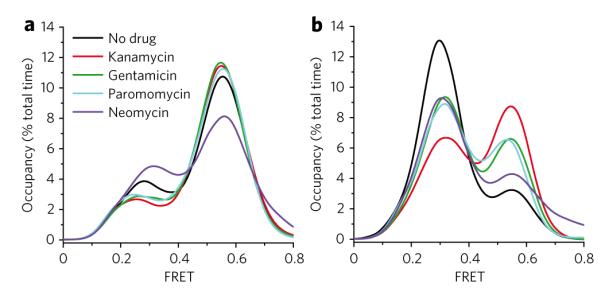
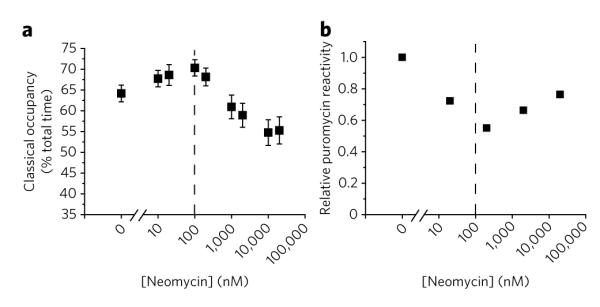
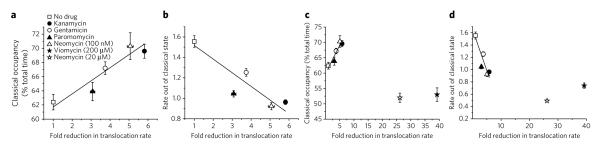
Aminoglycoside-class antibiotics bind directly to ribosomal RNA, imparting pleiotropic effects on ribosome function. Despite in-depth structural investigations of aminoglycoside–RNA oligonucleotide and aminoglycoside-ribosome interactions, mechanisms explaining the unique ribosome inhibition profiles of chemically similar aminoglycosides remain elusive. Here, using single-molecule fluorescence resonance energy transfer (smFRET) methods, we show that high-affinity aminoglycoside binding to the conserved decoding site region of the functional pre-translocation ribosome complex specifically remodels the nature of intrinsic dynamic processes within the particle. The extents of these effects, which are distinct for each member of the aminoglycoside class, strongly correlate with their inhibition of EF-G–catalyzed translocation. Neomycin, a 4,5-linked aminoglycoside, binds with lower affinity to one or more secondary binding sites, mediating distinct structural and dynamic perturbations that further enhance translocation inhibition. These new insights help explain why closely related aminoglycosides elicit pleiotropic translation activities and demonstrate the potential utility of smFRET as a tool for dissecting the mechanisms of antibiotic action.
氨基糖苷类抗生素直接与核糖体RNA结合,对核糖体功能产生多效性影响。尽管对氨基糖苷-RNA寡核苷酸和氨基糖苷-核糖体相互作用进行了深入的结构研究,但解释化学结构相似的氨基糖苷类抗生素独特核糖体抑制谱的机制仍然难以捉摸。在这里,我们使用单分子荧光共振能量转移(smFRET)方法表明,高亲和力的氨基糖苷类抗生素与功能性转位前核糖体复合物的保守解码位点区域结合,特异性地重塑了颗粒内固有动态过程的性质。这些效应的程度因氨基糖苷类的每个成员而异,与它们对EF-G催化的转位的抑制作用密切相关。新霉素是一种4,5-连接的氨基糖苷类抗生素,以较低的亲和力与一个或多个二级结合位点结合,介导不同的结构和动态扰动,进一步增强转位抑制。这些新见解有助于解释为什么密切相关的氨基糖苷类抗生素会引发多效性翻译活性,并证明了smFRET作为剖析抗生素作用机制工具的潜在用途。