1150 W Medical Center Dr, 7301 MSRB III, Ann Arbor, MI 48109-0644, USA.
Circulation. 2010 Mar 2;121(8):997-1004. doi: 10.1161/CIRCULATIONAHA.109.904557. Epub 2010 Feb 16.
The ubiquitin proteasome system maintains a dynamic equilibrium of proteins and prevents accumulation of damaged and misfolded proteins, yet its role in human cardiac dysfunction is not well understood. The present study evaluated ubiquitin proteasome system function in human heart failure and hypertrophic cardiomyopathy (HCM).
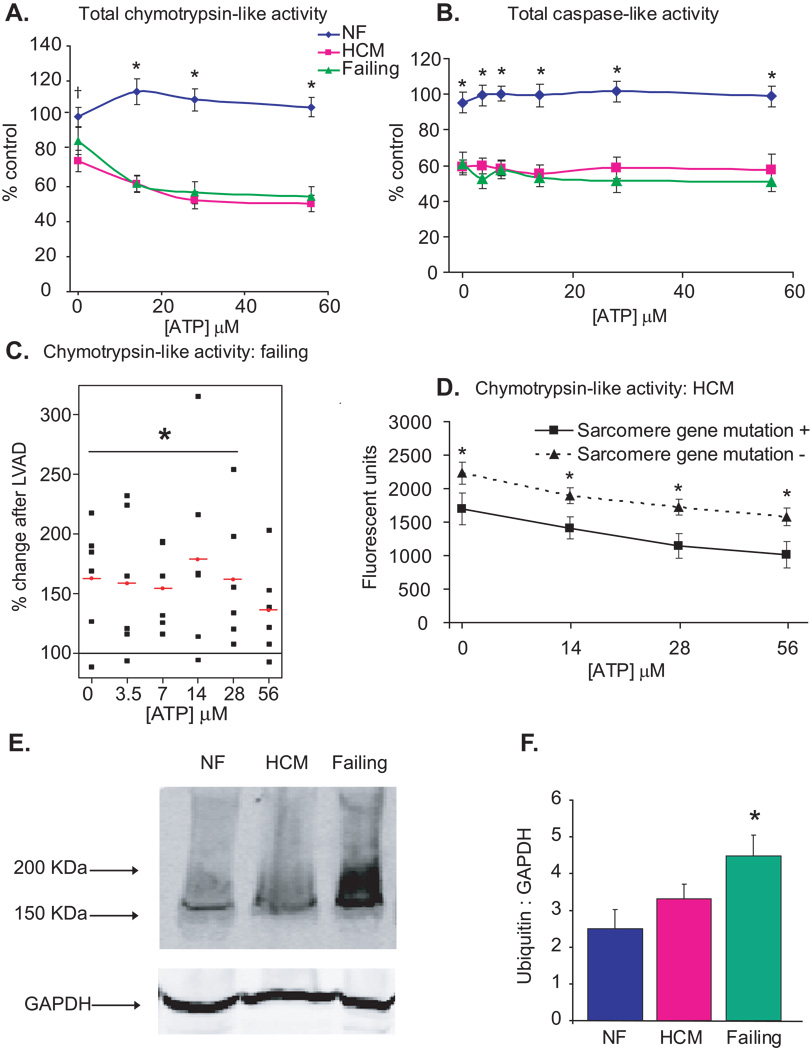
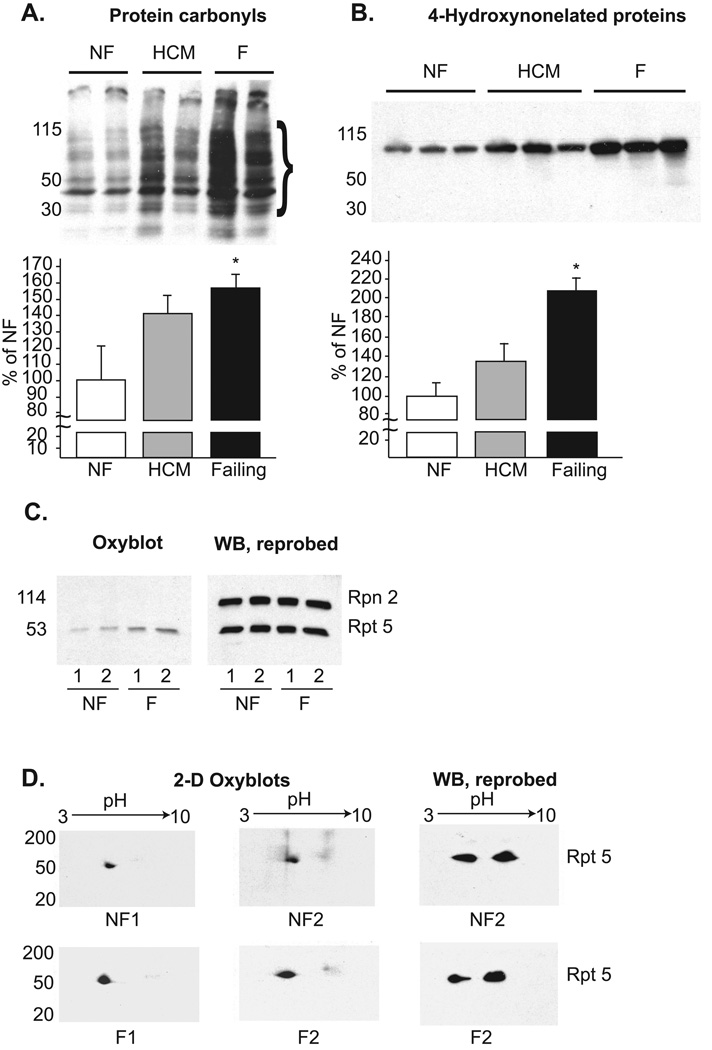
Proteasome function was studied in human nonfailing donor hearts, explanted failing hearts, and myectomy samples from patients with HCM. Proteasome proteolytic activities were markedly reduced in failing and HCM hearts compared with nonfailing hearts (P<0.01). This activity was partially restored after mechanical unloading in failing hearts (P<0.01) and was significantly lower in HCM hearts with pathogenic sarcomere mutations than in those lacking these mutations (P<0.05). There were no changes in the protein content of ubiquitin proteasome system subunits (ie, 11S, 20S, and 19S) or in active-site labeling of the 20S proteolytic subunit beta-5 among groups to explain decreased ubiquitin proteasome system activity in HCM and failing hearts. Examination of protein oxidation revealed that total protein carbonyls, 4-hydroxynonenylated proteins, and oxidative modification to 19S ATPase subunit Rpt 5 were increased in failing compared with nonfailing hearts.
Proteasome activity in HCM and failing human hearts is impaired in the absence of changes in proteasome protein content or availability of proteolytic active sites. These data provide strong evidence that posttranslational modifications to the proteasome may account for defective protein degradation in human cardiomyopathies.
泛素蛋白酶体系统维持着蛋白质的动态平衡,防止受损和错误折叠的蛋白质积累,但它在人类心功能障碍中的作用尚不清楚。本研究评估了泛素蛋白酶体系统在人类心力衰竭和肥厚型心肌病(HCM)中的功能。
研究了人正常供心、移植衰竭心和 HCM 患者心肌切除术样本中的蛋白酶体功能。与正常心相比,衰竭心和 HCM 心的蛋白酶体水解活性明显降低(P<0.01)。在衰竭心机械卸载后,这种活性部分恢复(P<0.01),并且在具有致病性肌节突变的 HCM 心中显著低于缺乏这些突变的 HCM 心(P<0.05)。泛素蛋白酶体系统亚基(即 11S、20S 和 19S)的蛋白含量或 20S 水解亚基β-5 的活性位点标记在各组之间均无变化,无法解释 HCM 和衰竭心泛素蛋白酶体系统活性降低的原因。对蛋白质氧化的检查表明,与正常心相比,衰竭心的总蛋白羰基、4-羟基壬烯化蛋白和 19S ATP 酶亚基 Rpt 5 的氧化修饰增加。
在没有改变蛋白酶体蛋白含量或水解活性位点的可用性的情况下,HCM 和衰竭人心肌中的蛋白酶体活性受损。这些数据为蛋白酶体的翻译后修饰可能导致人类心肌病中蛋白质降解缺陷提供了有力证据。