Institute for Lasers, Photonics and Biophotonics, The State University of New York at Buffalo, Buffalo, NY 14260-4200, USA.
ACS Appl Mater Interfaces. 2009 Mar;1(3):710-9. doi: 10.1021/am8002318.
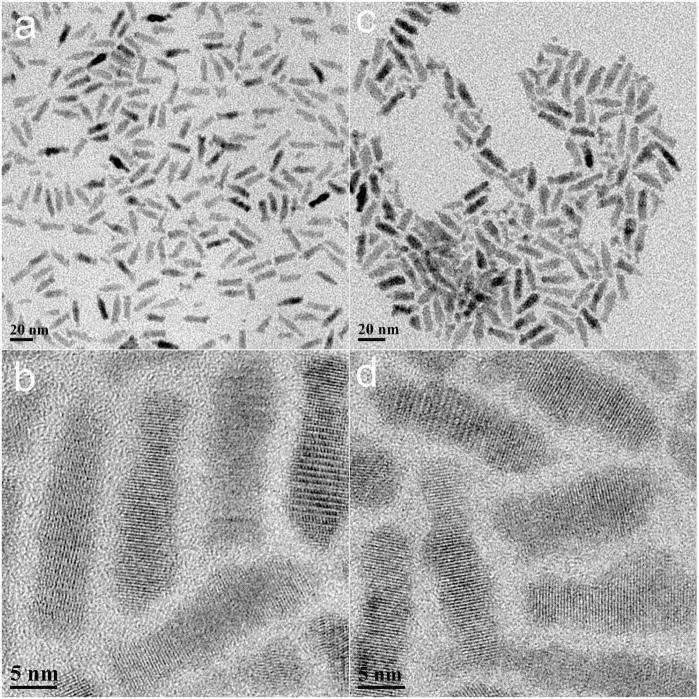
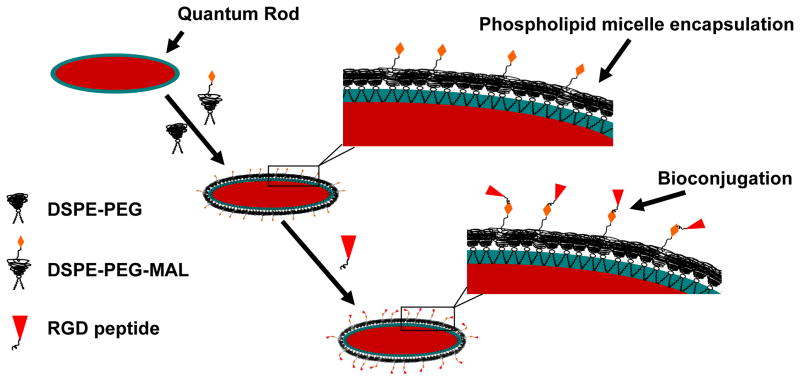
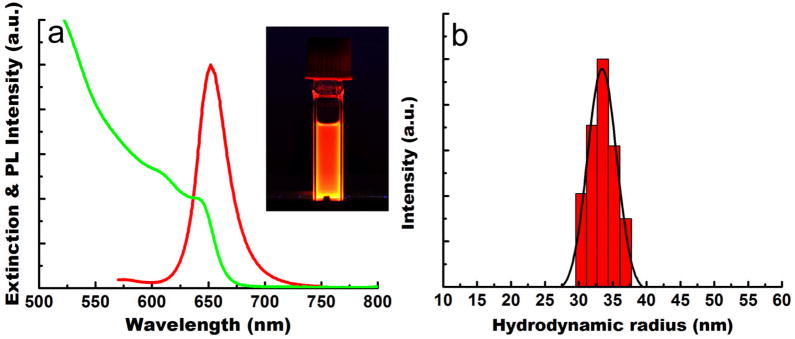
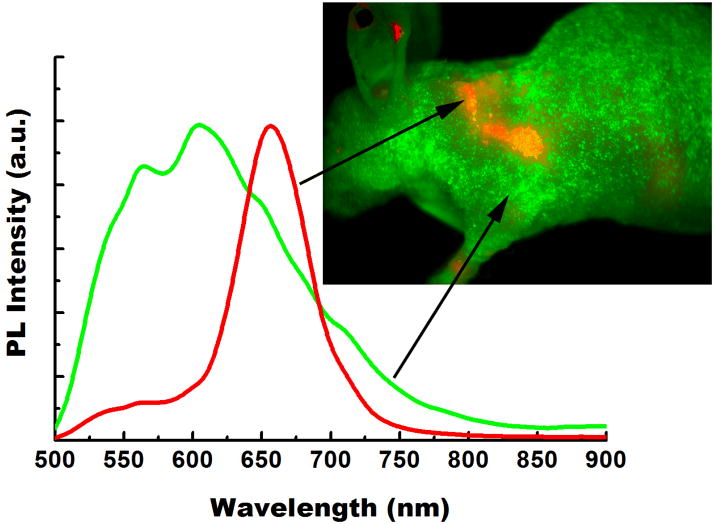
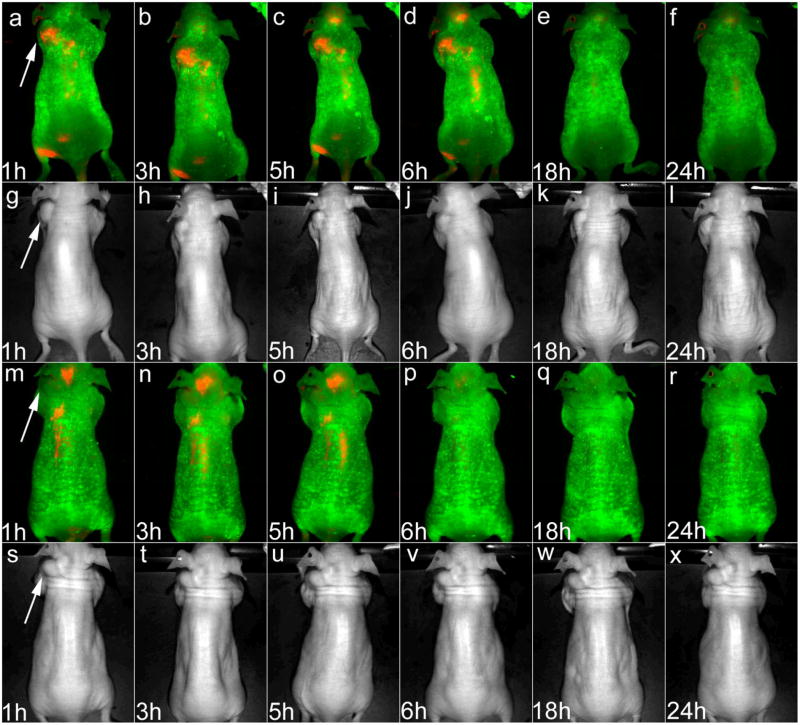
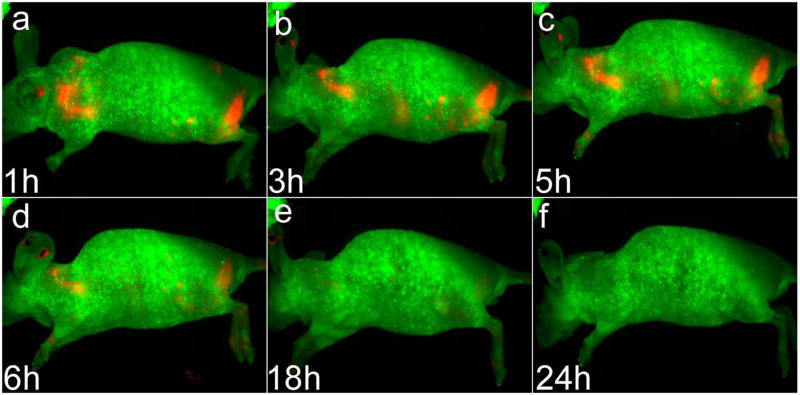
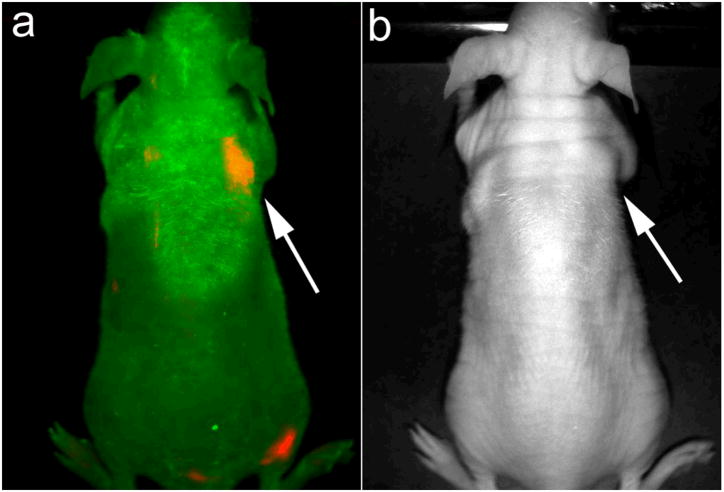
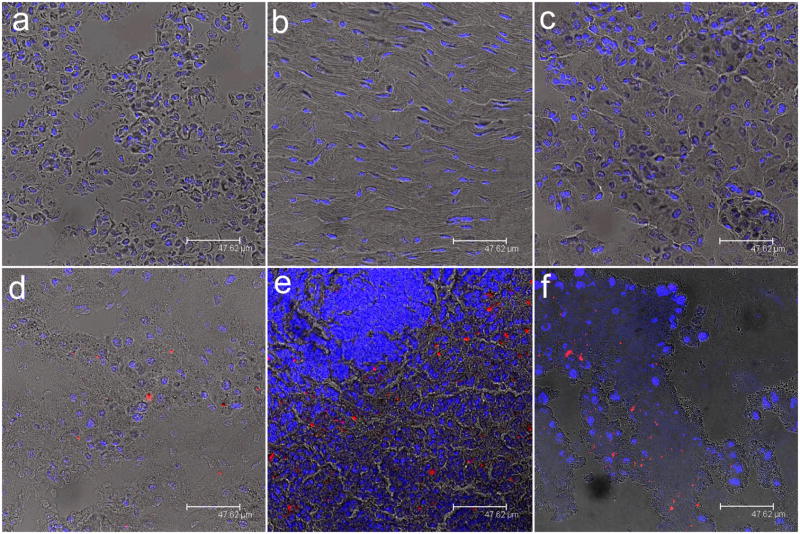
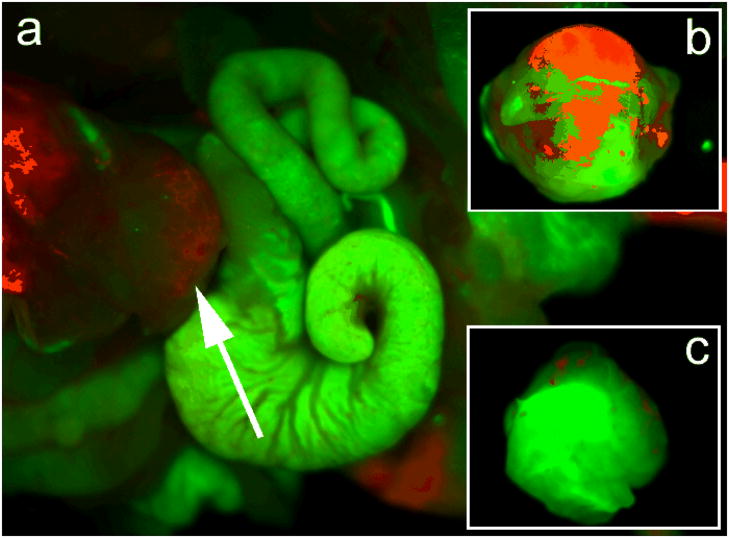
In this contribution, we demonstrate that highly luminescent CdSe/CdS/ZnS quantum rods (QRs) coated with PEGylated phospholipids and conjugated with cyclic RGD peptide can be successfully used for tumor targeting and imaging in live animals. The design of these targeted luminescent probes involves encapsulation of hydrophobic CdSe/CdS/ZnS QRs with PEGylated phospholipids, followed by conjugation of these PEGylated phospholipids to ligands that specifically target the tumor vasculature. In vivo optical imaging studies in nude mice bearing pancreatic cancer xenografts, both subcutaneous and orthotopic, indicate that the QR probes accumulate at tumor sites via the cyclic RGD peptides on the QR surface binding to the alpha(V)beta(3) integrins overexpressed in the tumor vasculature, following systemic injection. In vivo tumor detection studies showed no adverse effects even at a dose roughly 6.5 times higher than has been reported for in vivo imaging studies using quantum dots. Cytotoxicity studies indicated the absence of any toxic effect in the cellular and tissue levels arising from functionalized QRs. These results demonstrate the vast potential of QRs as bright, photostable, and biocompatible luminescent probes for the early diagnosis of cancer.
在本研究中,我们证明了经聚乙二醇化磷脂和环状 RGD 肽修饰的具有高光致发光性能的 CdSe/CdS/ZnS 量子点(QRs)可成功用于活体动物中的肿瘤靶向和成像。这些靶向发光探针的设计涉及将疏水性 CdSe/CdS/ZnS QRs 用聚乙二醇化磷脂包封,然后将这些聚乙二醇化磷脂与专门针对肿瘤血管系统的配体偶联。在携带胰腺癌细胞异种移植物的裸鼠(皮下和原位)的体内光学成像研究中,表明 QR 探针通过 QR 表面上的环状 RGD 肽与肿瘤血管系统中过度表达的 α(V)β(3)整合素结合,在系统注射后在肿瘤部位积累。体内肿瘤检测研究表明,即使在大约比使用量子点进行体内成像研究报道的剂量高 6.5 倍的剂量下,也没有任何不良反应。细胞毒性研究表明,功能性化 QR 不会在细胞和组织水平上产生任何毒性作用。这些结果表明 QR 作为明亮、光稳定且生物相容的发光探针在癌症的早期诊断中具有巨大的潜力。