Nanobiotix, 60 rue de Wattignies, Paris, France.
Int J Nanomedicine. 2010 Feb 2;5:37-49.
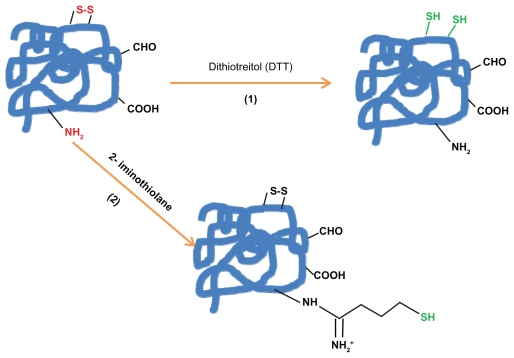
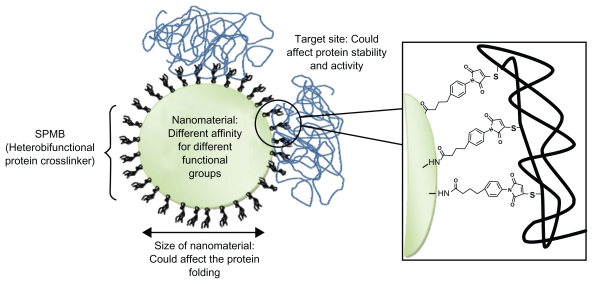
The latest development of protein engineering allows the production of proteins having desired properties and large potential markets, but the clinical advances of therapeutical proteins are still limited by their fragility. Nanotechnology could provide optimal vectors able to protect from degradation therapeutical biomolecules such as proteins, enzymes or specific polypeptides. On the other hand, some proteins can be also used as active ligands to help nanoparticles loaded with chemotherapeutic or other drugs to reach particular sites in the body. The aim of this review is to provide an overall picture of the general aspects of the most successful approaches used to combine proteins with nanosystems. This combination is mainly achieved by absorption, bioconjugation and encapsulation. Interactions of nanoparticles with biomolecules and caveats related to protein denaturation are also pointed out. A clear understanding of nanoparticle-protein interactions could make possible the design of precise and versatile hybrid nanosystems. This could further allow control of their pharmacokinetics as well as activity, and safety.
蛋白质工程的最新发展使得能够生产具有所需特性和巨大潜在市场的蛋白质,但治疗性蛋白质的临床进展仍然受到其脆弱性的限制。纳米技术可以提供最佳载体,能够保护治疗性生物分子(如蛋白质、酶或特定多肽)免受降解。另一方面,一些蛋白质也可以用作活性配体,以帮助负载化疗药物或其他药物的纳米颗粒到达体内的特定部位。本文综述的目的是提供将蛋白质与纳米系统结合的最成功方法的总体概述。这种结合主要通过吸收、生物偶联和封装来实现。还指出了纳米颗粒与生物分子的相互作用以及与蛋白质变性相关的注意事项。对纳米颗粒-蛋白质相互作用的清晰理解可以实现精确和多功能的混合纳米系统的设计。这可以进一步控制它们的药代动力学以及活性和安全性。