Department of Biology, University of Puerto Rico, Call Box 9000, Mayagüez Campus, Mayagüez, PR 00681-9000, USA.
J Mater Sci Mater Med. 2010 May;21(5):1739-50. doi: 10.1007/s10856-010-4016-6. Epub 2010 Feb 17.
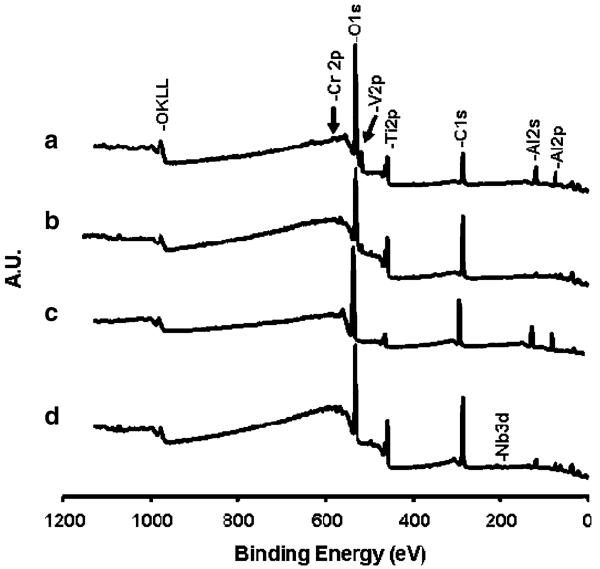
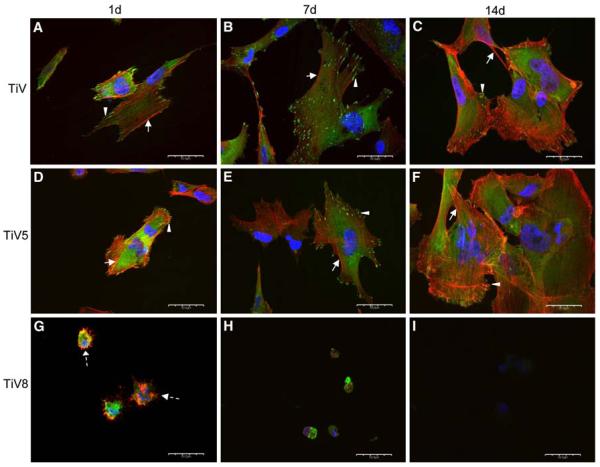
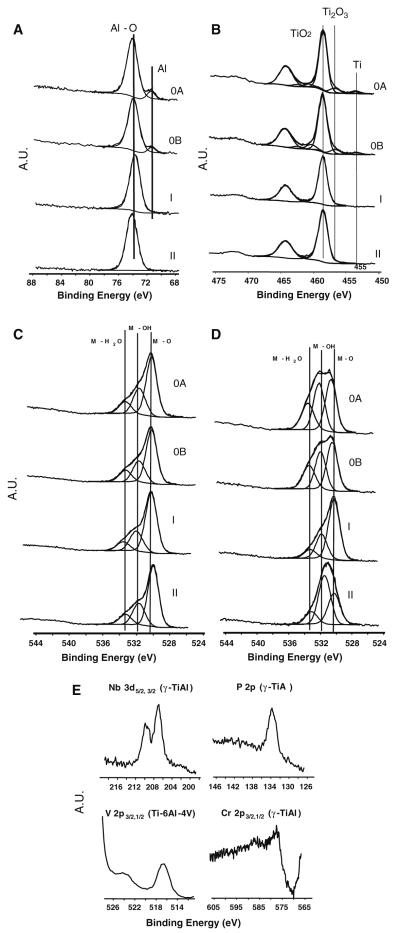
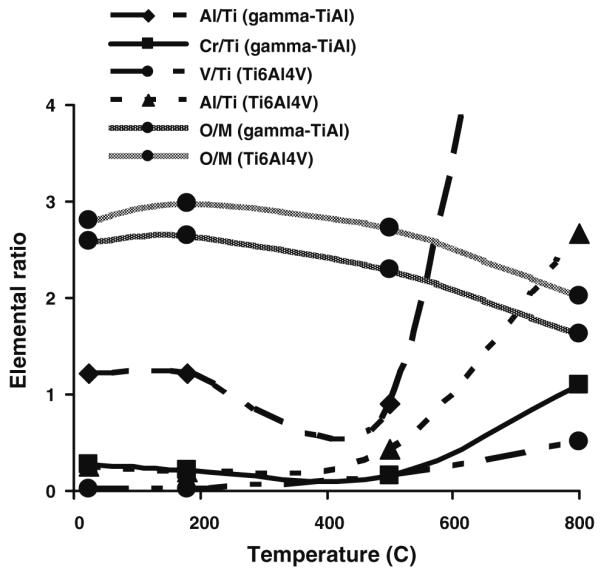
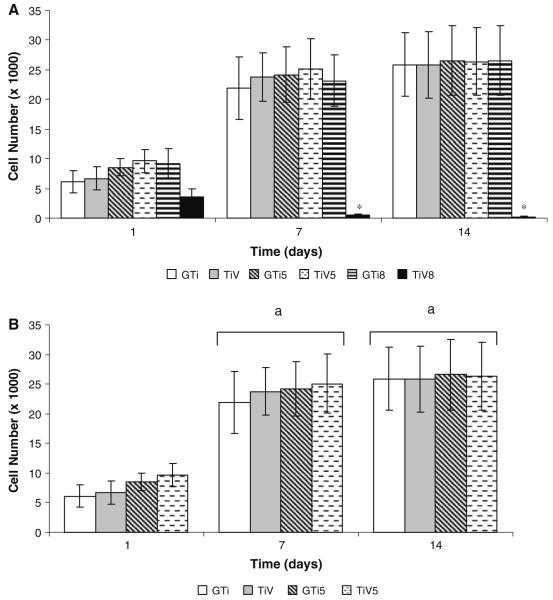
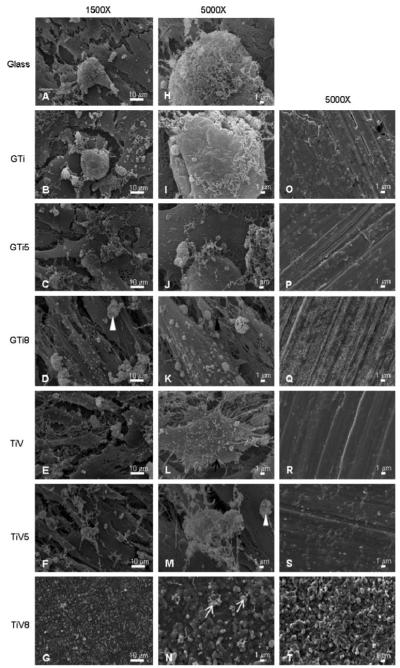
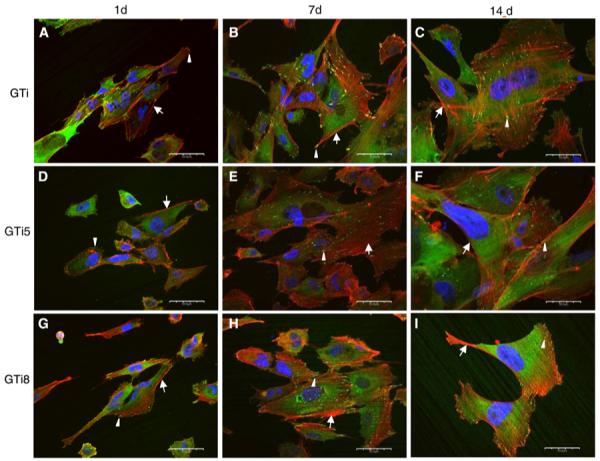
Ti-48Al-2Cr-2Nb (at.%) (gamma-TiAl), a gamma titanium aluminide alloy originally designed for aerospace applications, appears to have excellent potential as implant material. Thermal treatment of gamma-TiAl renders this alloy extremely corrosion resistant in vitro, which could improve its biocompatibility. In this study, the surface oxides produced by thermal oxidation (at 500 degrees C, and at 800 degrees C for 1 h in air) on gamma-TiAl were characterized by X-ray photoelectron spectroscopy (XPS). hFOB 1.19 cell adhesion on thermally oxidized gamma-TiAl was examined in vitro by a hexosaminidase assay, scanning electron microscopy (SEM) and confocal laser scanning microscopy (CLSM) after 1, 7 and 14 days. Ti-6Al-4V surfaces were used for comparison. Hexosaminidase assay data and CLSM analysis of focal contacts and cytoskeleton organization showed no differences in cell attachment on autoclaved and both heat-treated gamma-TiAl surfaces at the different time points. SEM images showed well organized multi-layers of differentiated cells adhered on thermally oxidized gamma-TiAl surfaces at day 14. Unexpectedly, thermally oxidized Ti-6Al-4V surfaces oxidized at 800 degrees C exhibited cytotoxic effects on hFOB 1.19 cells. Our results indicate that thermal oxidation of gamma-TiAl seems to be a promising method to generate highly corrosion resistant and biocompatible surfaces for implant applications.
钛-48 铝-2 铬-2 铌(原子%)(γ-TiAl),一种最初为航空航天应用而设计的γ 钛铝化物合金,似乎具有作为植入材料的优异潜力。γ-TiAl 的热处理使该合金在体外具有极强的耐腐蚀性,这可以提高其生物相容性。在这项研究中,通过 X 射线光电子能谱(XPS)对 γ-TiAl 在热氧化(在空气中 500°C 和 800°C 下分别处理 1 小时)过程中产生的表面氧化物进行了表征。通过葡萄糖胺酶测定、扫描电子显微镜(SEM)和共聚焦激光扫描显微镜(CLSM)在体外检查了热氧化 γ-TiAl 上 hFOB 1.19 细胞的黏附情况,分别在 1、7 和 14 天后进行。钛-6 铝-4 钒(Ti-6Al-4V)表面被用于比较。葡萄糖胺酶测定数据和对焦点以及细胞骨架组织的 CLSM 分析表明,在不同时间点,对灭菌和两种热处理的 γ-TiAl 表面,细胞黏附没有差异。SEM 图像显示,在 14 天时,在热氧化的 γ-TiAl 表面上附着有组织良好的多层分化细胞。出乎意料的是,在 800°C 下氧化的热氧化 Ti-6Al-4V 表面对 hFOB 1.19 细胞表现出细胞毒性作用。我们的结果表明,γ-TiAl 的热氧化似乎是一种很有前途的方法,可以为植入物应用生成高耐腐蚀性和生物相容性的表面。