Division of Applied Medicine, School of Medicine & Dentistry, University of Aberdeen, Aberdeen AB25 2ZD, UK.
BMC Med Educ. 2010 Mar 23;10:25. doi: 10.1186/1472-6920-10-25.
At some medical schools, students can opt to undertake a 1 year intercalated degree, usually a BSc, in addition to their medical course. Over the last few years the numbers of students who have opted to undertake an intercalated degree have been steadily decreasing despite the advantages in securing foundation posts. The aim of this study was to find out why medical students opted not to take an intercalated degree.
All 4th and 5th year medical students (n = 343) who had elected not to take an intercalated degree were personally handed a questionnaire.
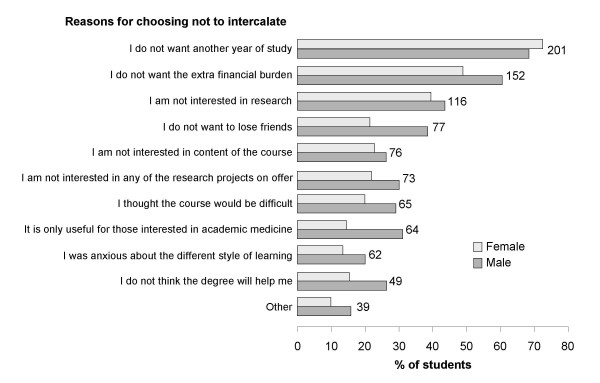
293 completed questionnaires were returned (response rate 85%). The most common reason students opted not to intercalate was because they did not want to have another year of study (69.6%) or incur more debt (51.9%). Only 45 (15.3%) students said they had enough information to inform their decision: reported take up of information provision was poor.
Our findings indicate that the benefits of intercalating need to be better defined and presented to students in a way that they can make a more informed decision.
在一些医学院校,学生除了医学课程外,还可以选择攻读为期一年的插班本科学位,通常是理科学位。尽管在获得基础职位方面有优势,但近年来选择攻读插班本科学位的学生人数一直在稳步下降。本研究旨在了解医学生选择不攻读插班本科学位的原因。
所有第四年和第五年的医学生(n=343)都被亲自发放了一份问卷。
共收回 293 份完整的问卷(应答率 85%)。学生选择不插班的最常见原因是他们不想再学习一年(69.6%)或增加更多债务(51.9%)。只有 45 名(15.3%)学生表示他们有足够的信息来做出决定:报告的信息提供情况很差。
我们的研究结果表明,需要更好地向学生定义和呈现插班的好处,以便他们能够做出更明智的决定。