Vascular Mapping Laboratory, Center for Nanomedicine, Sanford-Burnham Medical Research Institute at University of California at Santa Barbara, Biology II Building, University of California, Santa Barbara, CA 93106-9610, USA.
Science. 2010 May 21;328(5981):1031-5. doi: 10.1126/science.1183057. Epub 2010 Apr 8.
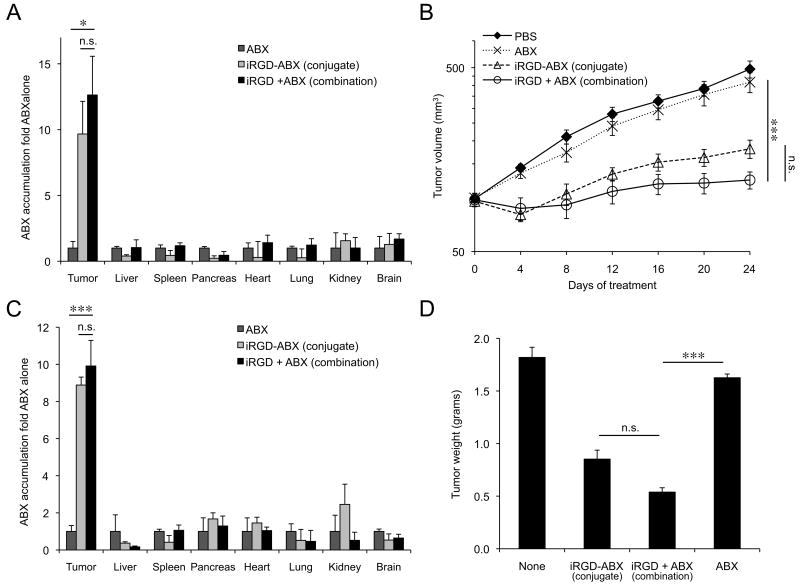
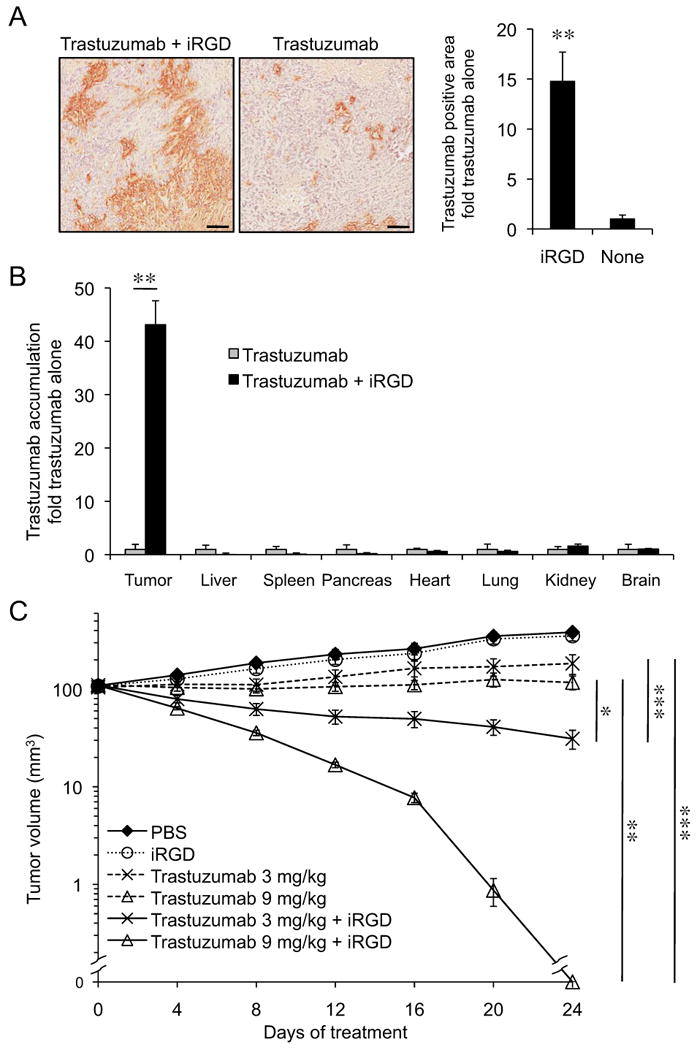
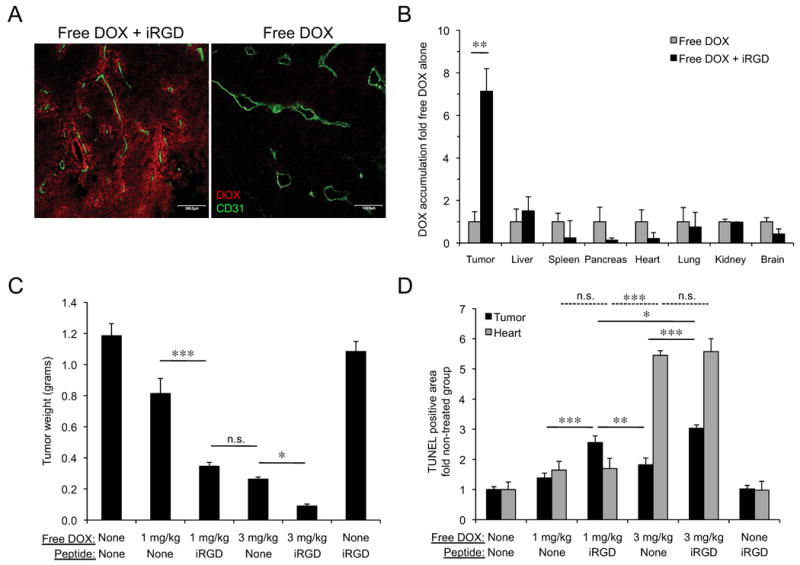
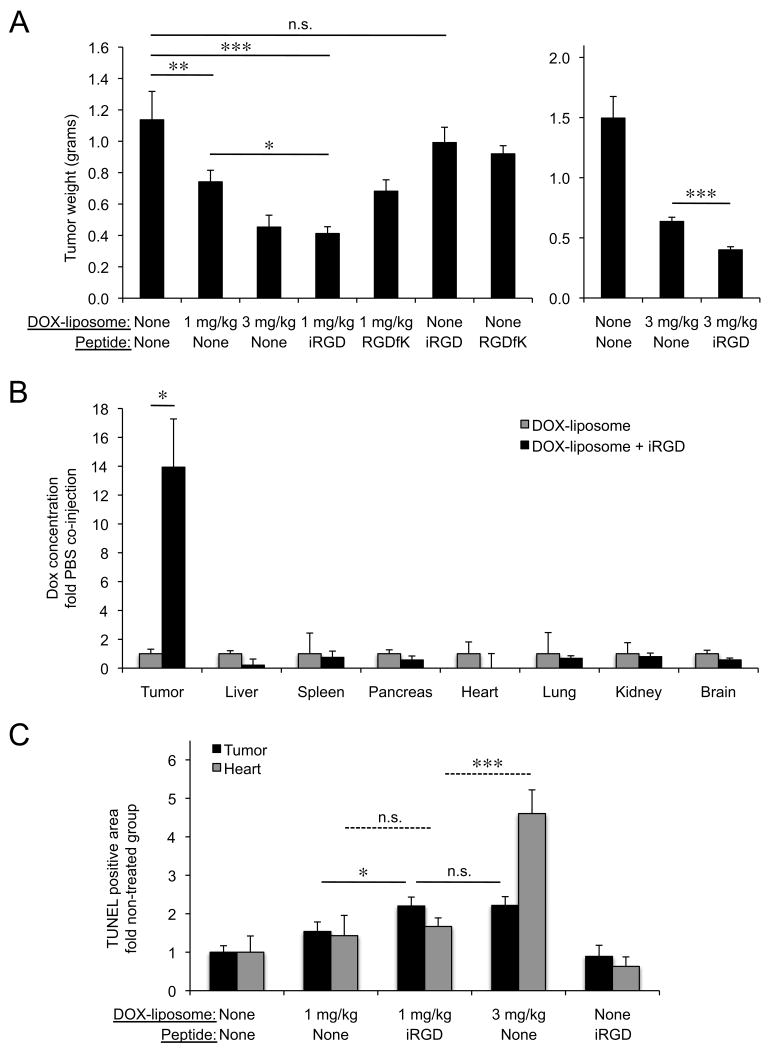
Poor penetration of anticancer drugs into tumors can be an important factor limiting their efficacy. We studied mouse tumor models to show that a previously characterized tumor-penetrating peptide, iRGD, increased vascular and tissue permeability in a tumor-specific and neuropilin-1-dependent manner, allowing coadministered drugs to penetrate into extravascular tumor tissue. Importantly, this effect did not require the drugs to be chemically conjugated to the peptide. Systemic injection with iRGD improved the therapeutic index of drugs of various compositions, including a small molecule (doxorubicin), nanoparticles (nab-paclitaxel and doxorubicin liposomes), and a monoclonal antibody (trastuzumab). Thus, coadministration of iRGD may be a valuable way to enhance the efficacy of anticancer drugs while reducing their side effects, a primary goal of cancer therapy research.
抗癌药物在肿瘤中的渗透不良可能是限制其疗效的一个重要因素。我们研究了小鼠肿瘤模型,结果表明,先前表征的一种肿瘤穿透肽 iRGD 以肿瘤特异性和神经纤毛蛋白 1 依赖性的方式增加了血管和组织通透性,使联合给予的药物能够渗透到血管外肿瘤组织中。重要的是,这种作用不需要将药物化学偶联到肽上。iRGD 的系统注射提高了各种成分药物的治疗指数,包括小分子(阿霉素)、纳米颗粒(白蛋白结合型紫杉醇和阿霉素脂质体)和单克隆抗体(曲妥珠单抗)。因此,联合使用 iRGD 可能是一种增强抗癌药物疗效同时降低其副作用的有价值方法,这是癌症治疗研究的主要目标。