Department of Infectious Diseases, Rigshospitalet, Denmark.
BMC Infect Dis. 2010 May 28;10:140. doi: 10.1186/1471-2334-10-140.
In tuberculosis (TB) endemic parts of the world, patients with pulmonary symptoms are managed as "smear-negative TB patients" if they do not improve on a two-week presumptive, broad-spectrum course of antibiotic treatment even if they are TB microscopy smear negative. These patients are frequently HIV positive and have a higher mortality than smear-positive TB patients. Lack of access to diagnose Pneumocystis jirovecii pneumonia might be a contributing reason. We therefore assessed the prevalence of P. jirovecii by PCR in oral wash specimens among TB patients and healthy individuals in an HIV- and TB-endemic area of sub-Saharan Africa.
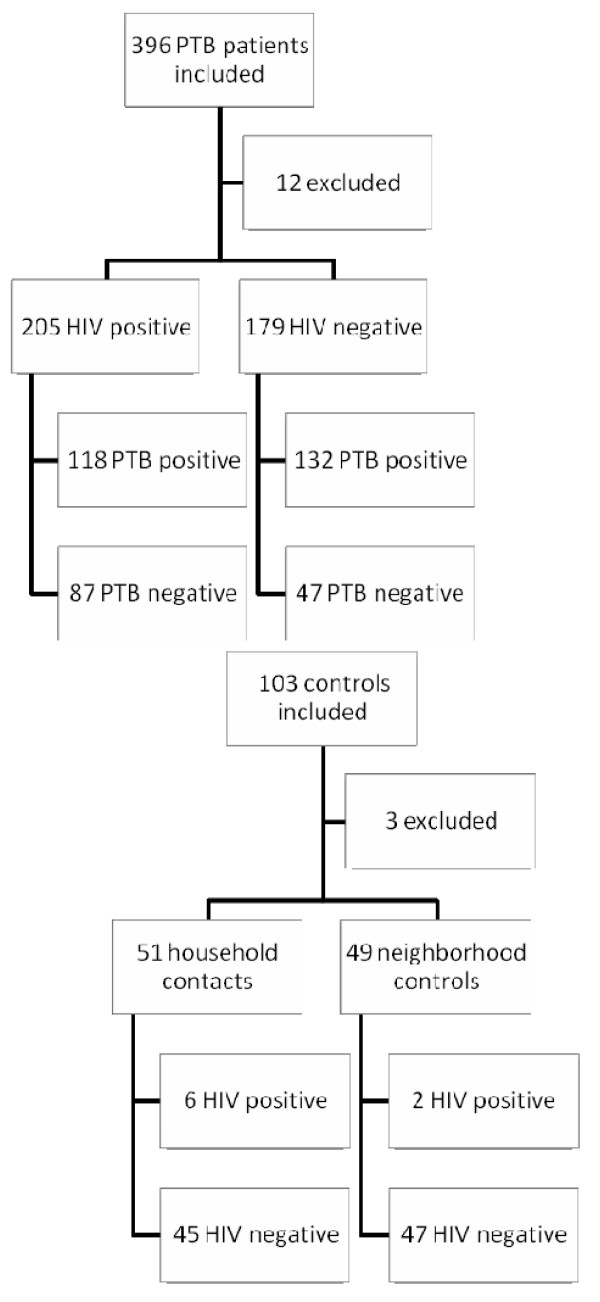
A prospective study of 384 patients initiating treatment for sputum smear-positive and smear-negative TB and 100 healthy household contacts and neighbourhood controls. DNA from oral wash specimens was examined by PCR for P. jirovecii. All patients delivered sputum for TB microscopy and culture. Healthy contacts and community controls were clinically assessed and all study subjects were HIV tested and had CD4 cell counts determined. Clinical status and mortality was assessed after a follow-up period of 5 months.
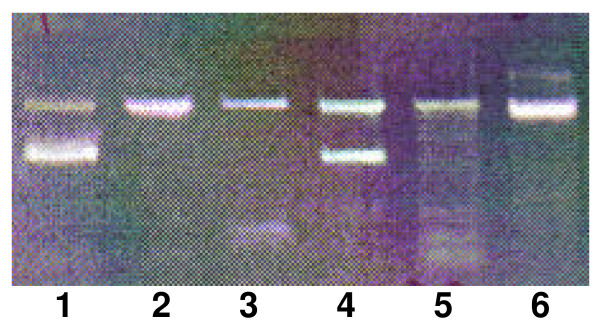
384 patients and 100 controls were included, 53% and 8% HIV positive respectively. A total number of 65 patients and controls (13.6%) were at definitive risk for PCP based on CD4 counts <200 cells per mm3 and no specific PCP prophylaxis. Only a single patient (0.3% of the patients) was PCR positive for P. jirovecii. None of the healthy household contacts or neighbourhood controls had PCR-detectable P. jirovecii DNA in their oral wash specimens regardless of HIV-status.
The prevalence of P. jirovecii as detected by PCR on oral wash specimens was very low among TB patients with or without HIV and healthy individuals in Tanzania. Colonisation by P. jirovecii was not detected among healthy controls. The present findings may encourage diagnostic use of this non-invasive method.
在结核病(TB)流行地区,如果患者在接受两周经验性广谱抗生素治疗后症状仍未改善,即使其结核分枝杆菌显微镜检查为阴性,也会被诊断为“菌阴肺结核患者”。这些患者通常 HIV 阳性,死亡率高于菌阳肺结核患者。无法诊断卡氏肺孢子虫肺炎可能是一个促成因素。因此,我们在撒哈拉以南非洲的一个 HIV 和结核病流行地区,评估了口腔冲洗标本中卡氏肺孢子虫的 PCR 检测在肺结核患者和健康个体中的患病率。
对 384 例开始接受痰涂片阳性和阴性肺结核治疗的患者以及 100 例健康的家庭接触者和社区对照者进行前瞻性研究。采用 PCR 检测口腔冲洗标本中的卡氏肺孢子虫 DNA。所有患者均进行了痰结核分枝杆菌显微镜检查和培养。健康接触者和社区对照者进行了临床评估,所有研究对象均进行了 HIV 检测和 CD4 细胞计数。在随访 5 个月后评估临床状况和死亡率。
共纳入 384 例患者和 100 例对照者,其中 HIV 阳性者分别占 53%和 8%。根据 CD4 计数<200 个细胞/mm3和未进行特定的卡氏肺孢子虫肺炎预防,共有 65 例患者和对照者(13.6%)存在明确的卡氏肺孢子虫肺炎风险。仅有 1 例患者(患者的 0.3%)PCR 检测卡氏肺孢子虫阳性。无论 HIV 状态如何,在健康的家庭接触者或社区对照者的口腔冲洗标本中均未检测到卡氏肺孢子虫 DNA。
在坦桑尼亚的肺结核患者(无论是否感染 HIV)和健康个体中,PCR 检测口腔冲洗标本中卡氏肺孢子虫的患病率非常低。在健康对照者中未检测到卡氏肺孢子虫定植。本研究结果可能会鼓励使用这种非侵入性方法进行诊断。