Cho Nam H
Department of Preventive Medicine, Ajou University School of Medicine, Suwon, Korea.
Korean Diabetes J. 2010 Feb;34(1):10-5. doi: 10.4093/kdj.2010.34.1.10. Epub 2010 Feb 28.
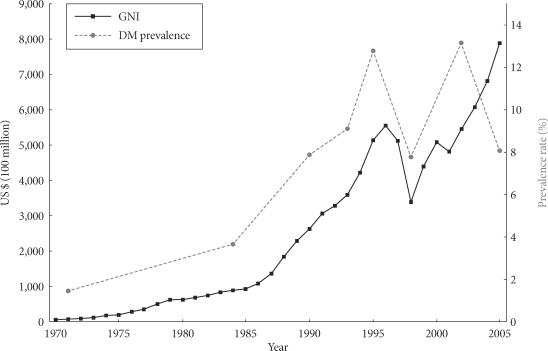
To determine the factors responsible for the dramatic increase in the prevalence of diabetes in Korea. A computerized literature survey was conducted to evaluate the risk factors for Type 2 diabetes mellitus (T2DM) in Korea, including genome-wide association studies. National Statistics gross national income data was integrated with the reported prevalence of diabetes to evaluate the relationship between diabetes and the economic growth. The strength of the association was evaluated using measures of effect size, such as odds ratio and relative risks. The putative risk factors identified in Korean studies are very similar to the risk factors identified from the other countries, including genetic background. Genome-wide association studies reported relative risks of 1.5 or less, indicating that no single gene is associated with the risk of T2DM. The scientific evidence suggests that the dramatic increase in the incidence and prevalence of T2DM in Korea is related to the economic development of Korea, which has a direct influence on health policy, as well as an individual's health behaviors. We expect to observe the current diabetes incidence rates until the key risk factors are present for long enough in our society, at which point we would expect to start observing a more gradual increase in both the incidence and prevalence of T2DM in Korea.
为确定韩国糖尿病患病率急剧上升的相关因素。开展了一项计算机化文献调查,以评估韩国2型糖尿病(T2DM)的危险因素,包括全基因组关联研究。将国家统计局的国民总收入数据与报告的糖尿病患病率相结合,以评估糖尿病与经济增长之间的关系。使用效应量指标(如比值比和相对风险)评估关联强度。韩国研究中确定的假定危险因素与其他国家确定的危险因素非常相似,包括遗传背景。全基因组关联研究报告的相对风险为1.5或更低,表明没有单一基因与T2DM风险相关。科学证据表明,韩国T2DM发病率和患病率的急剧上升与韩国的经济发展有关,这对卫生政策以及个人的健康行为都有直接影响。我们预计在关键危险因素在我们社会中存在足够长的时间之前,会观察到当前的糖尿病发病率,到那时我们预计会开始观察到韩国T2DM发病率和患病率的增长更加平缓。