Department of Endocrinology and Metabolism, Ajou University School of Medicine, Suwon, Korea.
Diabetes Metab J. 2011 Aug;35(4):303-8. doi: 10.4093/dmj.2011.35.4.303. Epub 2011 Aug 31.
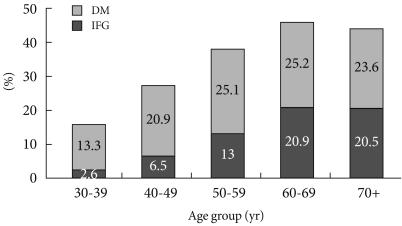
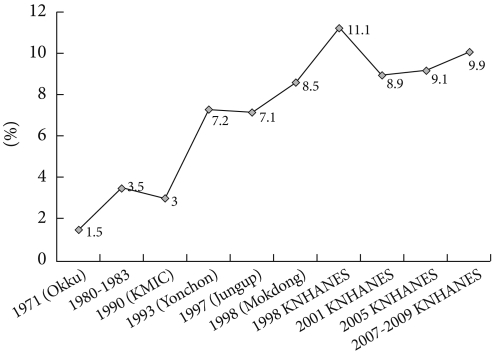
Diabetes is an increasing global health problem worldwide. Diabetes and its complications have become a major cause of morbidity and mortality in Korea. The prevalence of diabetes in Korea has increased six- to seven-fold from 1.5% to 9.9% in the past 40 years. The prevalence of impaired fasting glucose also increased to about 20% in 2009. The International Diabetes Federation has estimated that the prevalence of diabetes will rise to 11.4% in 2030. Possible risk factors for diabetes in Korea are age, male gender, obesity, prediabetes, gestational diabetes, smoking, decreased physical activity, and short sleep duration. With increasing obesity, especially in childhood, and improved longevity, the prevalence of diabetes is expected to dramatically increase more than previously estimated. Therefore, public efforts to introduce healthy lifestyle changes and diabetic prevention programs are necessary to reduce the global epidemic of diabetes.
糖尿病是全球范围内日益严重的健康问题。糖尿病及其并发症已成为韩国发病率和死亡率的主要原因。在过去的 40 年中,韩国的糖尿病患病率从 1.5%增加到了 9.9%,增加了六到七倍。空腹血糖受损的患病率在 2009 年也增加到了约 20%。国际糖尿病联合会估计,到 2030 年,糖尿病的患病率将上升到 11.4%。韩国糖尿病的可能危险因素包括年龄、男性、肥胖、糖尿病前期、妊娠糖尿病、吸烟、体力活动减少和睡眠持续时间缩短。随着肥胖的增加,特别是在儿童中,以及预期寿命的延长,糖尿病的患病率预计将比之前估计的大幅增加。因此,需要采取公共措施来引入健康的生活方式改变和糖尿病预防计划,以减少全球糖尿病的流行。