Clinic for Gastroenterology, Hepatology, and Infectiology, Heinrich-Heine-University, Düsseldorf, Germany.
Hepatology. 2010 Jul;52(1):256-65. doi: 10.1002/hep.23656.
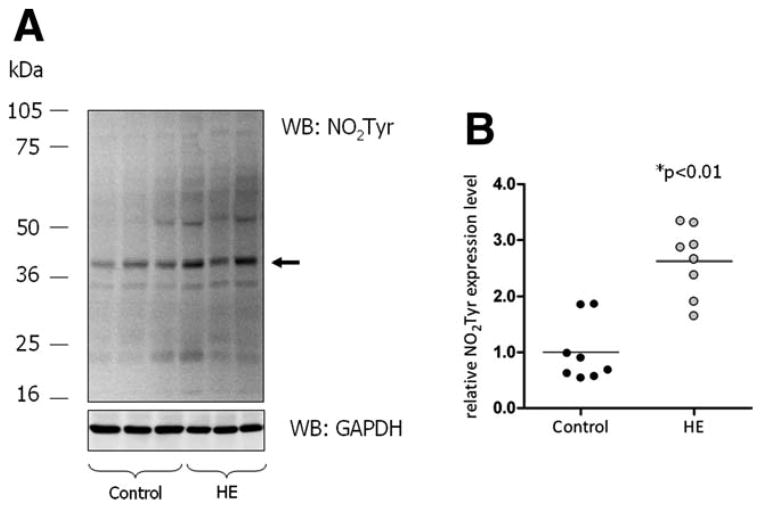
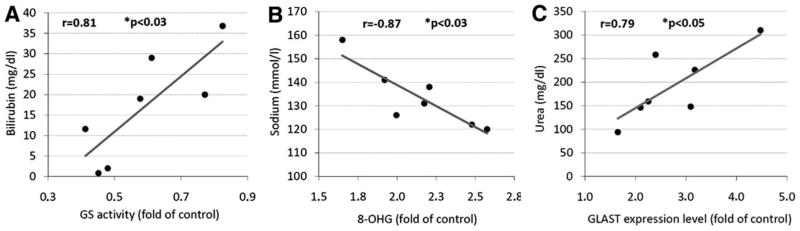
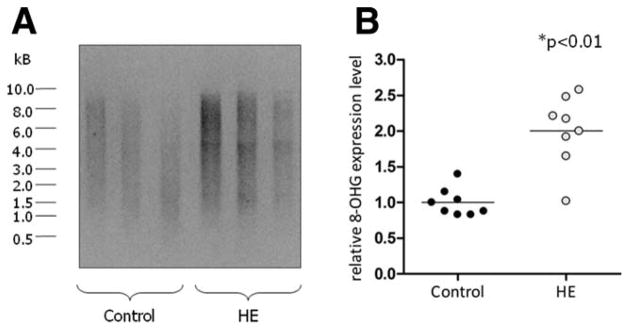
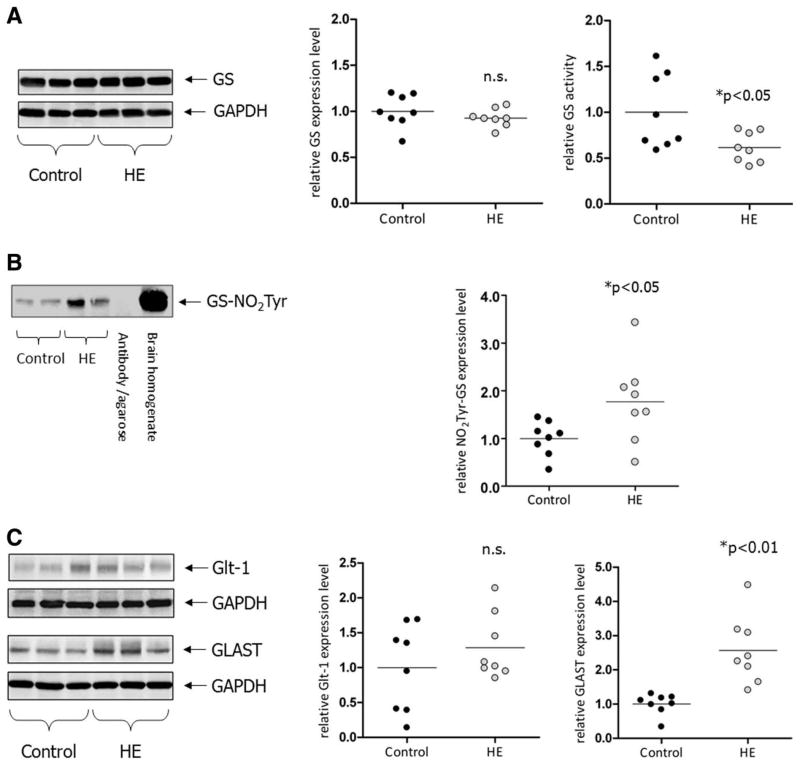
Cell culture studies and animal models point to an important role of oxidative/nitrosative stress in the pathogenesis of cerebral ammonia toxicity. However, it is unknown whether oxidative/nitrosative stress in the brain is also characteristic of hepatic encephalopathy (HE) in humans. We therefore analyzed post mortem cortical brain tissue samples from patients with cirrhosis dying with or without HE in comparison with brains from patients without liver disease. Significantly elevated levels of protein tyrosine-nitrated proteins, heat shock protein-27, and 8-hydroxyguanosine as a marker for RNA oxidation were found in the cerebral cortex of HE patients, but not of patients with cirrhosis but without HE. Glutamine synthetase (GS) activity was significantly decreased, whereas GS protein expression was not significantly affected. Protein expression of the glutamate/aspartate cotransporter was up-regulated in HE, whereas protein expression of neuronal and inducible nitric oxide synthases, manganese-dependent and copper/zinc-dependent superoxide dismutase, and glial glutamate transporter-1 were not significantly increased.
These data indicate that HE in patients with cirrhosis is associated with oxidative/nitrosative stress, protein tyrosine nitration, and RNA oxidation, suggesting a role of oxidative stress in the pathogenesis of HE in patients with cirrhosis.
细胞培养研究和动物模型表明,氧化/硝化应激在脑氨毒性发病机制中起着重要作用。然而,目前尚不清楚大脑中的氧化/硝化应激是否也是人类肝性脑病(HE)的特征。因此,我们分析了来自伴有或不伴有 HE 的肝硬化患者死后的大脑皮质组织样本,并与无肝病患者的大脑进行了比较。结果发现,HE 患者的大脑皮质中存在明显升高的蛋白质酪氨酸硝化蛋白、热休克蛋白 27 和 8-羟基鸟嘌呤(RNA 氧化的标志物)水平,但肝硬化而无 HE 的患者则没有。谷氨酰胺合成酶(GS)活性显著降低,而 GS 蛋白表达则没有显著影响。谷氨酸/天门冬氨酸共转运蛋白的蛋白表达在 HE 中上调,而神经元型和诱导型一氧化氮合酶、锰依赖性和铜/锌依赖性超氧化物歧化酶以及胶质谷氨酸转运体-1的蛋白表达则没有显著增加。
这些数据表明,肝硬化患者的 HE 与氧化/硝化应激、蛋白质酪氨酸硝化和 RNA 氧化有关,提示氧化应激在肝硬化患者 HE 的发病机制中起作用。