Yadav Ram Manohar, Dobal Pramod Singh, Shripathi T, Katiyar R S, Srivastava O N
Nanoscale Res Lett. 2008 Dec 10;4(3):197-203. doi: 10.1007/s11671-008-9225-2.
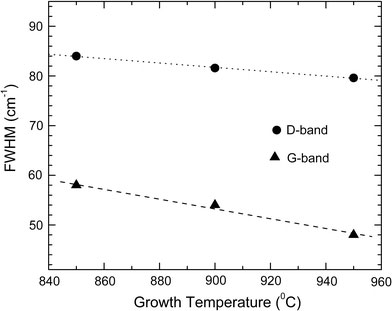
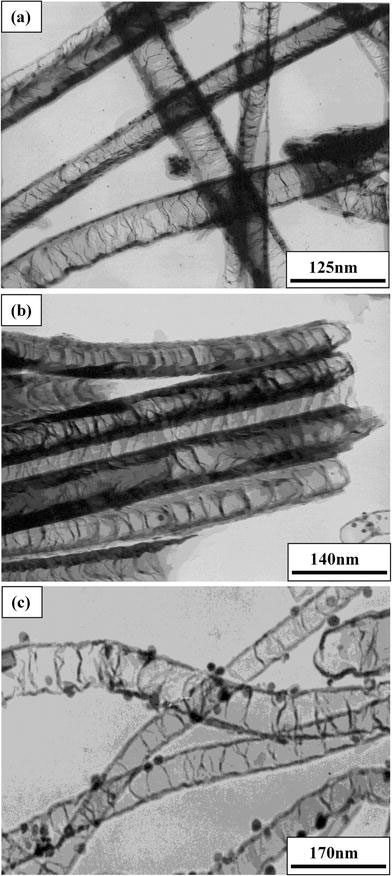
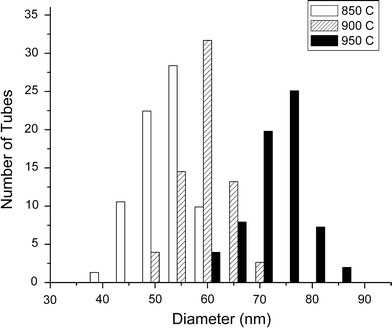
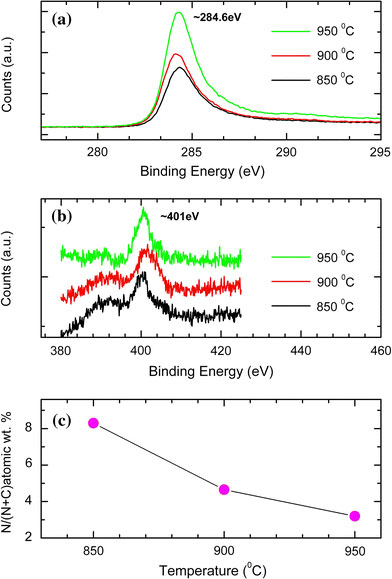
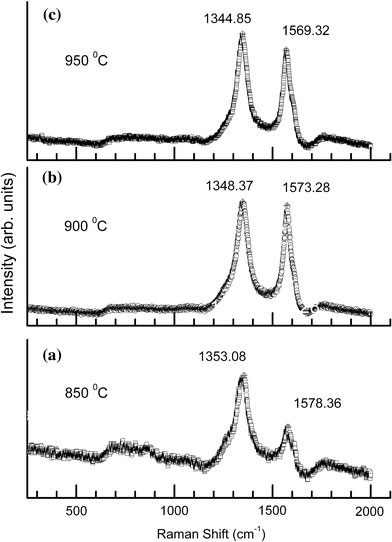
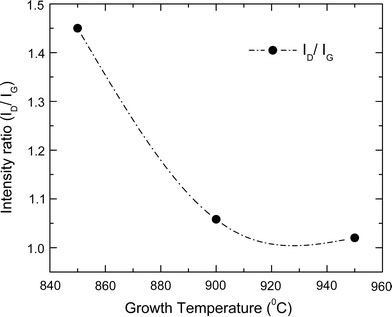
This investigation deals with the effect of growth temperature on the microstructure, nitrogen content, and crystallinity of C-N nanotubes. The X-ray photoelectron spectroscopic (XPS) study reveals that the atomic percentage of nitrogen content in nanotubes decreases with an increase in growth temperature. Transmission electron microscopic investigations indicate that the bamboo compartment distance increases with an increase in growth temperature. The diameter of the nanotubes also increases with increasing growth temperature. Raman modes sharpen while the normalized intensity of the defect mode decreases almost linearly with increasing growth temperature. These changes are attributed to the reduction of defect concentration due to an increase in crystal planar domain sizes in graphite sheets with increasing temperature. Both XPS and Raman spectral observations indicate that the C-N nanotubes grown at lower temperatures possess higher degree of disorder and higher N incorporation.
本研究探讨了生长温度对C-N纳米管的微观结构、氮含量和结晶度的影响。X射线光电子能谱(XPS)研究表明,纳米管中氮含量的原子百分比随生长温度的升高而降低。透射电子显微镜研究表明,竹节间距随生长温度的升高而增大。纳米管的直径也随生长温度的升高而增大。拉曼模式变尖锐,而缺陷模式的归一化强度几乎随生长温度的升高呈线性下降。这些变化归因于随着温度升高,石墨片中晶体平面畴尺寸增加,缺陷浓度降低。XPS和拉曼光谱观察均表明,在较低温度下生长的C-N纳米管具有更高的无序度和更高的氮掺入量。