Institute of Microbial Technology, Sector 39-A, Chandigarh 160036, India.
Microb Cell Fact. 2010 Jul 5;9:52. doi: 10.1186/1475-2859-9-52.
Microorganisms that are exposed to pollutants in the environment, such as metals/metalloids, have a remarkable ability to fight the metal stress by various mechanisms. These metal-microbe interactions have already found an important role in biotechnological applications. It is only recently that microorganisms have been explored as potential biofactories for synthesis of metal/metalloid nanoparticles. Biosynthesis of selenium (Se 0) nanospheres in aerobic conditions by a bacterial strain isolated from the coalmine soil is reported in the present study.
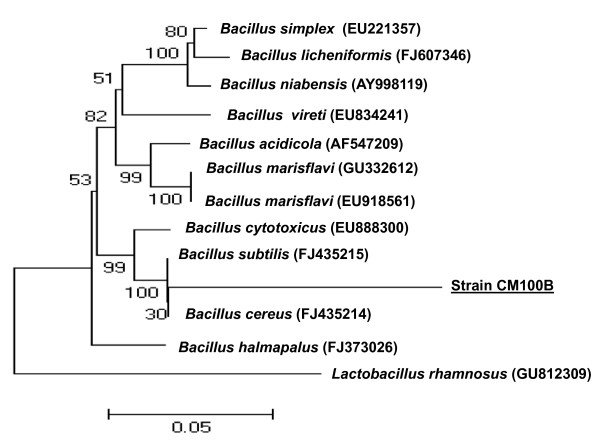
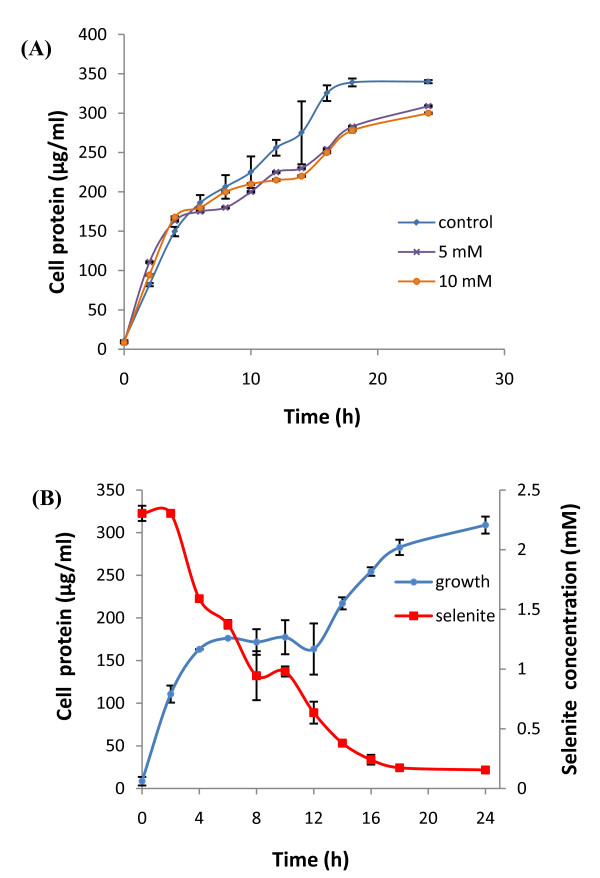
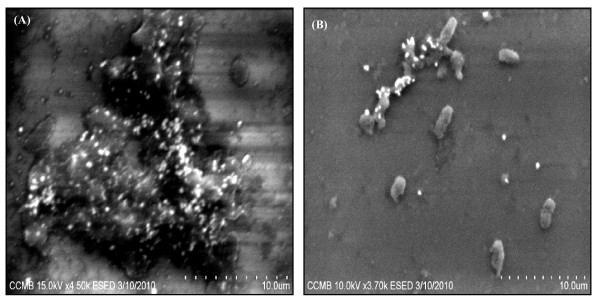
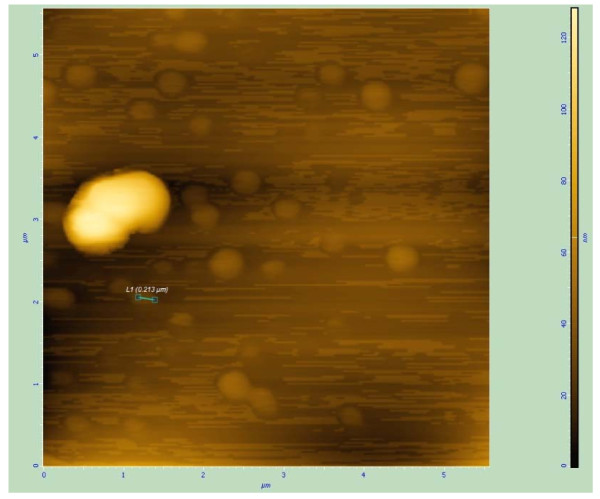
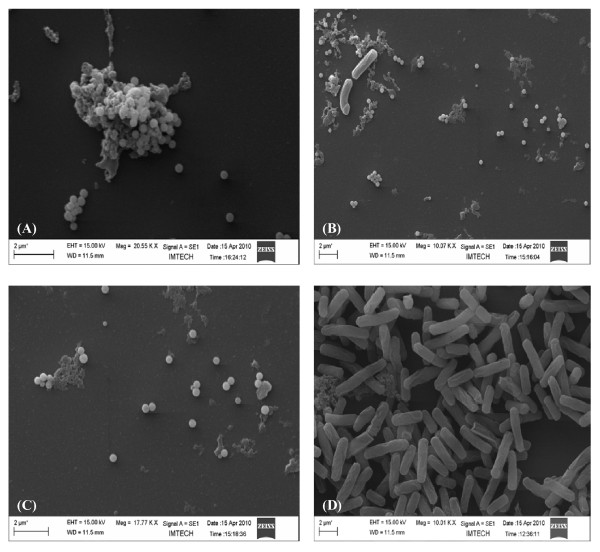
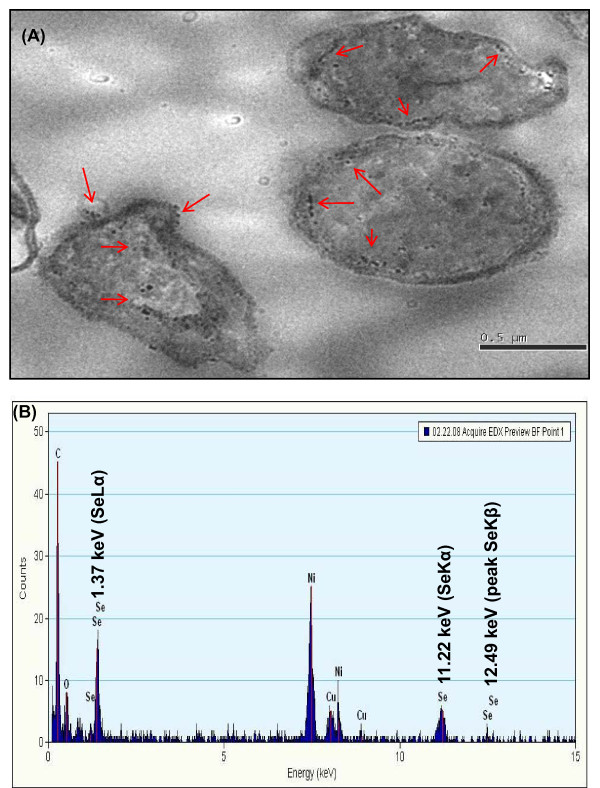
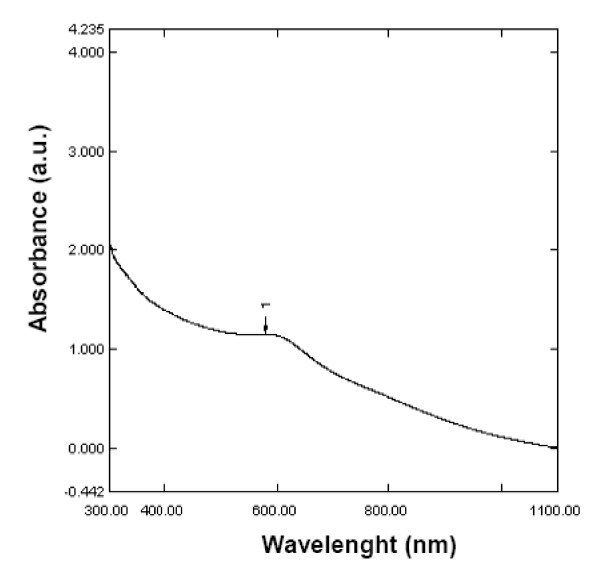
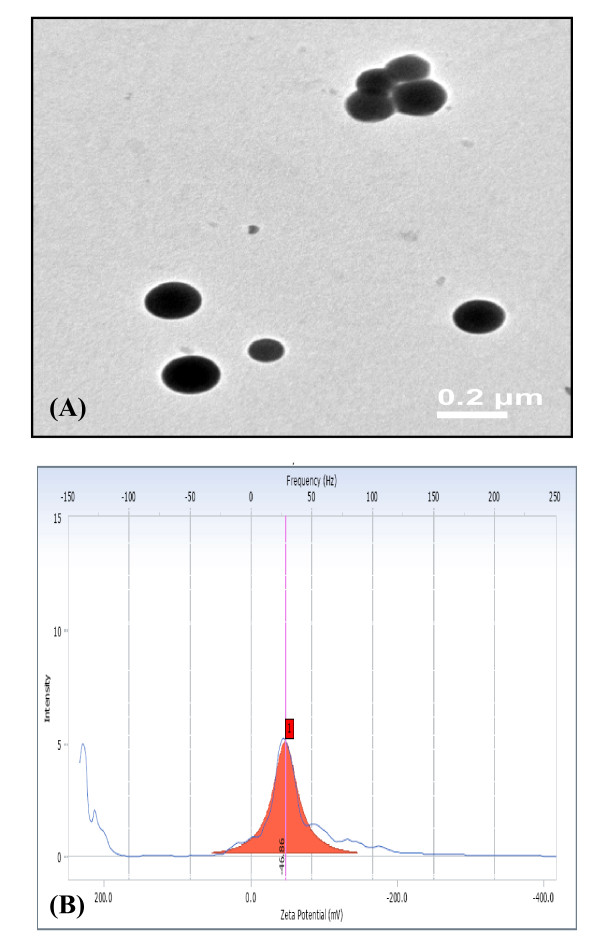
The strain CM100B, identified as Bacillus cereus by morphological, biochemical and 16S rRNA gene sequencing [GenBank:GU551935.1] was studied for its ability to generate selenium nanoparticles (SNs) by transformation of toxic selenite (SeO3(2-)) anions into red elemental selenium (Se 0) under aerobic conditions. Also, the ability of the strain to tolerate high levels of toxic selenite ions was studied by challenging the microbe with different concentrations of sodium selenite (0.5 mM-10 mM). ESEM, AFM and SEM studies revealed the spherical Se 0 nanospheres adhering to bacterial biomass as well as present as free particles. The TEM microscopy showed the accumulation of spherical nanostructures as intracellular and extracellular deposits. The deposits were identified as element selenium by EDX analysis. This is also indicated by the red coloration of the culture broth that starts within 2-3 h of exposure to selenite oxyions. Selenium nanoparticles (SNs) were further characterized by UV-Visible spectroscopy, TEM and zeta potential measurement. The size of nanospheres was in the range of 150-200 nm with high negative charge of -46.86 mV.
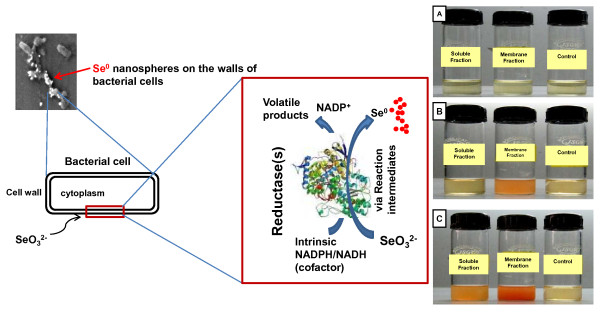
This bacterial isolate has the potential to be used as a bionanofactory for the synthesis of stable, nearly monodisperse Se 0 nanoparticles as well as for detoxification of the toxic selenite anions in the environment. A hypothetical mechanism for the biogenesis of selenium nanoparticles (SNs) involving membrane associated reductase enzyme(s) that reduces selenite (SeO3(2-)) to Se 0 through electron shuttle enzymatic metal reduction process has been proposed.
暴露于环境污染物(如金属/类金属)中的微生物具有通过各种机制抵抗金属胁迫的非凡能力。这些金属-微生物相互作用在生物技术应用中已经找到了重要的作用。直到最近,微生物才被探索为合成金属/类金属纳米粒子的潜在生物工厂。本研究报道了从煤矿土壤中分离的一株细菌在有氧条件下合成硒(Se 0 )纳米球的情况。
通过形态学、生物化学和 16S rRNA 基因测序[GenBank:GU551935.1]鉴定为蜡状芽孢杆菌的 CM100B 菌株,研究了其在有氧条件下将有毒亚硒酸盐(SeO3(2-))阴离子转化为红色元素硒(Se 0 )生成硒纳米粒子(SNs)的能力。此外,还通过用不同浓度的亚硒酸钠(0.5 mM-10 mM)挑战微生物来研究菌株耐受高浓度有毒亚硒酸盐离子的能力。ESEM、AFM 和 SEM 研究表明,Se 0 纳米球附着在细菌生物量上,也以游离颗粒的形式存在。TEM 显微镜显示,球形纳米结构作为细胞内和细胞外沉积物积累。通过能谱分析(EDX)鉴定这些沉积物为元素硒。这也表明,在暴露于亚硒酸氧离子 2-3 小时内,培养液开始呈现红色。通过紫外-可见光谱、TEM 和 zeta 电位测量进一步对硒纳米粒子(SNs)进行了表征。纳米球的尺寸在 150-200nm 范围内,带负电荷为-46.86 mV。
该细菌分离株具有作为生物纳米工厂的潜力,可用于合成稳定、近单分散的 Se 0 纳米粒子,以及用于环境中有毒亚硒酸盐阴离子的解毒。提出了一种涉及膜相关还原酶(s)的硒纳米粒子(SNs)生物发生的假设机制,该酶通过电子穿梭酶促金属还原过程将亚硒酸盐(SeO3(2-))还原为 Se 0 。