McLean Hospital, 115 Mill Street Belmont, MA 02478, USA.
Alcohol Clin Exp Res. 2010 Oct;34(10):1803-12. doi: 10.1111/j.1530-0277.2010.01267.x. Epub 2010 Jul 20.
Relatively few studies have examined gender differences in the effectiveness of specific behavioral or pharmacologic treatment of alcohol dependence. The aim of this study is to assess whether there were gender differences in treatment outcomes for specific behavioral and medication treatments singly or in combination by conducting a secondary analysis of public access data from the national, multisite NIAAA-sponsored COMBINE study.
The COMBINE study investigated alcohol treatment among 8 groups of patients (378 women, 848 men) who received medical management (MM) with 16 weeks of placebo, naltrexone (100 mg/day), acamprosate (3 g/day), or their combination with or without a specialist-delivered combined behavioral intervention. We examined efficacy measures separately for men and women, followed by an overall analysis that included gender and its interaction with treatment condition in the analyses. These analyses were performed to confirm whether the findings reported in the parent trial were also relevant to women, and to more closely examine secondary outcome variables that were not analyzed previously for gender effects.
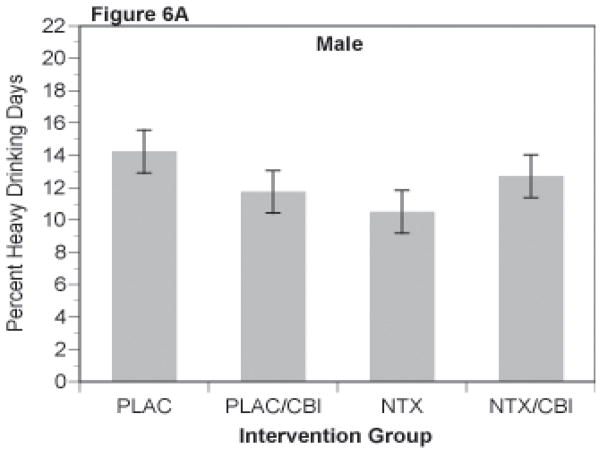
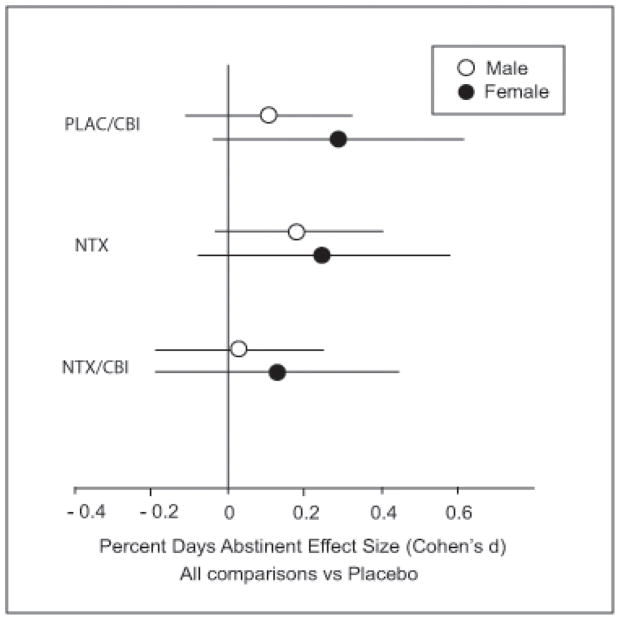
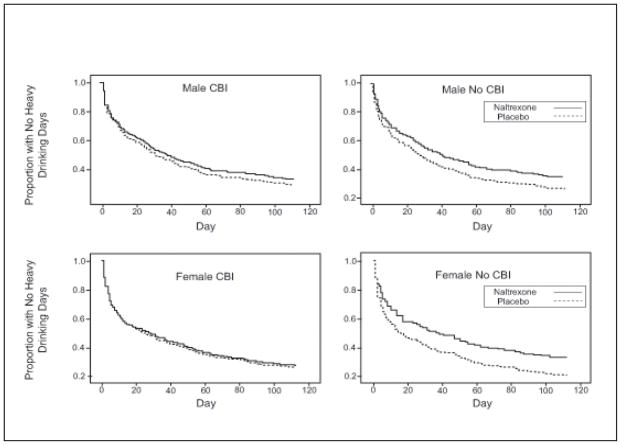
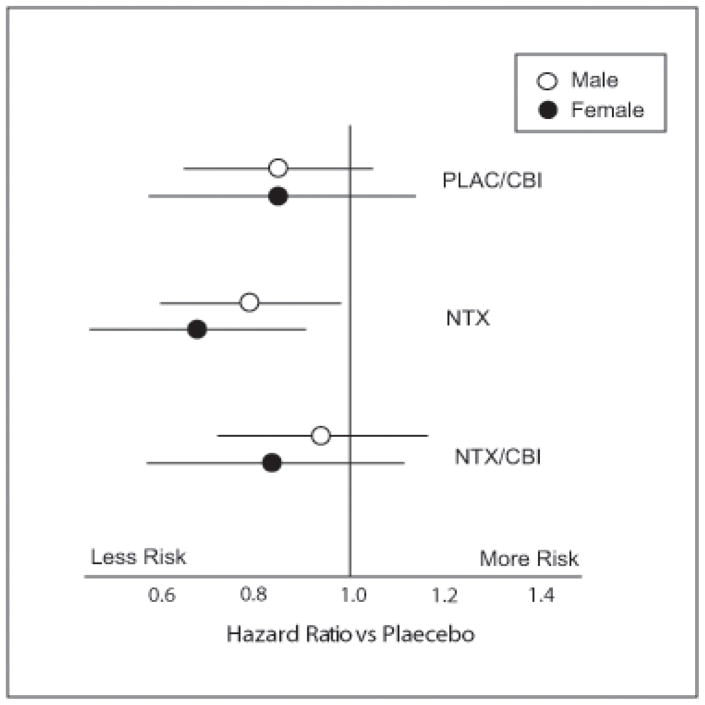
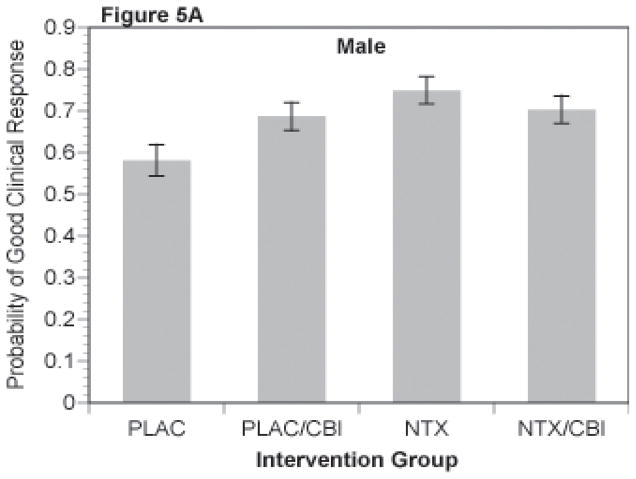
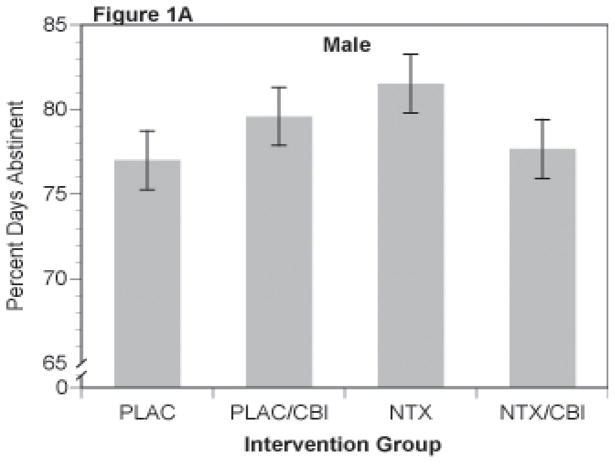
Compared to men, women reported a later age of onset of alcohol dependence by approximately 3 years, were significantly less likely to have had previous alcohol treatment, and drank fewer drinks per drinking day. Otherwise, there were no baseline gender differences in drinking measures. Outcome analyses of 2 primary (percent days abstinent and time to first heavy drinking day) and 2 secondary (good clinical response and percent heavy drinking days) drinking measures yielded the same overall pattern in each gender as that observed in the parent COMBINE study report. That is, only the naltrexone by behavioral intervention interaction reached or approached significance in women as well as in men. There was a naltrexone main effect that was significant in both men and women in reduction in alcohol craving scores with naltrexone-treated subjects reporting lower craving than placebo-treated subjects.
This gender-focused analysis found that alcohol-dependent women responded to naltrexone with COMBINE's Medical Management, similar to the alcohol-dependent men, on a wide range of outcome measures. These results suggest that clinicians can feel comfortable prescribing naltrexone for alcohol dependence in both men and women. In this study, it is also notable that fewer women than men reported receiving any alcohol treatment prior to entry into the COMBINE study. Of note, women tend to go to primary health care more frequently than to specialty substance abuse programs for treatment, and so the benefit we confirm for women of the naltrexone and MM combination has practical implications for treating alcohol-dependent women.
很少有研究探讨特定行为或药物治疗酒精依赖的有效性方面的性别差异。本研究的目的是通过对国家多中心酒精相互作用研究(COMBINE)中公开获得的数据进行二次分析,评估特定行为和药物治疗单一或联合治疗时是否存在性别差异。
COMBINE 研究调查了 8 组患者(378 名女性,848 名男性)的酒精治疗情况,他们接受了医学管理(MM),为期 16 周的安慰剂、纳曲酮(100mg/天)、安非他酮(3g/天)或其与专家提供的联合行为干预相结合的治疗。我们分别为男性和女性检查了疗效指标,然后进行了总体分析,在分析中包括性别及其与治疗条件的相互作用。进行这些分析是为了确认在母体试验中报告的发现是否也与女性相关,并更仔细地检查以前未分析过性别影响的次要结果变量。
与男性相比,女性报告的酒精依赖发病年龄晚约 3 年,以前接受过酒精治疗的可能性显著较低,并且每天饮酒的饮酒量也较少。否则,在饮酒测量方面没有基线性别差异。2 个主要(无饮酒天数和首次重度饮酒天数)和 2 个次要(良好临床反应和重度饮酒天数百分比)饮酒测量结果的分析在每个性别中都产生了与母 COMBINE 研究报告中观察到的相同的总体模式。也就是说,只有纳曲酮与行为干预的相互作用在女性和男性中都达到或接近显著水平。在纳曲酮治疗组报告的较低渴望评分方面,纳曲酮的主要效应在男性和女性中都具有统计学意义。
这项以性别为重点的分析发现,与男性酒精依赖者一样,接受 COMBINE 医学管理的女性对一系列广泛的结果测量指标对纳曲酮有反应。这些结果表明,临床医生可以放心地为男性和女性开出纳曲酮治疗酒精依赖。在这项研究中,值得注意的是,进入 COMBINE 研究之前,报告接受任何酒精治疗的女性少于男性。值得注意的是,女性往往比男性更频繁地去初级保健而不是专门的药物滥用项目接受治疗,因此我们确认的纳曲酮和 MM 联合治疗对女性的益处对治疗酒精依赖的女性具有实际意义。