Department of Molecular, Cell and Developmental Biology, University of California Santa Cruz, Santa Cruz, CA 95064, USA.
Curr Opin Neurobiol. 2011 Feb;21(1):169-74. doi: 10.1016/j.conb.2010.07.010. Epub 2010 Aug 20.
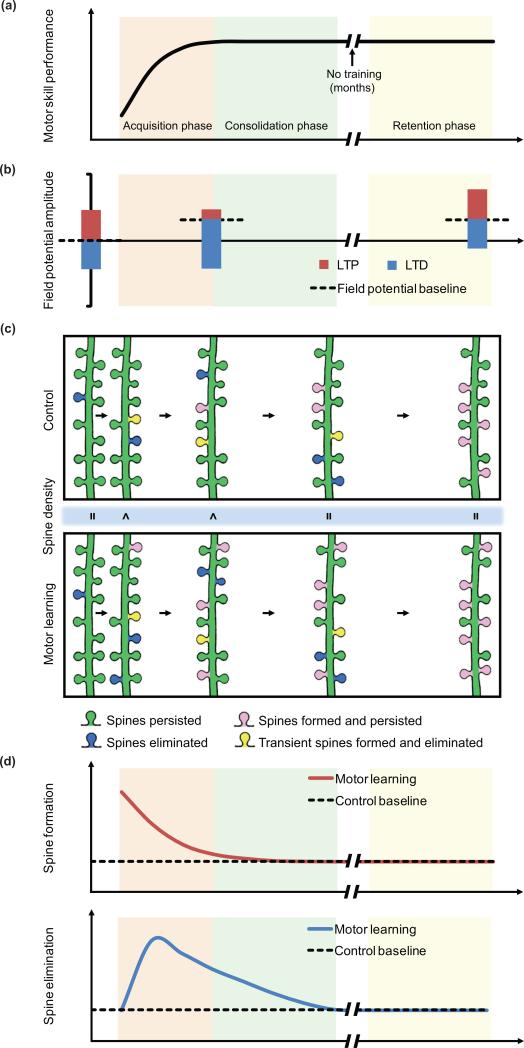
Dendritic spines are the postsynaptic sites of the majority of excitatory synapses in the mammalian central nervous system. The morphology and dynamics of dendritic spines change throughout the lifespan of animals, in response to novel experiences and neuropathologies. New spines form rapidly as animals learn new tasks or experience novel sensory stimulations. This is followed by a selective elimination of previously existing spines, leading to significant synaptic remodeling. In the brain damaged by injuries or neurological diseases, spines in surviving cortical regions turn over substantially, potentially forming new synaptic connections to adopt the function lost in the damaged region. These findings suggest that spine plasticity plays important roles in the formation and maintenance of a functional neural circuitry.
树突棘是哺乳动物中枢神经系统中大多数兴奋性突触的后突触位点。树突棘的形态和动态在动物的整个生命周期中都会发生变化,以响应新的体验和神经病理学。当动物学习新任务或体验新的感觉刺激时,新的树突棘会迅速形成。随后,先前存在的树突棘会被选择性地消除,导致显著的突触重塑。在因损伤或神经疾病而受损的大脑中,存活的皮质区域中的树突棘会大量更替,可能会形成新的突触连接,以弥补受损区域丧失的功能。这些发现表明,树突棘可塑性在功能性神经回路的形成和维持中起着重要作用。