Department of Internal Medicine, Izmir Bozyaka Training and Research Hospital, Izmir, Turkiye.
Clinics (Sao Paulo). 2010 Jun;65(8):799-802. doi: 10.1590/s1807-59322010000800010.
To determine the effect of Helicobacter pylori (H. pylori) eradication on blood levels of high-sensitivity C-reactive protein (hs-CRP), macrophage migration inhibitory factor and fetuin-A in patients with dyspepsia who are concurrently infected with H. pylori.
H.pylori infection was diagnosed based on the 14C urea breath test (UBT) and histology. Lansoprazole 30 mg twice daily, amoxicillin 1 g twice daily, and clarithromycin 500 mg twice daily were given to all infected patients for 14 days; 14C UBT was then re-measured. In 30 subjects, migration inhibitory factor, fetuin-A and hs-CRP levels were examined before and after the eradication of H. pylori infection and compared to levels in 30 healthy subjects who tested negative for H. pylori infection.
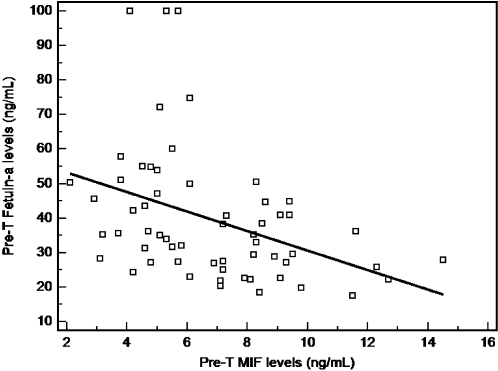
Age and sex distribution were comparable between patients and controls. Migration inhibitory factor and hs-CRP levels were higher, and fetuin-A levels were lower, in H. pylori-infected patients (p<0.05). Following eradication of H. pylori, migration inhibitory factor and hs-CRP levels were significantly decreased, whereas fetuin-A levels were increased. However, eradication of the organism did not change lipid levels (p>0.05).
These findings suggest that H. pylori eradication reduces the levels of pro-inflammatory cytokines such as migration inhibitory factor and hs-CRP and also results in a significant increase in anti-inflammatory markers such as fetuin-A.
确定根除幽门螺杆菌(H. pylori)对同时感染 H. pylori 的消化不良患者血液中高敏 C 反应蛋白(hs-CRP)、巨噬细胞移动抑制因子和胎球蛋白 A 水平的影响。
根据 14C 尿素呼气试验(UBT)和组织学诊断 H. pylori 感染。所有感染患者均给予兰索拉唑 30mg,每日 2 次;阿莫西林 1g,每日 2 次;克拉霉素 500mg,每日 2 次,共 14 天;然后重新测量 14C UBT。在 30 名受试者中,在根除 H. pylori 感染前后检查了移动抑制因子、胎球蛋白 A 和 hs-CRP 水平,并与 30 名 H. pylori 感染阴性的健康受试者进行了比较。
患者和对照组的年龄和性别分布无差异。与未感染 H. pylori 的患者相比,感染 H. pylori 的患者的移动抑制因子和 hs-CRP 水平更高,胎球蛋白 A 水平更低(p<0.05)。根除 H. pylori 后,移动抑制因子和 hs-CRP 水平显著降低,而胎球蛋白 A 水平升高。然而,根除该病原体并未改变血脂水平(p>0.05)。
这些发现表明,根除 H. pylori 可降低促炎细胞因子(如移动抑制因子和 hs-CRP)的水平,并导致抗炎标志物(如胎球蛋白 A)显著增加。