Key Laboratory of the Ministry of Education for Cell Biology and Tumor Cell Engineering, School of Life Sciences, Xiamen University, Xiamen, Fujian, China.
Cancer Res. 2010 Nov 1;70(21):8547-57. doi: 10.1158/0008-5472.CAN-10-1938. Epub 2010 Sep 17.
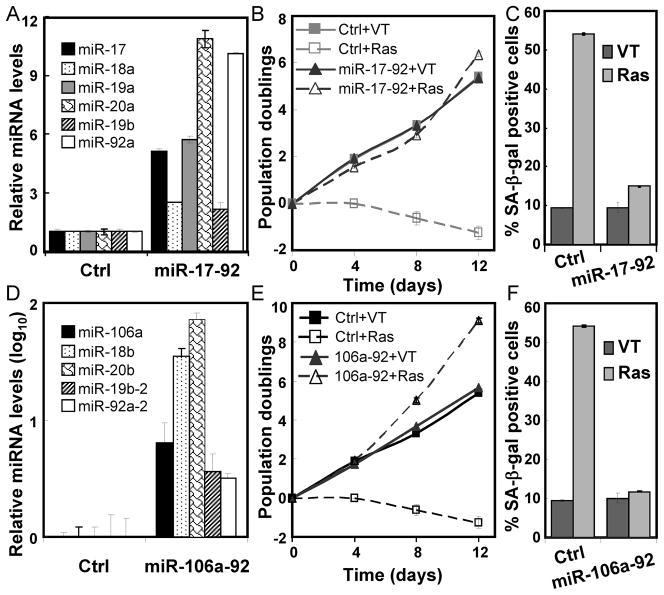
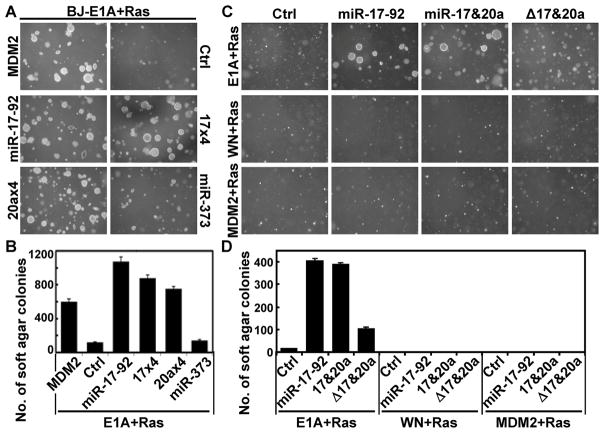
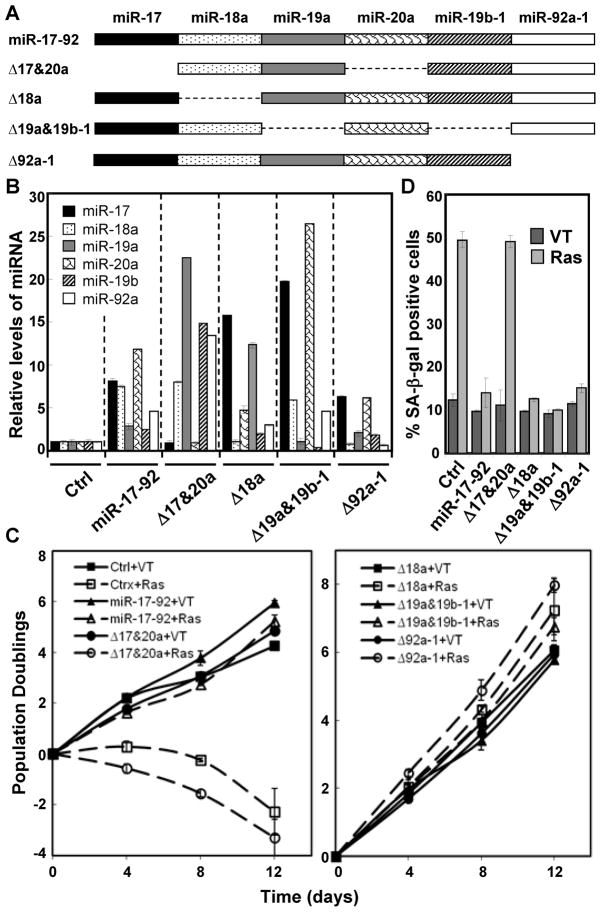
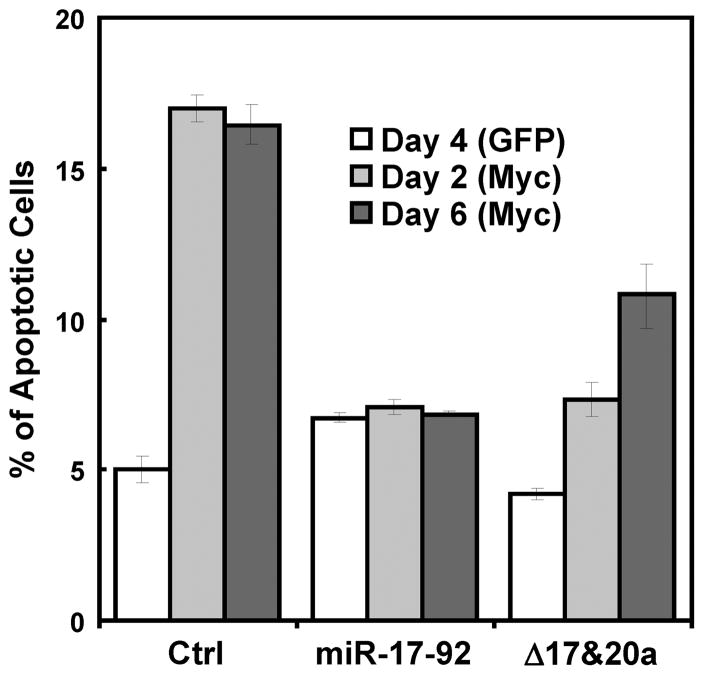
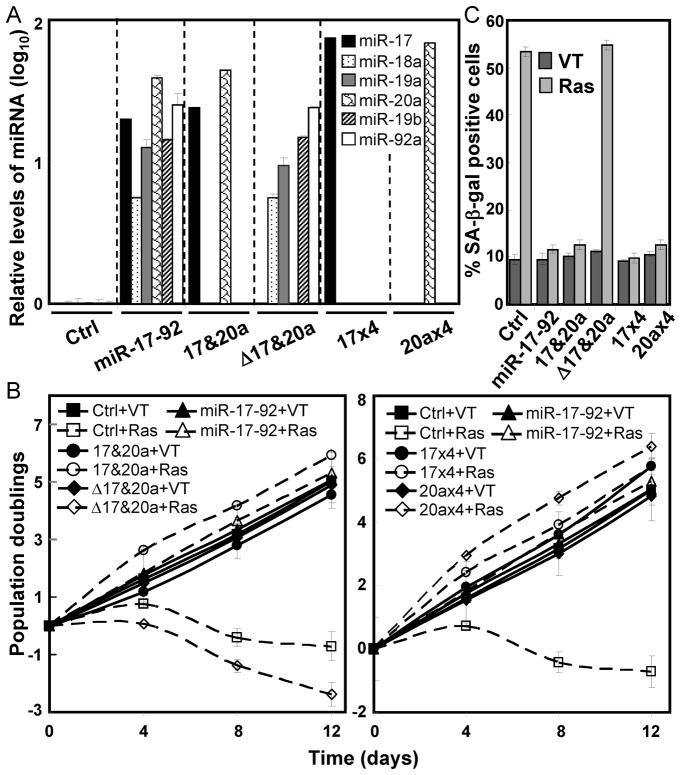
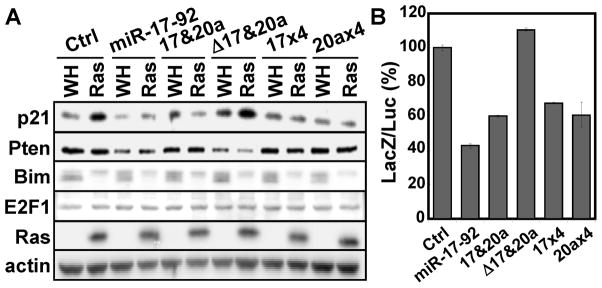
In mammalian cells, activation of oncogenes usually triggers innate tumor-suppressing defense mechanisms, including apoptosis and senescence, which are compromised by additional mutations before cancers are developed. The miR-17-92 gene cluster, a polycistron encoding six microRNAs (miRNA), is frequently overexpressed in human cancers and has been shown to promote several aspects of oncogenic transformation, including evasion of apoptosis. In the current study, we show a new role of miR-17-92 in inhibiting oncogenic ras-induced senescence. Further dissection of the miRNA components in this cluster reveals that the miR-17/20a seed family accounts for this antisenescence activity. miR-17 and miR-20a are both necessary and sufficient for conferring resistance to ras-induced senescence by directly targeting p21(WAF1), a key effector of senescence. By contrast, these components are not essential for the ability of miR-17-92 to evade Myc-induced apoptosis. Moreover, disruption of senescence by miR-17-92 or its miR-17/20a components leads to enhanced oncogenic transformation by activated ras in primary human cells. Taken together with previous reports that miR-17-92 inhibits apoptosis by suppressing Pten via the miR-19 components, our results indicate that this miRNA cluster promotes tumorigenesis by antagonizing both tumor-suppressing mechanisms, apoptosis, and senescence, through the activities of different miRNA components encoded in this cluster.
在哺乳动物细胞中,癌基因的激活通常会触发先天的肿瘤抑制防御机制,包括细胞凋亡和衰老,而这些机制在癌症发展之前会被额外的突变所破坏。miR-17-92 基因簇是一个编码六个 microRNA(miRNA)的多顺反子,在人类癌症中经常过表达,并已被证明能促进癌基因转化的多个方面,包括逃避细胞凋亡。在本研究中,我们展示了 miR-17-92 在抑制癌基因 ras 诱导的衰老中的新作用。进一步分析该簇中的 miRNA 成分表明,miR-17/20a 种子家族负责这种抗衰老活性。miR-17 和 miR-20a 都是赋予 ras 诱导的衰老抗性所必需和充分的,它们直接靶向衰老的关键效应子 p21(WAF1)。相比之下,这些成分对于 miR-17-92 逃避 Myc 诱导的细胞凋亡的能力并不是必需的。此外,miR-17-92 或其 miR-17/20a 成分破坏衰老会导致激活的 ras 在原代人细胞中引发更强的致癌转化。结合先前的报道,即 miR-17-92 通过 miR-19 成分抑制 Pten 来抑制细胞凋亡,我们的结果表明,该 miRNA 簇通过该簇中编码的不同 miRNA 成分的活性,拮抗细胞凋亡和衰老这两种肿瘤抑制机制,从而促进肿瘤发生。