Volen National Center for Complex Systems, Brandeis University, Waltham, MA, USA.
Brain Res. 2010 Dec 13;1365:48-65. doi: 10.1016/j.brainres.2010.09.070. Epub 2010 Sep 25.
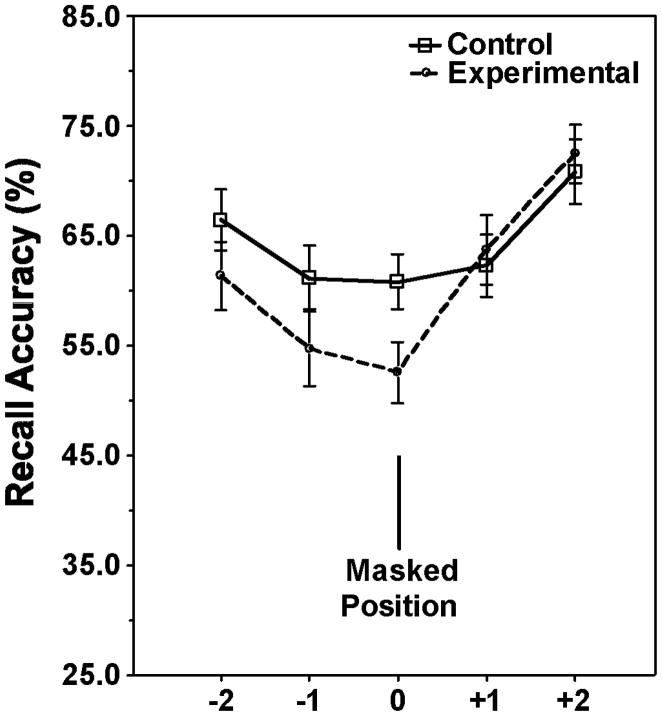
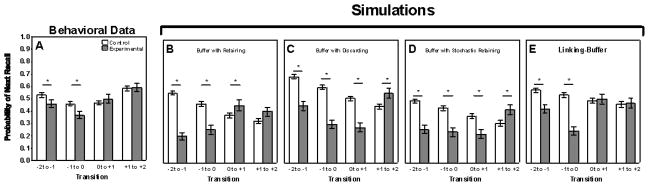
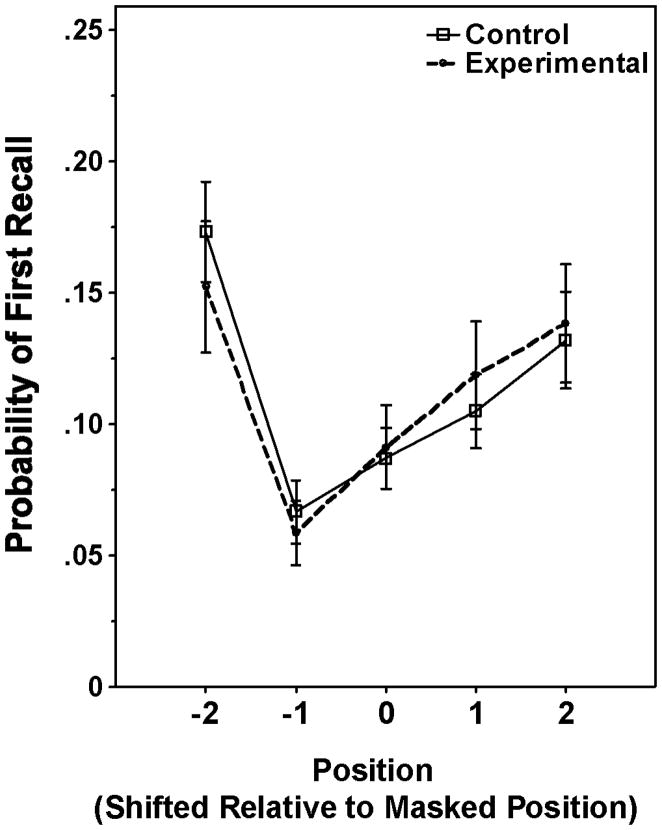
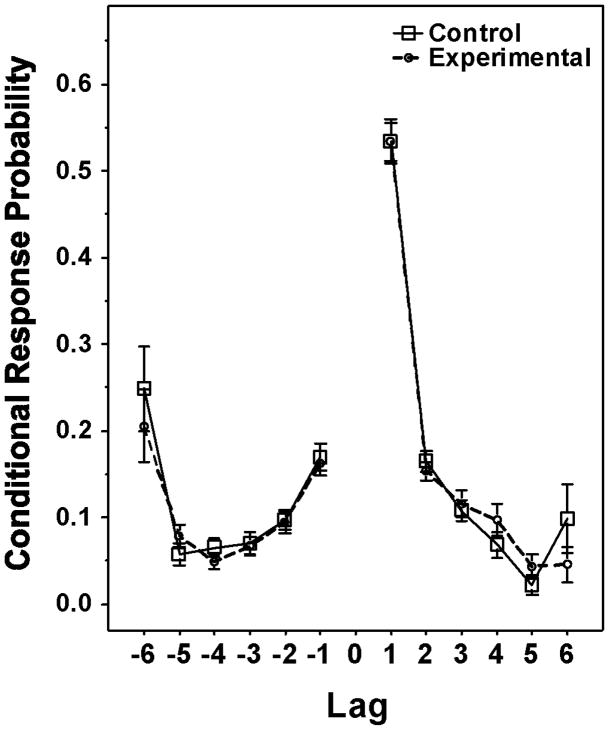
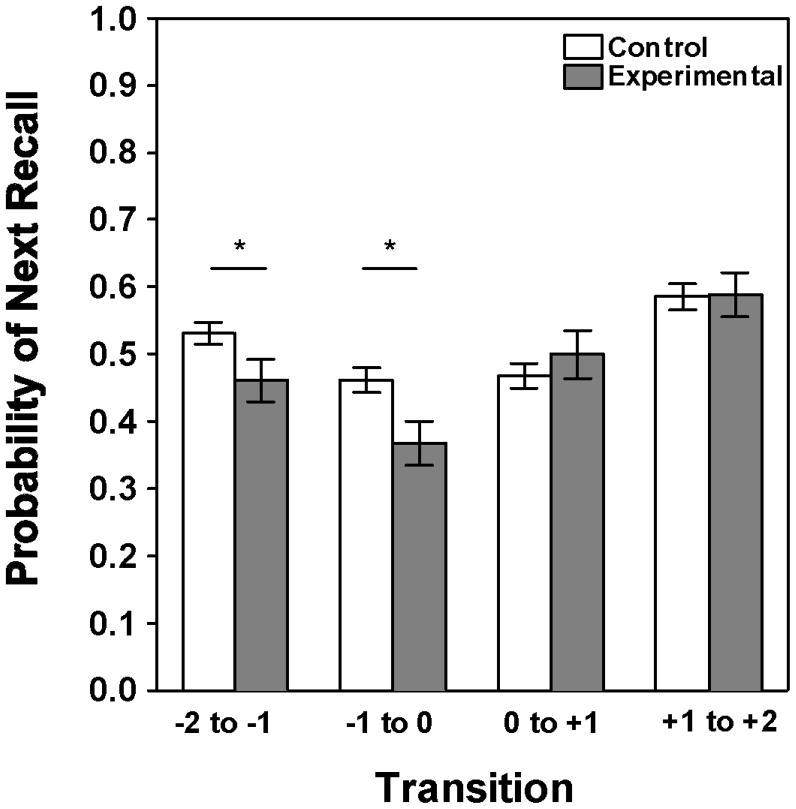
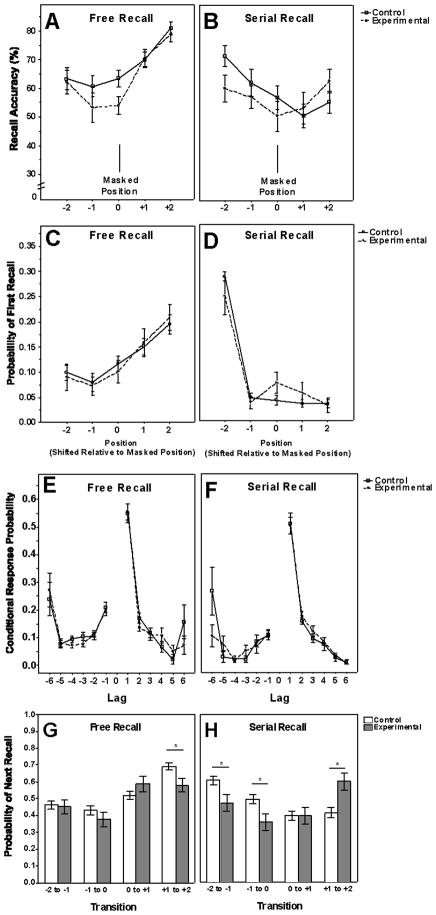
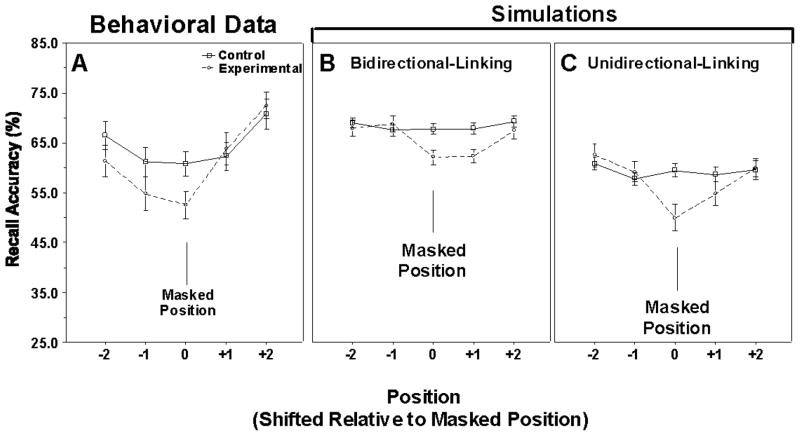
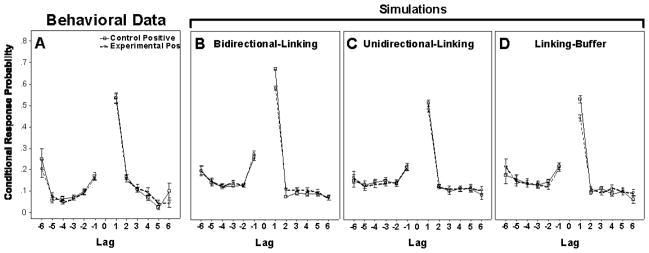
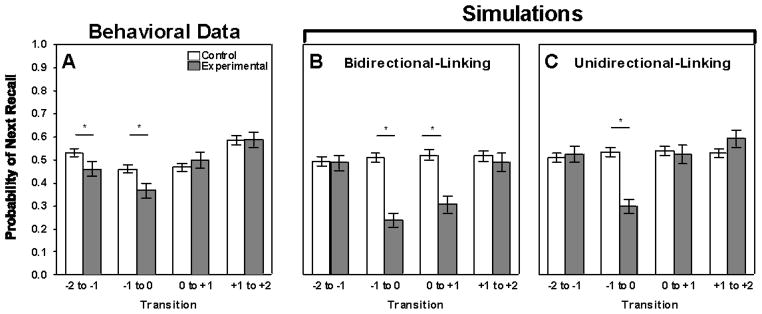
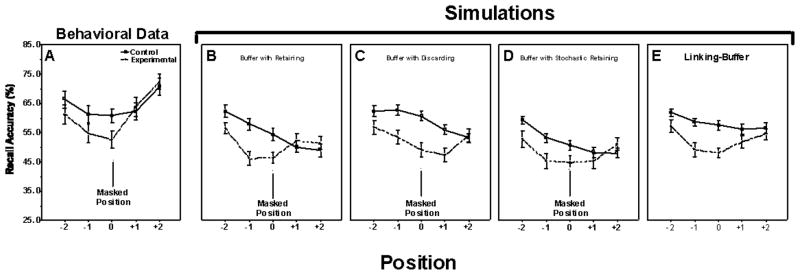
Poor hearing acuity reduces memory for spoken words, even when the words are presented with enough clarity for correct recognition. An "effortful hypothesis" suggests that the perceptual effort needed for recognition draws from resources that would otherwise be available for encoding the word in memory. To assess this hypothesis, we conducted a behavioral task requiring immediate free recall of word-lists, some of which contained an acoustically masked word that was just above perceptual threshold. Results show that masking a word reduces the recall of that word and words prior to it, as well as weakening the linking associations between the masked and prior words. In contrast, recall probabilities of words following the masked word are not affected. To account for this effect we conducted computational simulations testing two classes of models: Associative Linking Models and Short-Term Memory Buffer Models. Only a model that integrated both contextual linking and buffer components matched all of the effects of masking observed in our behavioral data. In this Linking-Buffer Model, the masked word disrupts a short-term memory buffer, causing associative links of words in the buffer to be weakened, affecting memory for the masked word and the word prior to it, while allowing links of words following the masked word to be spared. We suggest that these data account for the so-called "effortful hypothesis", where distorted input has a detrimental impact on prior information stored in short-term memory.
听力敏锐度差会降低对口语单词的记忆,即使这些单词的发音足够清晰,可以正确识别。一个“费力假说”表明,识别所需的感知努力会从原本可用于将单词编码到记忆中的资源中抽取。为了评估这个假说,我们进行了一项行为任务,要求立即自由回忆单词列表,其中一些列表包含一个声学掩蔽的单词,其刚好高于感知阈值。结果表明,掩蔽一个单词会降低对该单词和之前单词的回忆,同时削弱掩蔽词和之前单词之间的联系。相比之下,掩蔽词后面的单词的回忆概率不受影响。为了解释这种效应,我们进行了计算模拟测试了两类模型:联想链接模型和短期记忆缓冲区模型。只有一种整合了上下文链接和缓冲区组件的模型,与我们行为数据中观察到的掩蔽所有效应相匹配。在这个链接-缓冲区模型中,掩蔽词会破坏短期记忆缓冲区,导致缓冲区中单词的联想链接变弱,影响对掩蔽词及其之前单词的记忆,而允许掩蔽词后面的单词的链接不受影响。我们认为,这些数据解释了所谓的“费力假说”,即扭曲的输入会对短期记忆中存储的先前信息产生不利影响。