Sharif Mhd Saeed, Abbod Maysam, Amira Abbes, Zaidi Habib
Department of Electronic and Computer Engineering, School of Engineering and Design, Brunel University, West London, Uxbridge UB8 3PH, UK.
Int J Biomed Imaging. 2010;2010. doi: 10.1155/2010/105610. Epub 2010 Sep 26.
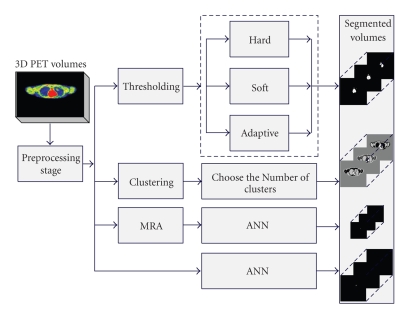
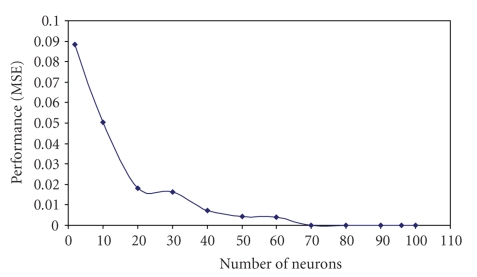
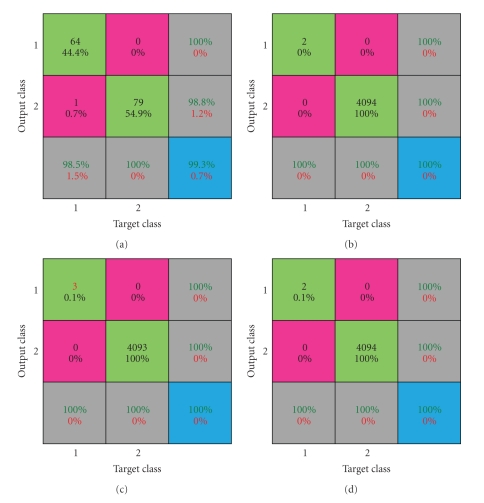
Tumour detection, classification, and quantification in positron emission tomography (PET) imaging at early stage of disease are important issues for clinical diagnosis, assessment of response to treatment, and radiotherapy planning. Many techniques have been proposed for segmenting medical imaging data; however, some of the approaches have poor performance, large inaccuracy, and require substantial computation time for analysing large medical volumes. Artificial intelligence (AI) approaches can provide improved accuracy and save decent amount of time. Artificial neural networks (ANNs), as one of the best AI techniques, have the capability to classify and quantify precisely lesions and model the clinical evaluation for a specific problem. This paper presents a novel application of ANNs in the wavelet domain for PET volume segmentation. ANN performance evaluation using different training algorithms in both spatial and wavelet domains with a different number of neurons in the hidden layer is also presented. The best number of neurons in the hidden layer is determined according to the experimental results, which is also stated Levenberg-Marquardt backpropagation training algorithm as the best training approach for the proposed application. The proposed intelligent system results are compared with those obtained using conventional techniques including thresholding and clustering based approaches. Experimental and Monte Carlo simulated PET phantom data sets and clinical PET volumes of nonsmall cell lung cancer patients were utilised to validate the proposed algorithm which has demonstrated promising results.
在疾病早期的正电子发射断层扫描(PET)成像中,肿瘤的检测、分类和定量对于临床诊断、治疗反应评估及放射治疗计划而言都是重要问题。已经提出了许多用于分割医学成像数据的技术;然而,其中一些方法性能不佳、误差较大,并且在分析大量医学数据时需要大量计算时间。人工智能(AI)方法可以提高准确性并节省大量时间。人工神经网络(ANN)作为最佳的AI技术之一,有能力精确地对病变进行分类和定量,并针对特定问题对临床评估进行建模。本文提出了ANN在小波域中用于PET体积分割的新应用。还介绍了在空间域和小波域中使用不同训练算法以及隐藏层中不同数量神经元的ANN性能评估。根据实验结果确定隐藏层中神经元的最佳数量,同时指出Levenberg-Marquardt反向传播训练算法是所提出应用的最佳训练方法。将所提出的智能系统结果与使用包括基于阈值处理和聚类的传统技术所获得的结果进行比较。利用实验和蒙特卡罗模拟的PET体模数据集以及非小细胞肺癌患者的临床PET体积来验证所提出的算法,并已显示出有前景的结果。