• 文献检索
  • 文档翻译
  • 深度研究
  • 学术资讯
  • Suppr Zotero 插件Zotero 插件
  • 邀请有礼
  • 套餐&价格
  • 历史记录
应用&插件
Suppr Zotero 插件Zotero 插件浏览器插件Mac 客户端Windows 客户端微信小程序
定价
高级版会员购买积分包购买API积分包
服务
文献检索文档翻译深度研究API 文档MCP 服务
关于我们
关于 Suppr公司介绍联系我们用户协议隐私条款
关注我们

Suppr 超能文献

核心技术专利:CN118964589B侵权必究
粤ICP备2023148730 号-1Suppr @ 2026

文献检索

告别复杂PubMed语法,用中文像聊天一样搜索,搜遍4000万医学文献。AI智能推荐,让科研检索更轻松。

立即免费搜索

文件翻译

保留排版,准确专业,支持PDF/Word/PPT等文件格式,支持 12+语言互译。

免费翻译文档

深度研究

AI帮你快速写综述,25分钟生成高质量综述,智能提取关键信息,辅助科研写作。

立即免费体验

眼部氢氟酸灼伤:动物模型、损伤机制及治疗

Ocular hydrofluoric acid burns: animal model, mechanism of injury and therapy.

作者信息

McCulley J P

机构信息

Southwestern Medical Center, Dallas, Texas.

出版信息

Trans Am Ophthalmol Soc. 1990;88:649-84.

PMID:2095035
原文链接:https://pmc.ncbi.nlm.nih.gov/articles/PMC1298602/
Abstract

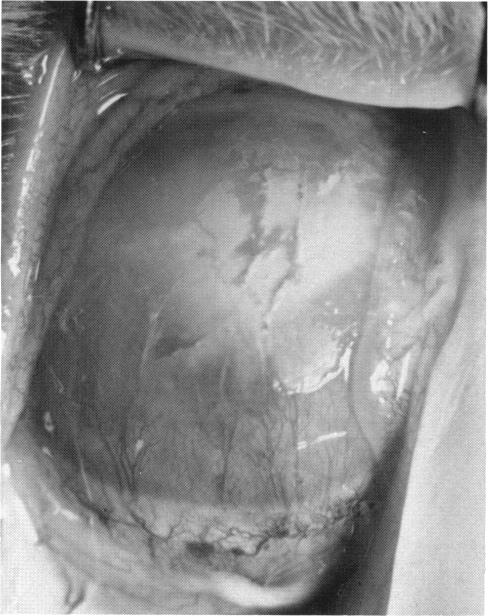
A series of ocular HF burns was produced in rabbits in order to clarify the nature of the injury and to provide a description of the animal model. Burned eyes were evaluated clinically and allowed to progress for up to 65 days before histologic examination. The mechanism of HF toxicity was investigated through the study of burns produced by chemicals chosen to mimic its pH effects, osmotic effects, and effects of the free fluoride ion alone. The severe progressive caustic effect of HF on the eyes was found to depend on the combination of pH and the toxic effects of the free fluoride ion, together causing extensive dose-related damage to superficial and deep structures of the eye. Mild burns caused reversible ocular injury; whereas more severe burns lead to corneal stromal scarring, vascularization, edema, formation of calcific band keratopathy plus iris and ciliary body fibrosis. An investigation was made of potential treatments for experimental ocular HF burns in rabbits. Topical ointments containing MgO or MgSO4 and irrigations with or subconjunctival injections of H2O or solutions containing NaCl, MgCl2, CaCl2, LaCl3, hyamine, zephiran, calcium gluconate or a mixture of divalent metal ions were tested for toxicity and for therapeutic value in ocular HF burns. Immediate single irrigation with H2O, NaCl or MgCl2 solution was most effective. Other therapeutic agents commonly used in HF skin burn therapy were either too toxic in normal eyes or caused additive damage to burned eyes.

摘要

为了阐明损伤的性质并提供该动物模型的描述,在兔子身上制造了一系列眼部氢氟酸烧伤。对烧伤的眼睛进行临床评估,并在组织学检查前让其发展长达65天。通过研究由模拟其pH值效应、渗透效应和单独游离氟离子效应的化学物质所造成的烧伤,来探究氢氟酸的毒性机制。发现氢氟酸对眼睛的严重进行性腐蚀作用取决于pH值和游离氟离子的毒性效应的结合,共同对眼睛的浅表和深部结构造成广泛的剂量相关损伤。轻度烧伤导致可逆性眼损伤;而更严重的烧伤则导致角膜基质瘢痕形成、血管化、水肿、钙化性带状角膜病变形成以及虹膜和睫状体纤维化。对兔子实验性眼部氢氟酸烧伤的潜在治疗方法进行了研究。测试了含有氧化镁或硫酸镁的局部药膏,以及用或结膜下注射水或含有氯化钠、氯化镁、氯化钙、氯化镧、海明、季铵盐、葡萄糖酸钙或二价金属离子混合物的溶液进行冲洗,以评估其在眼部氢氟酸烧伤中的毒性和治疗价值。立即单次用水、氯化钠或氯化镁溶液冲洗最为有效。其他常用于氢氟酸皮肤烧伤治疗的治疗剂在正常眼睛中要么毒性太大,要么对烧伤眼睛造成额外损伤。

https://cdn.ncbi.nlm.nih.gov/pmc/blobs/c396/1298602/db51b0520beb/taos00011-0683-a.jpg
https://cdn.ncbi.nlm.nih.gov/pmc/blobs/c396/1298602/55bc48ac12c3/taos00011-0669-a.jpg
https://cdn.ncbi.nlm.nih.gov/pmc/blobs/c396/1298602/1efca42e95ff/taos00011-0680-a.jpg
https://cdn.ncbi.nlm.nih.gov/pmc/blobs/c396/1298602/1dc097a37911/taos00011-0682-a.jpg
https://cdn.ncbi.nlm.nih.gov/pmc/blobs/c396/1298602/db51b0520beb/taos00011-0683-a.jpg
https://cdn.ncbi.nlm.nih.gov/pmc/blobs/c396/1298602/55bc48ac12c3/taos00011-0669-a.jpg
https://cdn.ncbi.nlm.nih.gov/pmc/blobs/c396/1298602/1efca42e95ff/taos00011-0680-a.jpg
https://cdn.ncbi.nlm.nih.gov/pmc/blobs/c396/1298602/1dc097a37911/taos00011-0682-a.jpg
https://cdn.ncbi.nlm.nih.gov/pmc/blobs/c396/1298602/db51b0520beb/taos00011-0683-a.jpg

相似文献

1
Ocular hydrofluoric acid burns: animal model, mechanism of injury and therapy.眼部氢氟酸灼伤:动物模型、损伤机制及治疗
Trans Am Ophthalmol Soc. 1990;88:649-84.
2
The efficacy of calcium gluconate in ocular hydrofluoric acid burns.
Hum Exp Toxicol. 1997 Apr;16(4):223-8. doi: 10.1177/096032719701600412.
3
Hydrofluoric acid burns of the eye.眼部氢氟酸灼伤
J Occup Med. 1983 Jun;25(6):447-50. doi: 10.1097/00043764-198306000-00008.
4
The role of calcium gluconate in the treatment of hydrofluoric acid eye burn.葡萄糖酸钙在氢氟酸眼部烧伤治疗中的作用。
Ann Emerg Med. 1993 Sep;22(9):1488-90. doi: 10.1016/s0196-0644(05)82003-7.
5
Use of an amphoteric lavage solution for emergency treatment of eye burns. First animal type experimental clinical considerations.两性冲洗液在眼部烧伤急救治疗中的应用。第一部分:动物类型实验的临床考量。
Burns. 2002 Dec;28(8):782-6. doi: 10.1016/s0305-4179(02)00194-8.
6
[Treatment of eye burns with a polyvalent proteolytic inhibitor].[用多价蛋白水解抑制剂治疗眼烧伤]
Klin Monbl Augenheilkd. 1990 Jul;197(1):1-5. doi: 10.1055/s-2008-1046233.
7
Ocular hydrofluoric acid burns.眼部氢氟酸烧伤
Am J Ophthalmol. 1992 Oct 15;114(4):420-3. doi: 10.1016/s0002-9394(14)71852-5.
8
Amniotic membrane extraction solution for ocular chemical burns.眼化学烧伤用羊膜提取液。
Clin Exp Ophthalmol. 2009 Dec;37(9):855-63. doi: 10.1111/j.1442-9071.2009.02159.x.
9
Use of amphoteric rinsing solution for treatment of ocular tissues exposed to nitrogen mustard.两性电解质冲洗液在氮芥眼组织暴露中的应用。
Acta Ophthalmol. 2013 Feb;91(1):e35-40. doi: 10.1111/j.1755-3768.2012.02533.x. Epub 2012 Oct 5.
10
Dimethyl sulfoxide but not indomethacin is efficient for healing in hydrofluoric acid eye burns.二甲基亚砜而非吲哚美辛对氢氟酸眼部灼伤的愈合有效。
Burns. 2017 Feb;43(1):232-244. doi: 10.1016/j.burns.2016.09.026. Epub 2016 Oct 27.

引用本文的文献

1
Exploring the therapeutic potential: sinomenine and melatonin in alkali-induced corneal burns.探究治疗潜力:盐酸青藤碱和褪黑素在碱性角膜烧伤中的作用。
Int Ophthalmol. 2024 Nov 10;44(1):422. doi: 10.1007/s10792-024-03327-y.
2
A case of chemical eye injuries and aspiration pneumonia caused by occupational acute chemical poisoning.一例职业性急性化学中毒所致化学性眼外伤及吸入性肺炎病例。
World J Emerg Med. 2023;14(1):83-84. doi: 10.5847/wjem.j.1920-8642.2023.007.
3
International Harmonization of Nomenclature and Diagnostic Criteria (INHAND): Nonproliferative and Proliferative Lesions of the Rabbit.

本文引用的文献

1
An experimental study on the evaluation of hydrosulphosol in the treatment of ocular injuries due to chemical burns.氢硫酸溶胶治疗化学烧伤所致眼外伤的评估实验研究
Trans Am Soc Ophthalmol Otolaryngol Allergy. 1951;49:557-94.
2
Toxicological and metabolic effects of fluorine-containing compounds.
Ind Med Surg. 1950 Nov;19(11):535-9.
3
TREATMENT OF HYDROFLUORIC ACID BURNS.氢氟酸烧伤的治疗
J Occup Med. 1965 May;7:193-5. doi: 10.1097/00043764-196505000-00004.
国际命名与诊断标准协调(INHAND):兔的非增殖性和增殖性病变
J Toxicol Pathol. 2021;34(3 Suppl):183S-292S. doi: 10.1293/tox.34.183S. Epub 2021 Sep 28.
4
Evaluation of Clinical and Histological Outcomes of Adipose-Derived Mesenchymal Stem Cells in a Rabbit Corneal Alkali Burn Model.兔角膜碱烧伤模型中脂肪间充质干细胞的临床和组织学结果评估
Stem Cells Int. 2021 Mar 7;2021:6610023. doi: 10.1155/2021/6610023. eCollection 2021.
5
Management Strategies of Ocular Chemical Burns: Current Perspectives.眼部化学烧伤的管理策略:当前观点
Clin Ophthalmol. 2020 Sep 15;14:2687-2699. doi: 10.2147/OPTH.S235873. eCollection 2020.
6
An update on chemical eye burns.眼部化学灼伤的最新进展
Eye (Lond). 2019 Sep;33(9):1362-1377. doi: 10.1038/s41433-019-0456-5. Epub 2019 May 13.
7
Guidelines for Bystander First Aid 2016.《2016年旁观者急救指南》
Singapore Med J. 2017 Jul;58(7):411-417. doi: 10.11622/smedj.2017062.
8
Current and Upcoming Therapies for Ocular Surface Chemical Injuries.眼表化学伤的当前和即将到来的治疗方法。
Ocul Surf. 2017 Jan;15(1):48-64. doi: 10.1016/j.jtos.2016.09.002. Epub 2016 Sep 17.
9
Treatment of hydrofluoric acid exposure to the eye.眼部氢氟酸暴露的治疗。
Int J Ophthalmol. 2015 Feb 18;8(1):157-61. doi: 10.3980/j.issn.2222-3959.2015.01.28. eCollection 2015.
10
The ocular surface chemical burns.眼表化学伤。
J Ophthalmol. 2014;2014:196827. doi: 10.1155/2014/196827. Epub 2014 Jul 1.
4
HYDROFLUORIC ACID BURNS OF THE HANDS.手部氢氟酸烧伤
Br J Plast Surg. 1964 Jan;17:53-9. doi: 10.1016/s0007-1226(64)80010-2.
5
HYDROGEN FLUORIDE (HF) INHALATION AND BURNS.
Arch Environ Health. 1963 Oct;7:445-7. doi: 10.1080/00039896.1963.10663563.
6
Control of the fluorine hazard.氟危害的控制。
Br J Ind Med. 1956 Oct;13(4):301-3. doi: 10.1136/oem.13.4.301.
7
Hydrofluoric acid burns of the eye.眼部氢氟酸灼伤
J Occup Med. 1983 Jun;25(6):447-50. doi: 10.1097/00043764-198306000-00008.
8
Hydrofluoric acid burn treatment.氢氟酸烧伤治疗
Am Ind Hyg Assoc J. 1966 Mar-Apr;27(2):166-71. doi: 10.1080/00028896609342811.
9
Acid burns of the eye.眼部酸烧伤
Am J Ophthalmol. 1968 Oct;66(4):654-7. doi: 10.1016/0002-9394(68)91285-3.
10
Hydrofluoric acid burns.氢氟酸烧伤
Plast Reconstr Surg. 1971 Aug;48(2):107-12. doi: 10.1097/00006534-197108000-00001.