• 文献检索
  • 文档翻译
  • 深度研究
  • 学术资讯
  • Suppr Zotero 插件Zotero 插件
  • 邀请有礼
  • 套餐&价格
  • 历史记录
应用&插件
Suppr Zotero 插件Zotero 插件浏览器插件Mac 客户端Windows 客户端微信小程序
定价
高级版会员购买积分包购买API积分包
服务
文献检索文档翻译深度研究API 文档MCP 服务
关于我们
关于 Suppr公司介绍联系我们用户协议隐私条款
关注我们

Suppr 超能文献

核心技术专利:CN118964589B侵权必究
粤ICP备2023148730 号-1Suppr @ 2026

文献检索

告别复杂PubMed语法,用中文像聊天一样搜索,搜遍4000万医学文献。AI智能推荐,让科研检索更轻松。

立即免费搜索

文件翻译

保留排版,准确专业,支持PDF/Word/PPT等文件格式,支持 12+语言互译。

免费翻译文档

深度研究

AI帮你快速写综述,25分钟生成高质量综述,智能提取关键信息,辅助科研写作。

立即免费体验

阻塞性睡眠呼吸暂停综合征(OSAS)在口呼吸儿童中的表现。

Obstructive sleep apnea syndrome (OSAS) in mouth breathing children.

机构信息

Federal University of São Paulo - Medical School.

出版信息

Braz J Otorhinolaryngol. 2010 Sep-Oct;76(5):552-6. doi: 10.1590/S1808-86942010000500003.

DOI:10.1590/S1808-86942010000500003
PMID:20963335
原文链接:https://pmc.ncbi.nlm.nih.gov/articles/PMC9450721/
Abstract

UNLABELLED

It is well known that mouth breathing is associated with adenotonsillar hypertrophy - which is the main cause of obstructive sleep apnea among children. Despite the importance of this matter, there are only a handful of studies showing the relationship between OSAS and mouth breathing.

AIM

to determine the prevalence of obstructive sleep disorders in mouth breathing children and study its correlation with otorhinolaryngological findings.

STUDY DESIGN

Retrospective cohort study.

METHOD

Data analysis from 248 medical charts of mouth breathing children seen at the Pediatric Otolaryngologic Division of a large medical institution between the years of 2000 and 2006. All patients had nasofibroscopy and or Cavum radiographs and polysomnographic exams. According to the Apnea index, patients were classified as primary snorers (AI<1); and as OSAS (>1).

RESULTS

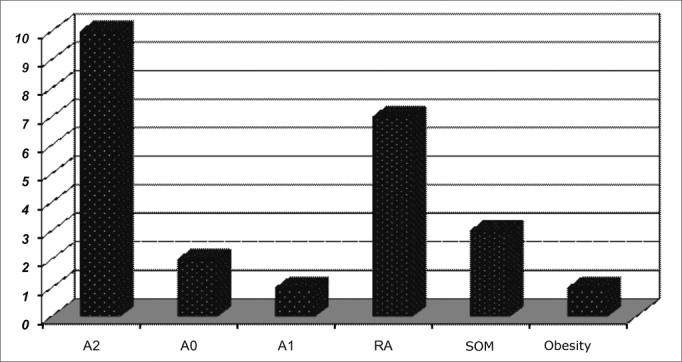
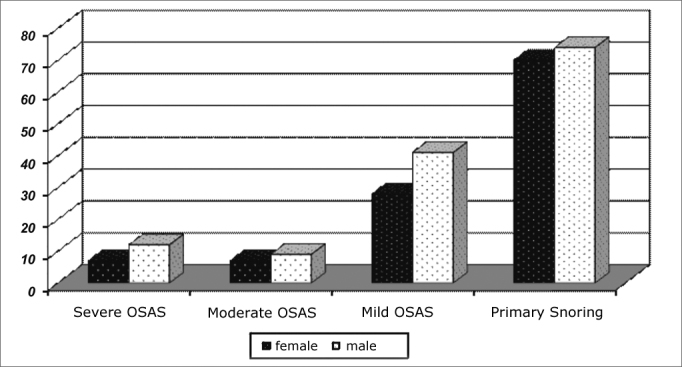
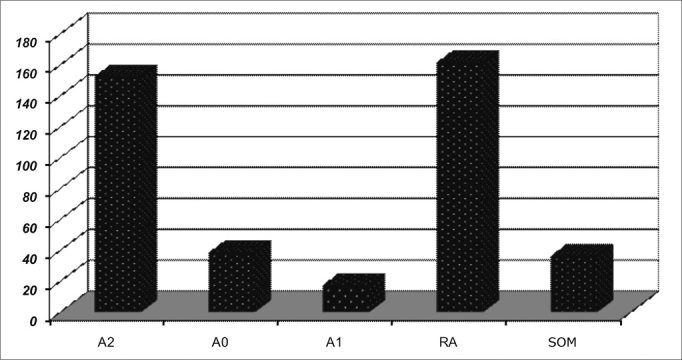
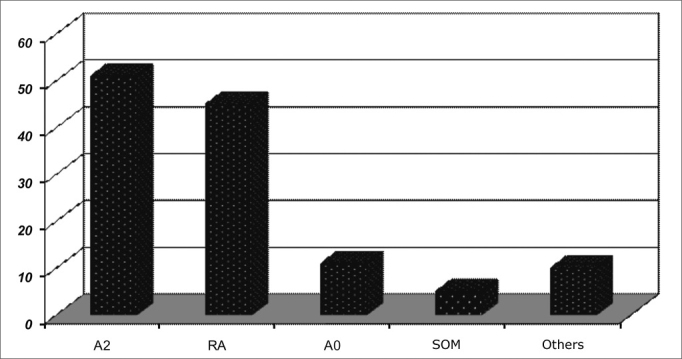
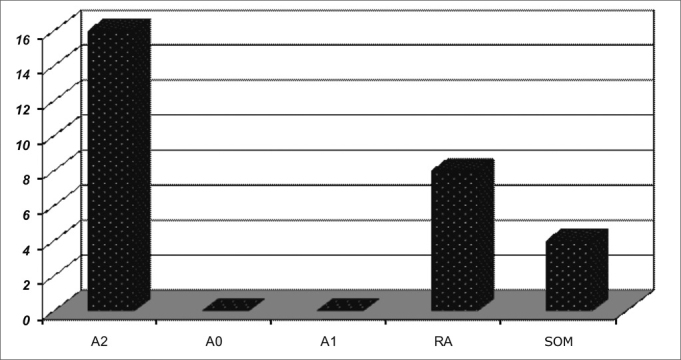
From 248 patients included in the study, 144 (58%) were primary snorers and 104 (42%) had OSAS. The most prevalent otorhinolaryngological findings were adenotonsillar hypertrophy (n=152; 61.2%), tonsilar hypertrophy (n=17; 6.8%), adenoid hypertrophy (n=37; 14.9%), rhinitis (n=155; 62.5%) and secretory otitis (n=36; 14.5%).

CONCLUSIONS

primary snoring and OSAS are frequent findings in mouth breathing children. The most frequent otorhinolaryngological disorder in children with OSAS is adenotonsillar hypertrophy with or without rhinitis.

摘要

目的

确定张口呼吸儿童阻塞性睡眠障碍的患病率,并研究其与耳鼻喉科发现的相关性。

研究设计

回顾性队列研究。

方法

对 2000 年至 2006 年间在一家大型医疗机构的儿科耳鼻喉科分部就诊的 248 例张口呼吸儿童的病历进行数据分析。所有患者均接受了鼻纤维镜检查和/或 Cavum 射线照相和多导睡眠图检查。根据呼吸暂停指数,患者被分为单纯性鼾症(AI<1)和阻塞性睡眠呼吸暂停低通气综合征(>1)。

结果

在纳入研究的 248 例患者中,144 例(58%)为单纯性鼾症,104 例(42%)为阻塞性睡眠呼吸暂停低通气综合征。最常见的耳鼻喉科发现是腺样体扁桃体肥大(n=152;61.2%)、扁桃体肥大(n=17;6.8%)、腺样体肥大(n=37;14.9%)、鼻炎(n=155;62.5%)和分泌性中耳炎(n=36;14.5%)。

结论

张口呼吸儿童中,单纯性鼾症和阻塞性睡眠呼吸暂停低通气综合征很常见。阻塞性睡眠呼吸暂停低通气综合征患儿最常见的耳鼻喉科疾病是腺样体扁桃体肥大,伴或不伴鼻炎。
https://cdn.ncbi.nlm.nih.gov/pmc/blobs/0192/9450721/41fccdfc98bd/gr7.jpg
https://cdn.ncbi.nlm.nih.gov/pmc/blobs/0192/9450721/77611f83fe6a/gr1.jpg
https://cdn.ncbi.nlm.nih.gov/pmc/blobs/0192/9450721/df721f57fcd7/gr2.jpg
https://cdn.ncbi.nlm.nih.gov/pmc/blobs/0192/9450721/ebdb29d73318/gr3.jpg
https://cdn.ncbi.nlm.nih.gov/pmc/blobs/0192/9450721/f2c2815113c2/gr4.jpg
https://cdn.ncbi.nlm.nih.gov/pmc/blobs/0192/9450721/087113193cdb/gr5.jpg
https://cdn.ncbi.nlm.nih.gov/pmc/blobs/0192/9450721/0a5c4d4a60b9/gr6.jpg
https://cdn.ncbi.nlm.nih.gov/pmc/blobs/0192/9450721/41fccdfc98bd/gr7.jpg
https://cdn.ncbi.nlm.nih.gov/pmc/blobs/0192/9450721/77611f83fe6a/gr1.jpg
https://cdn.ncbi.nlm.nih.gov/pmc/blobs/0192/9450721/df721f57fcd7/gr2.jpg
https://cdn.ncbi.nlm.nih.gov/pmc/blobs/0192/9450721/ebdb29d73318/gr3.jpg
https://cdn.ncbi.nlm.nih.gov/pmc/blobs/0192/9450721/f2c2815113c2/gr4.jpg
https://cdn.ncbi.nlm.nih.gov/pmc/blobs/0192/9450721/087113193cdb/gr5.jpg
https://cdn.ncbi.nlm.nih.gov/pmc/blobs/0192/9450721/0a5c4d4a60b9/gr6.jpg
https://cdn.ncbi.nlm.nih.gov/pmc/blobs/0192/9450721/41fccdfc98bd/gr7.jpg

相似文献

1
Obstructive sleep apnea syndrome (OSAS) in mouth breathing children.阻塞性睡眠呼吸暂停综合征(OSAS)在口呼吸儿童中的表现。
Braz J Otorhinolaryngol. 2010 Sep-Oct;76(5):552-6. doi: 10.1590/S1808-86942010000500003.
2
Prevalence of obstructive sleep apnea syndrome and associated symptoms in 3--11-year-old Turkish children.3至11岁土耳其儿童阻塞性睡眠呼吸暂停综合征及相关症状的患病率
Pediatr Pulmonol. 2005 Mar;39(3):251-6. doi: 10.1002/ppul.20179.
3
Risk factors of obstructive sleep apnea syndrome in children.儿童阻塞性睡眠呼吸暂停综合征的危险因素。
J Otolaryngol Head Neck Surg. 2020 Mar 4;49(1):11. doi: 10.1186/s40463-020-0404-1.
4
Polysomnographic findings are associated with cephalometric measurements in mouth-breathing children.多导睡眠图的结果与口呼吸儿童的头影测量值有关。
J Clin Sleep Med. 2009 Dec 15;5(6):554-61.
5
[Prevalence of childhood obstructive sleep apnoea syndrome in a referral sleep unit].[转诊睡眠科儿童阻塞性睡眠呼吸暂停低通气综合征的患病率]
Rev Neurol. 2023 May 1;76(9):279-285. doi: 10.33588/rn.7609.2023076.
6
A case-control study to investigate the prevalence of obstructive sleep apnea and the utility of the Sleep-Related Breathing Disorder scale of the Pediatric Sleep Questionnaire in children and young people with epilepsy.一项病例对照研究,旨在调查阻塞性睡眠呼吸暂停的患病率,以及《儿童睡眠问卷》中的睡眠相关呼吸障碍量表在癫痫儿童和青少年中的应用。
J Clin Sleep Med. 2024 Jul 1;20(7):1039-1047. doi: 10.5664/jcsm.11054.
7
Technical report: diagnosis and management of childhood obstructive sleep apnea syndrome.技术报告:儿童阻塞性睡眠呼吸暂停综合征的诊断与管理
Pediatrics. 2002 Apr;109(4):e69. doi: 10.1542/peds.109.4.e69.
8
Natural history of snoring and obstructive sleep apnea in Thai school-age children.泰国学龄儿童打鼾及阻塞性睡眠呼吸暂停的自然病史
Pediatr Pulmonol. 2005 May;39(5):415-20. doi: 10.1002/ppul.20207.
9
Snoring and obstructive sleep apnea in Thai school-age children: prevalence and predisposing factors.泰国学龄儿童的打鼾与阻塞性睡眠呼吸暂停:患病率及诱发因素
Pediatr Pulmonol. 2001 Sep;32(3):222-7. doi: 10.1002/ppul.1112.
10
Inability of clinical history to distinguish primary snoring from obstructive sleep apnea syndrome in children.临床病史无法区分儿童原发性打鼾与阻塞性睡眠呼吸暂停低通气综合征。
Chest. 1995 Sep;108(3):610-8. doi: 10.1378/chest.108.3.610.

引用本文的文献

1
Orofacial Myofunctional Therapy: Investigating a Novel Therapeutic Approach for Pediatric Obstructive Sleep Apnea in Children with and Without Down Syndrome-A Study Protocol.口面部肌功能治疗:探索一种针对患有和未患有唐氏综合征的儿童阻塞性睡眠呼吸暂停的新型治疗方法——一项研究方案
Children (Basel). 2025 Jun 6;12(6):737. doi: 10.3390/children12060737.
2
Association between the habitual lip and tongue posture, clinical characteristics, and sleep-related problems in infants with Trisomy 21.21三体综合征婴儿的习惯性唇舌姿势、临床特征与睡眠相关问题之间的关联
Codas. 2025 Mar 31;37(3):e20240095. doi: 10.1590/2317-1782/e20240095pt. eCollection 2025.
3

本文引用的文献

1
Sleep habits and risk factors for sleep-disordered breathing in infants and young toddlers in Louisville, Kentucky.肯塔基州路易斯维尔市婴幼儿的睡眠习惯与睡眠呼吸障碍的风险因素
Sleep Med. 2006 Apr;7(3):211-9. doi: 10.1016/j.sleep.2005.11.003. Epub 2006 Mar 27.
2
Diagnostic approach to obstructive sleep apnea in children.儿童阻塞性睡眠呼吸暂停的诊断方法
Sleep Med Rev. 1998 Nov;2(4):255-69. doi: 10.1016/s1087-0792(98)90012-0.
3
Prevalence of snoring and symptoms of sleep-disordered breathing in primary school children in istanbul.
Sleep Apnea Syndrome in Children: A Retrospective Study of 419 Cases and Polysomnographic Findings with Implications for Rapid Treatment.
儿童睡眠呼吸暂停综合征:419例回顾性研究及多导睡眠图结果对快速治疗的启示
Children (Basel). 2025 Feb 12;12(2):222. doi: 10.3390/children12020222.
4
Comparison of infrared thermography of the face between mouth-breathing and nasal-breathing children.口呼吸儿童与鼻呼吸儿童面部红外热成像的比较。
Eur Arch Otorhinolaryngol. 2025 Feb;282(2):1051-1060. doi: 10.1007/s00405-024-09038-5. Epub 2024 Oct 21.
5
Mouth Breathing and Its Impact on Atypical Swallowing: A Systematic Review and Meta-Analysis.口呼吸及其对非典型吞咽的影响:一项系统评价与荟萃分析
Dent J (Basel). 2024 Jan 23;12(2):21. doi: 10.3390/dj12020021.
6
Comparison of superior airway dimensions and cephalometric anatomic landmarks between 8-12-year-old children with obstructive sleep apnea and healthy children using CBCT images.使用锥形束计算机断层扫描(CBCT)图像比较8至12岁阻塞性睡眠呼吸暂停儿童与健康儿童的上气道尺寸和头影测量解剖标志。
J Dent Res Dent Clin Dent Prospects. 2022 Winter;16(1):18-23. doi: 10.34172/joddd.2022.003. Epub 2022 May 29.
7
Quality of life related to residual snoring after adenotonsillectomy: a pilot study.腺样体扁桃体切除术后与残余打鼾相关的生活质量:一项初步研究。
Sleep Sci. 2021 Jan-Mar;14(4):330-336. doi: 10.5935/1984-0063.20200093.
8
Identification of Breathing Patterns through EEG Signal Analysis Using Machine Learning.通过机器学习对脑电图信号进行分析来识别呼吸模式。
Brain Sci. 2021 Feb 26;11(3):293. doi: 10.3390/brainsci11030293.
9
Sleep quality in children: questionnaires available in Brazil.儿童的睡眠质量:巴西可用的问卷调查
Sleep Sci. 2017 Oct-Dec;10(4):154-160. doi: 10.5935/1984-0063.20170027.
10
Unilateral Nasal Obstruction during Later Growth Periods Affects Craniofacial Muscles in Rats.生长后期的单侧鼻阻塞影响大鼠颅面肌。
Front Physiol. 2017 Jan 10;7:669. doi: 10.3389/fphys.2016.00669. eCollection 2016.
伊斯坦布尔小学生打鼾及睡眠呼吸障碍症状的患病率
Chest. 2004 Jul;126(1):19-24. doi: 10.1378/chest.126.1.19.
4
The nose and sleep-disordered breathing: what we know and what we do not know.鼻子与睡眠呼吸紊乱:我们所知道的和我们不知道的。
Chest. 2003 Dec;124(6):2309-23. doi: 10.1378/chest.124.6.2309.
5
Gender differences in symptoms related to sleep apnea in a general population and in relation to referral to sleep clinic.普通人群中与睡眠呼吸暂停相关症状的性别差异以及与转诊至睡眠诊所的关系。
Chest. 2003 Jul;124(1):204-11. doi: 10.1378/chest.124.1.204.
6
Prevalence of habitual snoring and sleep-disordered breathing in preschool-aged children in an Italian community.意大利某社区学龄前儿童习惯性打鼾和睡眠呼吸障碍的患病率
J Pediatr. 2003 Apr;142(4):377-82. doi: 10.1067/mpd.2003.118.
7
Prevalence of obstructive sleep apnea syndrome in a cohort of 1,207 children of southern Italy.意大利南部1207名儿童队列中阻塞性睡眠呼吸暂停综合征的患病率
Chest. 2001 Dec;120(6):1930-5. doi: 10.1378/chest.120.6.1930.
8
Pediatric sleep disorders: new developments and evolving understanding.小儿睡眠障碍:新进展与不断演变的认识
Curr Opin Pulm Med. 2000 Nov;6(6):501-6. doi: 10.1097/00063198-200011000-00007.
9
Habitual snoring, OSA and craniofacial modification. Orthodontic clinical and diagnostic aspects in a case control study.习惯性打鼾、阻塞性睡眠呼吸暂停与颅面形态改变。一项病例对照研究中的正畸临床与诊断要点
Minerva Stomatol. 1999 Apr;48(4):125-37.
10
The effect of adenotonsillectomy on serum insulin-like growth factor-I and growth in children with obstructive sleep apnea syndrome.腺样体扁桃体切除术对阻塞性睡眠呼吸暂停综合征患儿血清胰岛素样生长因子-I及生长发育的影响
J Pediatr. 1999 Jul;135(1):76-80. doi: 10.1016/s0022-3476(99)70331-8.