Department of Chemical Engineering, McGill University, 3610 University, Montreal, Quebec, H3A 2B2, Canada.
Microb Cell Fact. 2010 Nov 1;9:81. doi: 10.1186/1475-2859-9-81.
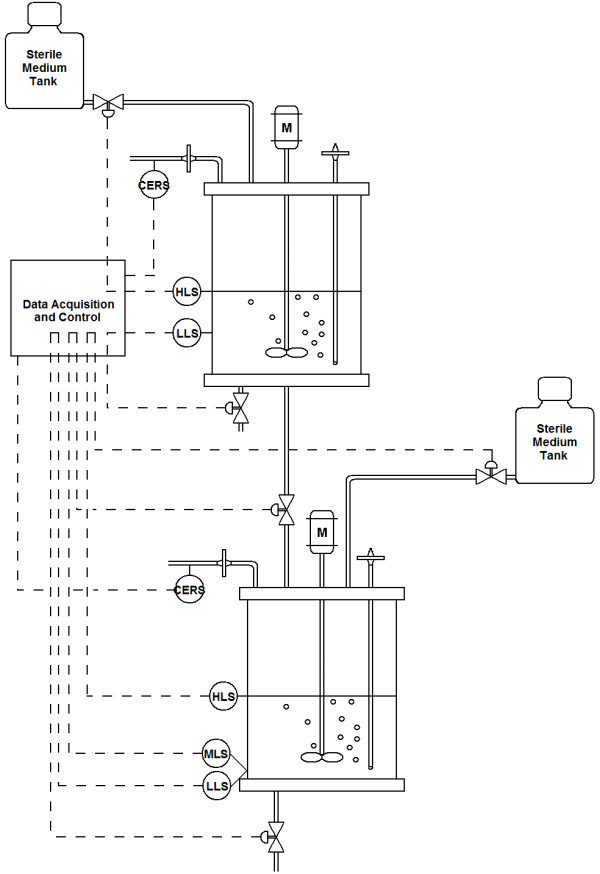
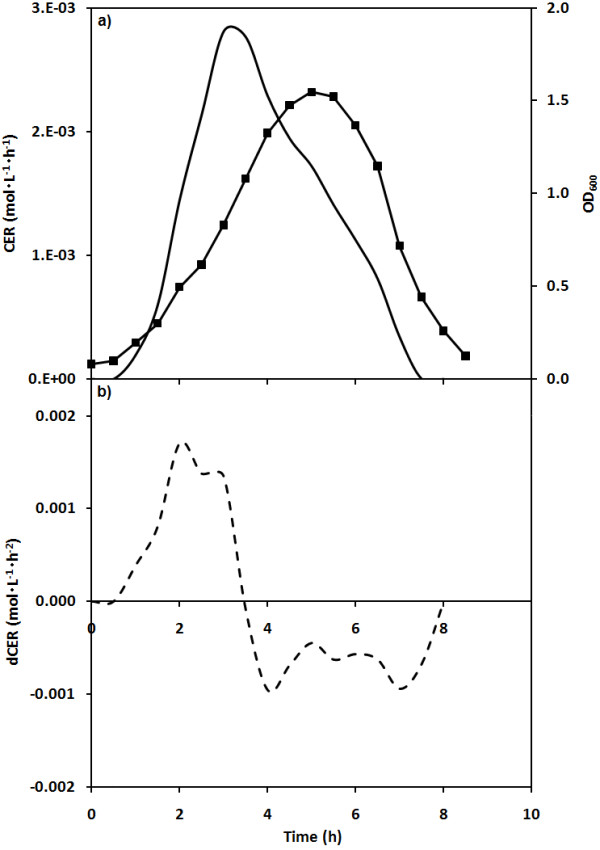
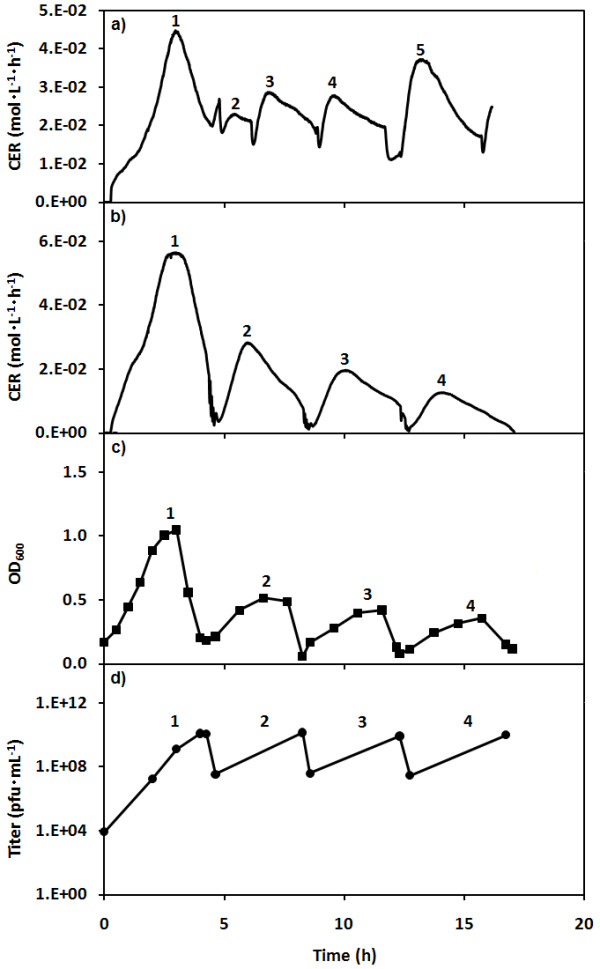
A two-stage, self-cycling process for the production of bacteriophages was developed. The first stage, containing only the uninfected host bacterium, was operated under self-cycling fermentation (SCF) conditions. This automated method, using the derivative of the carbon dioxide evolution rate (CER) as the control parameter, led to the synchronization of the host bacterium. The second stage, containing both the host and the phage, was operated using self-cycling infection (SCI) with CER and CER-derived data as the control parameters. When each infection cycle was terminated, phages were harvested and a new infection cycle was initiated by adding host cells from the SCF (first stage). This was augmented with fresh medium and the small amount of phages left from the previous cycle initiated the next infection cycle. Both stages were operated independently, except for this short period of time when the SCF harvest was added to the SCI to initiate the next cycle.
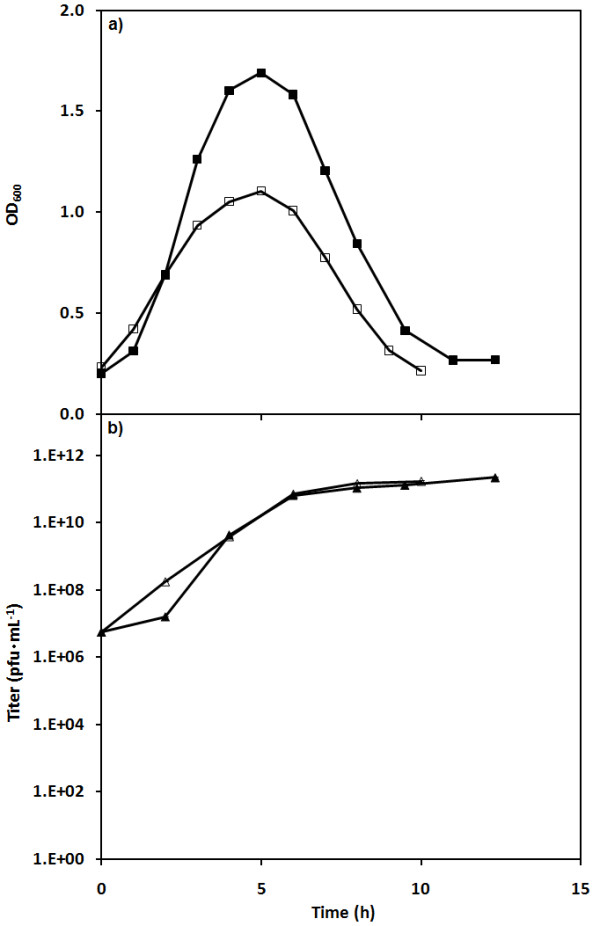
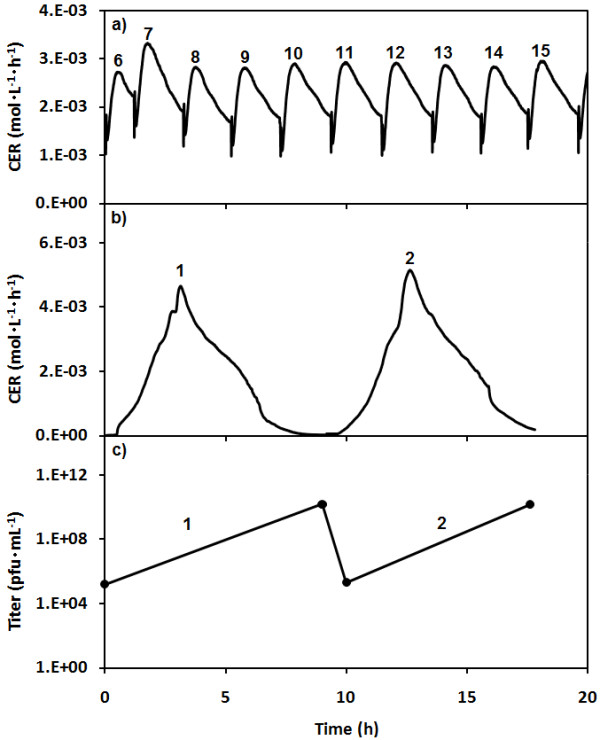
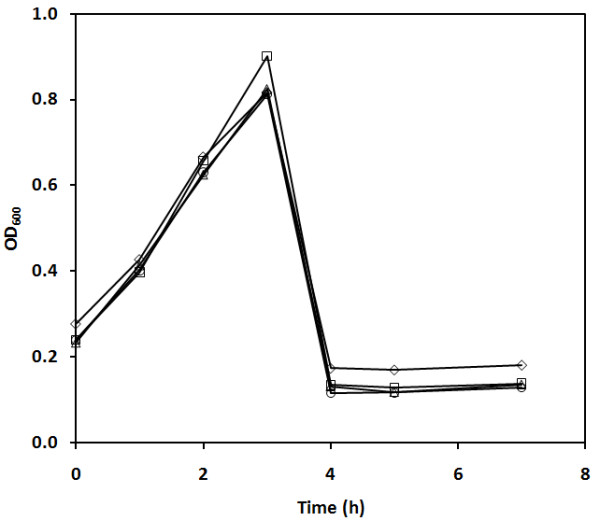
It was demonstrated that this mode of operation resulted in stable infection cycles if the growth of the host cells in the SCF was synchronized. The final phage titers obtained were reproducible among cycles and were as good as those obtained in batch productions performed under the same conditions (medium, temperature, initial multiplicity of infection, etc.). Moreover, phages obtained in different cycles showed no important difference in infectivity. Finally, it was shown that cell synchronization of the host cells in the first stage (SCF) not only maintained the volumetric productivity (phages per volume) but also led to higher specific productivity (phage per cell per hour) in the second stage (SCI).
Production of bacteriophage T4 in the semi-continuous, automated SCF/SCI system was efficient and reproducible from cycle to cycle. Synchronization of the host in the first stage prior to infection led to improvements in the specific productivity of phages in the second stage while maintaining the volumetric productivity. These results demonstrate the significant potential of this approach for both upstream and downstream process optimization.
开发了一种用于噬菌体生产的两阶段自循环工艺。第一阶段仅包含未感染的宿主细菌,在自循环发酵(SCF)条件下运行。这种自动化方法使用二氧化碳释放率(CER)的导数作为控制参数,导致宿主细菌同步。第二阶段同时包含宿主和噬菌体,使用自循环感染(SCI),以 CER 和 CER 衍生数据作为控制参数。当每个感染周期结束时,收获噬菌体,并通过从 SCF(第一阶段)添加宿主细胞来启动新的感染周期。通过添加新鲜培养基和上一个周期留下的少量噬菌体来启动下一个感染周期。除了在 SCF 收获添加到 SCI 以启动下一个周期的这段短时间外,两个阶段都是独立运行的。
如果在 SCF 中宿主细胞的生长同步,则证明这种操作模式可导致稳定的感染周期。在不同周期中获得的噬菌体效价在循环之间具有可重复性,并且与在相同条件下进行的分批生产(培养基、温度、初始感染倍数等)获得的效价一样好。此外,不同周期中获得的噬菌体在感染力方面没有重要差异。最后,证明第一阶段(SCF)中宿主细胞的同步不仅维持了体积生产力(每体积噬菌体),而且在第二阶段(SCI)中导致更高的比生产力(每细胞每小时噬菌体)。
在半自动连续 SCF/SCI 系统中生产噬菌体 T4 是高效且可重复的,从一个周期到另一个周期。在感染之前在第一阶段对宿主进行同步可提高第二阶段噬菌体的比生产力,同时维持体积生产力。这些结果表明,该方法在上下游工艺优化方面具有重要潜力。