Ling Xuefeng B, Lau Kenneth, Deshpande Chetan, Park Jane L, Milojevic Diana, Macaubas Claudia, Xiao Chris, Lopez-Avila Viorica, Kanegaye John, Burns Jane C, Cohen Harvey, Schilling James, Mellins Elizabeth D
Clin Proteomics. 2010 Dec;6(4):175-193. doi: 10.1007/s12014-010-9058-8. Epub 2010 Sep 30.
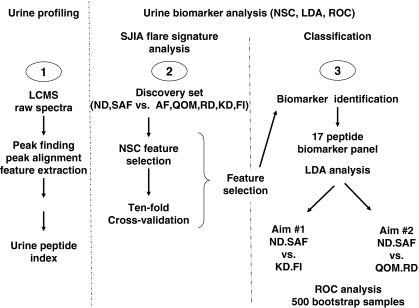
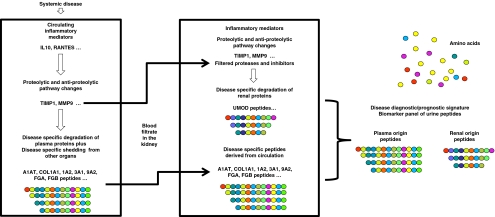
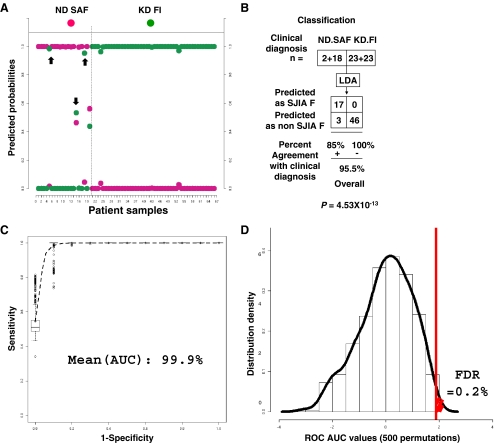
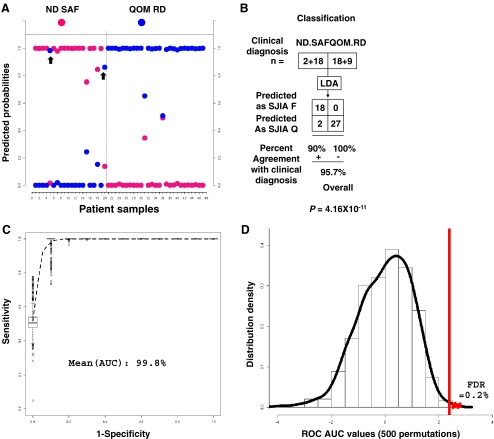
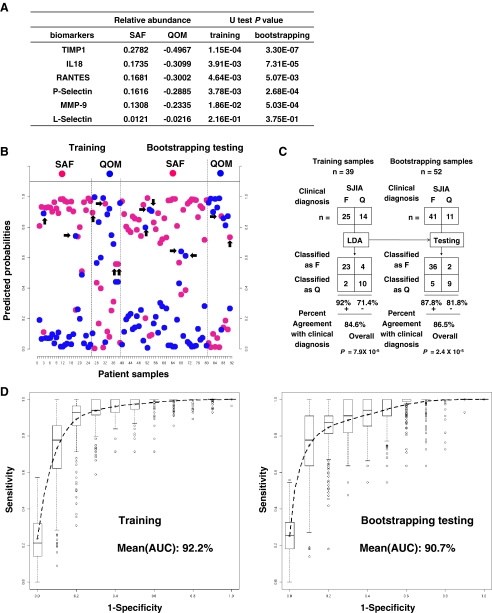
Systemic juvenile idiopathic arthritis is a chronic pediatric disease. The initial clinical presentation can mimic other pediatric inflammatory conditions, which often leads to significant delays in diagnosis and appropriate therapy. SJIA biomarker development is an unmet diagnostic/prognostic need to prevent disease complications. EXPERIMENTAL DESIGN: We profiled the urine peptidome to analyze a set of 102 urine samples, from patients with SJIA, Kawasaki disease (KD), febrile illnesses (FI), and healthy controls. A set of 91 plasma samples, from SJIA flare and quiescent patients, were profiled using a customized antibody array against 43 proteins known to be involved in inflammatory and protein catabolic processes. RESULTS: We identified a 17-urine-peptide biomarker panel that could effectively discriminate SJIA patients at active, quiescent, and remission disease states, and patients with active SJIA from confounding conditions including KD and FI. Targeted sequencing of these peptides revealed that they fall into several tight clusters from seven different proteins, suggesting disease-specific proteolytic activities. The antibody array plasma profiling identified an SJIA plasma flare signature consisting of tissue inhibitor of metalloproteinase-1 (TIMP1), interleukin (IL)-18, regulated upon activation, normal T cell expressed and secreted (RANTES), P-Selectin, MMP9, and L-Selectin. CONCLUSIONS AND CLINICAL RELEVANCE: The urine peptidomic and plasma protein analyses have the potential to improve SJIA care and suggest that SJIA urine peptide biomarkers may be an outcome of inflammation-driven effects on catabolic pathways operating at multiple sites. ELECTRONIC SUPPLEMENTARY MATERIAL: The online version of this article (doi:10.1007/s12014-010-9058-8) contains supplementary material, which is available to authorized users.
全身型幼年特发性关节炎是一种慢性儿科疾病。其初始临床表现可类似于其他儿科炎症性疾病,这常常导致诊断和适当治疗的显著延迟。全身型幼年特发性关节炎生物标志物的开发是预防疾病并发症的一项未满足的诊断/预后需求。实验设计:我们对尿液肽组进行了分析,以分析102份尿液样本,这些样本来自全身型幼年特发性关节炎患者、川崎病(KD)患者、发热性疾病(FI)患者和健康对照者。使用针对已知参与炎症和蛋白质分解代谢过程的43种蛋白质的定制抗体阵列,对91份来自全身型幼年特发性关节炎发作期和缓解期患者的血浆样本进行了分析。结果:我们鉴定出一个由17种尿液肽组成的生物标志物面板,该面板能够有效区分处于活动期、静止期和缓解期疾病状态的全身型幼年特发性关节炎患者,以及区分处于活动期的全身型幼年特发性关节炎患者与包括川崎病和发热性疾病在内的混淆病症患者。对这些肽进行靶向测序显示,它们来自7种不同蛋白质的几个紧密簇,提示存在疾病特异性蛋白水解活性。抗体阵列血浆分析鉴定出一种全身型幼年特发性关节炎血浆发作特征,其由金属蛋白酶组织抑制剂-1(TIMP1)、白细胞介素(IL)-18、活化后正常T细胞表达和分泌的调节因子(RANTES)、P-选择素、基质金属蛋白酶9(MMP9)和L-选择素组成。结论及临床意义:尿液肽组学和血浆蛋白分析有潜力改善全身型幼年特发性关节炎的治疗,并提示全身型幼年特发性关节炎尿液肽生物标志物可能是炎症对多个部位分解代谢途径驱动作用的结果。电子补充材料:本文的在线版本(doi:10.1007/s12014-010-9058-8)包含补充材料,授权用户可获取。