Department of Veterinary Medicine, University of Maryland College Park, and Virginia-Maryland Regional College of Veterinary Medicine, 8075 Greenmead Drive, College Park, MD 20742, USA.
Virol J. 2010 Dec 9;7:365. doi: 10.1186/1743-422X-7-365.
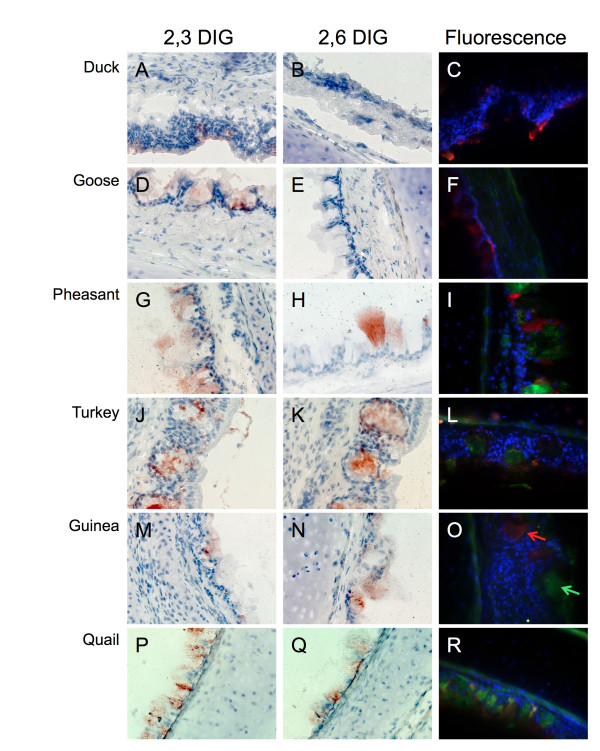
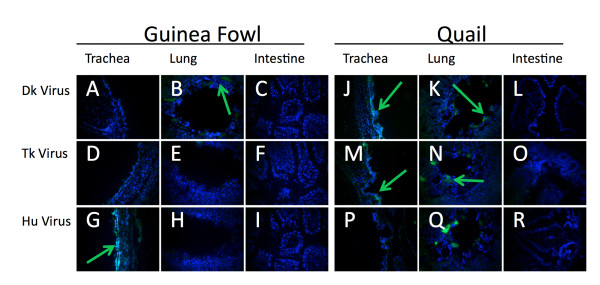
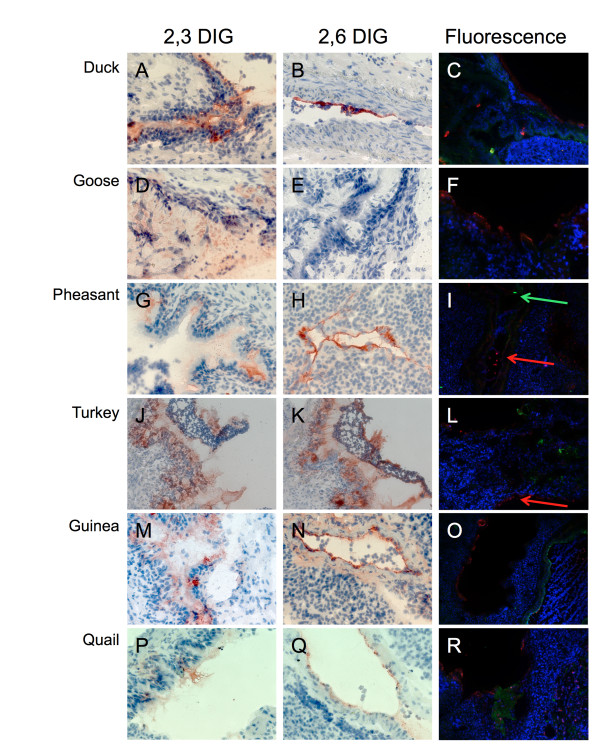
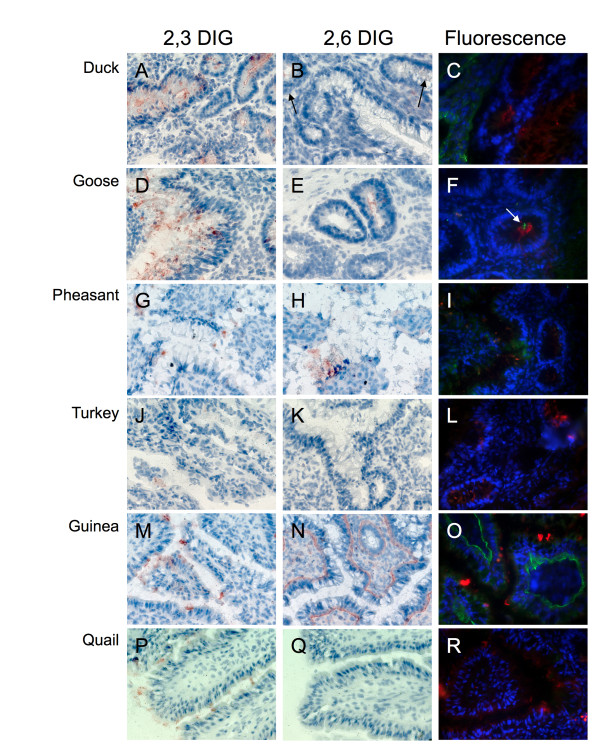
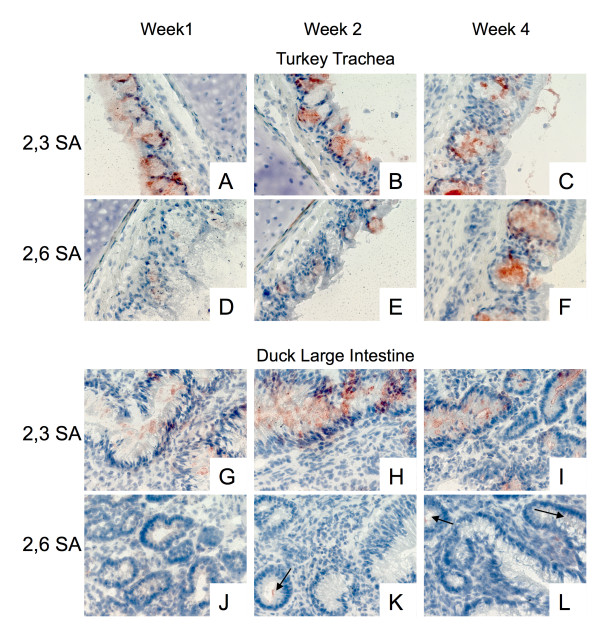
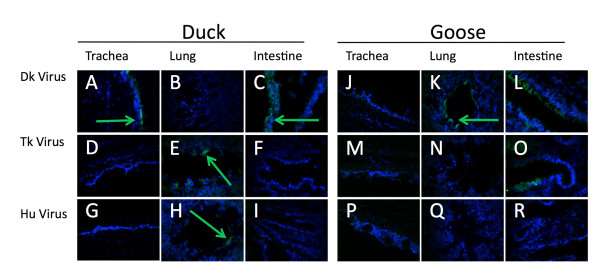
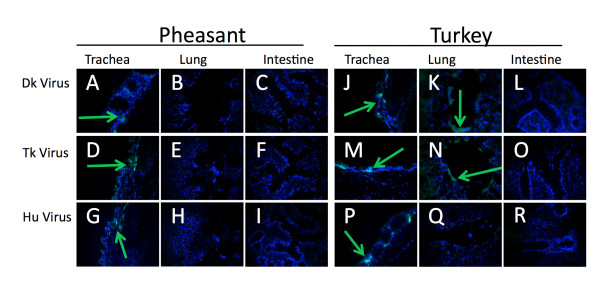
It is commonly accepted that avian influenza viruses (AIVs) bind to terminal α2,3 sialic acid (SA) residues whereas human influenza viruses bind to α2,6 SA residues. By a series of amino acid changes on the HA surface protein, AIVs can switch receptor specificity and recognize α2,6 SA positive cells, including human respiratory epithelial cells. Animal species, like pigs and Japanese quail, that contain both α2,3 and α2,6 SA become ideal environments for receptor switching. Here, we describe the SA patterns and distributions in 6 common minor domestic poultry species: Peking duck, Toulouse geese, Chinese ring-neck pheasant, white midget turkey, bobwhite quail, and pearl guinea fowl. Lectins specific to α2,3 and α2,6 SA (Maakia amurensis agglutinin and Sambuca nigra agglutinin, respectively) were used to detect SA by an alkaline phosphotase-based method and a fluorescent-based method. Differences in SA moieties and their ability to bind influenza viruses were visualized by fluorescent labeling of 4 different H3N2 influenza viruses known to be specific for one receptor or the other. The geese and ducks showed α2,3 SA throughout the respiratory tract and marginal α2,6 SA only in the colon. The four other avian species showed both α2,3 and α2,6 SA in the respiratory tract and the intestines. Furthermore, the turkey respiratory tract showed a positive correlation between age and α2,6 SA levels. The fact that these birds have both avian and human flu receptors, combined with their common presence in backyard farms and live bird markets worldwide, mark them as potential mixing bowl species and necessitates improved surveillance and additional research about the role of these birds in influenza host switching.
普遍认为,禽流感病毒(AIV)结合末端α2,3 唾液酸(SA)残基,而人流感病毒结合α2,6 SA 残基。通过 HA 表面蛋白的一系列氨基酸变化,AIV 可以改变受体特异性并识别包含α2,6 SA 的阳性细胞,包括人类呼吸道上皮细胞。猪和日本鹌鹑等既含有α2,3 又含有α2,6 SA 的动物物种成为受体转换的理想环境。在这里,我们描述了 6 种常见的小型家禽物种的 SA 模式和分布:北京鸭、图卢兹鹅、中国环颈雉、白矮火鸡、白腰鹌鹑和珍珠鹧鸪。分别用 Maakia amurensis 凝集素(针对α2,3 SA)和 Sambuca nigra 凝集素(针对α2,6 SA)作为特异性识别α2,3 和α2,6 SA 的凝集素,通过碱性磷酸酶法和荧光法检测 SA。通过对 4 种已知特异性结合一种受体的不同 H3N2 流感病毒进行荧光标记,可视化 SA 结构及其与流感病毒结合的能力。鹅和鸭在整个呼吸道中显示α2,3 SA,仅在结肠中显示边缘α2,6 SA。其他四种禽类在呼吸道和肠道中均显示出α2,3 和α2,6 SA。此外,火鸡的呼吸道中α2,6 SA 水平与年龄呈正相关。这些鸟类既具有禽源流感受体又具有人流感受体,再加上它们在世界各地的后院农场和活禽市场中普遍存在,这使它们成为潜在的混合碗物种,需要加强监测,并进一步研究这些鸟类在流感宿主转换中的作用。