1. ZAO BioBohemia, Moscow, Russia.
J Cancer. 2010 Nov 29;1:230-41. doi: 10.7150/jca.1.230.
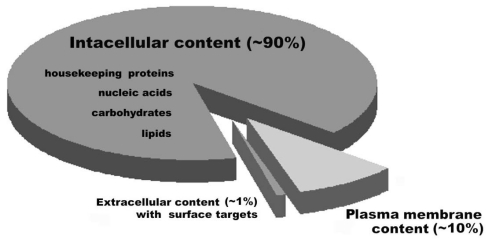
A recent advance in anti-cancer therapies has been the use of cancer cells to develop vaccines. However, immunization with cancer cell-based vaccines has not resulted in significant long-term therapeutic benefits. A possible reason for this is that while cancer cells provide surface antigens that are targets for a desired immune response, they also contain a high abundance of housekeeping proteins, carbohydrates, nucleic acids, lipids, and other intracellular contents that are ubiquitous in all mammalian cells. These ubiquitous molecules are not the intended targets of this therapy approach, and thus, the immune response generated is not sufficient to eliminate the cancer cells present. In this review, a discussion of the cell surface of cancer cells is presented in relation to the goals of improving antigen composition of cancer cell-based vaccines. Strategies to enrich vaccines for cancer-specific antigens are also discussed.
近年来,癌症治疗的一个进展是利用癌细胞来开发疫苗。然而,用基于癌细胞的疫苗进行免疫接种并没有带来显著的长期治疗益处。造成这种情况的一个可能原因是,虽然癌细胞提供了作为所需免疫反应目标的表面抗原,但它们还含有大量的管家蛋白、碳水化合物、核酸、脂质和其他在所有哺乳动物细胞中普遍存在的细胞内物质。这些普遍存在的分子不是这种治疗方法的预期目标,因此,产生的免疫反应不足以消除存在的癌细胞。在这篇综述中,讨论了癌细胞的表面与改善基于癌细胞的疫苗的抗原组成的目标的关系。还讨论了用于富集癌症特异性抗原的疫苗的策略。