Peserico Alessia, Simone Cristiano
Laboratory of Signal-Dependent Transcription, Department of Translational Pharmacology (DTP), Consorzio Mario Negri Sud, Santa Maria Imbaro, 66030 Chieti, Italy.
J Biomed Biotechnol. 2011;2011:371832. doi: 10.1155/2011/371832. Epub 2010 Dec 5.
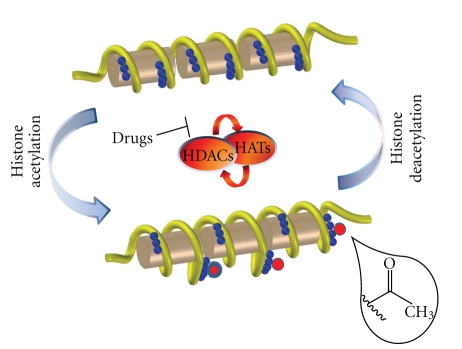
The balance between protein acetylation and deacetylation controls several physiological and pathological cellular processes, and the enzymes involved in the maintenance of this equilibrium-acetyltransferases (HATs) and deacetylases (HDACs)-have been widely studied. Presently, the evidences obtained in this field suggest that the dynamic acetylation equilibrium is mostly maintained through the physical and functional interplay between HAT and HDAC activities. This model overcomes the classical vision in which the epigenetic marks of acetylation have only an activating function whereas deacetylation marks have a repressing activity. Given the existence of several players involved in the preservation of this equilibrium, the identification of these complex networks of interacting proteins will likely foster our understanding of how cells regulate intracellular processes and respond to the extracellular environment and will offer the rationale for new therapeutic approaches based on epigenetic drugs in human diseases.
蛋白质乙酰化与去乙酰化之间的平衡控制着多个生理和病理细胞过程,参与维持这种平衡的酶——乙酰转移酶(HATs)和去乙酰化酶(HDACs)——已得到广泛研究。目前,该领域获得的证据表明,动态乙酰化平衡主要通过HAT和HDAC活性之间的物理和功能相互作用来维持。这种模型克服了传统观念,即乙酰化的表观遗传标记仅具有激活功能,而去乙酰化标记具有抑制活性。鉴于存在多个参与维持这种平衡的因素,识别这些相互作用蛋白质的复杂网络可能会促进我们对细胞如何调节细胞内过程以及对细胞外环境做出反应的理解,并为基于表观遗传药物治疗人类疾病的新方法提供理论依据。