Arizona Center on Aging, University of Arizona, Tucson, Arizona, United States of America.
PLoS One. 2010 Dec 2;5(12):e15514. doi: 10.1371/journal.pone.0015514.
Risk of encephalitis from West Nile virus (WNV) infection increases dramatically with age. Understanding the basis of this susceptibility requires development of suitable animal models. Here, we investigated the immune response to WNV in old non-human primates.
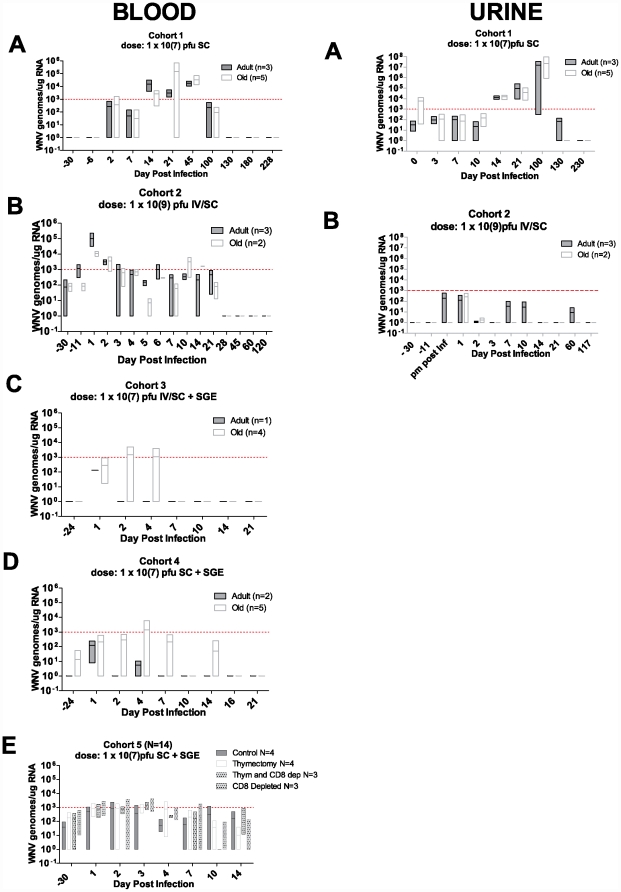
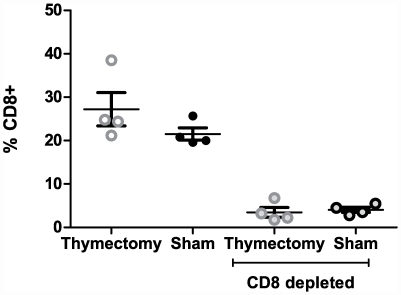
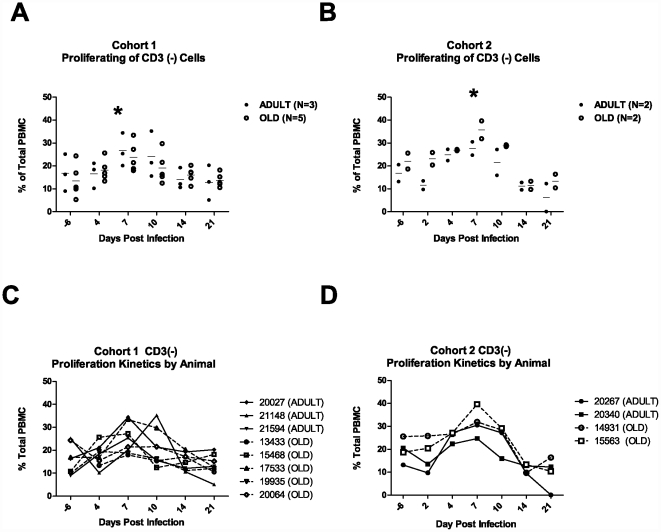
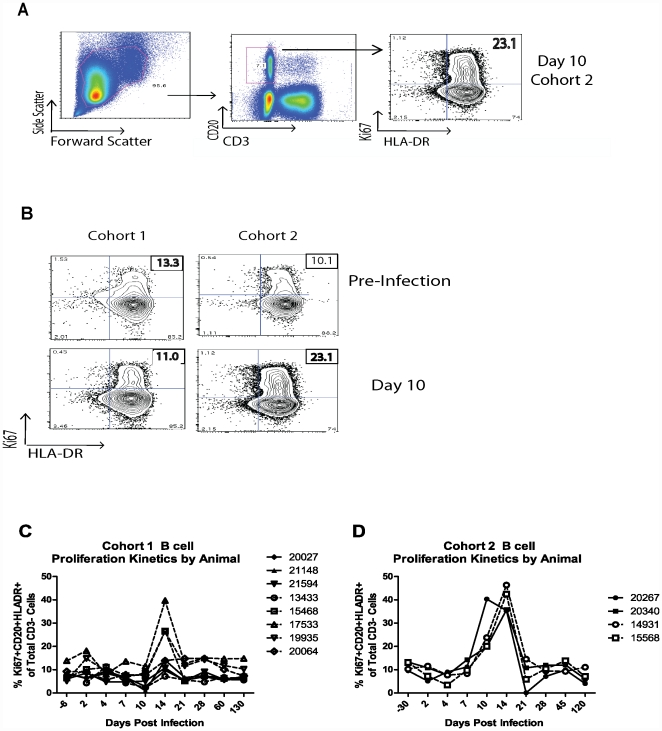
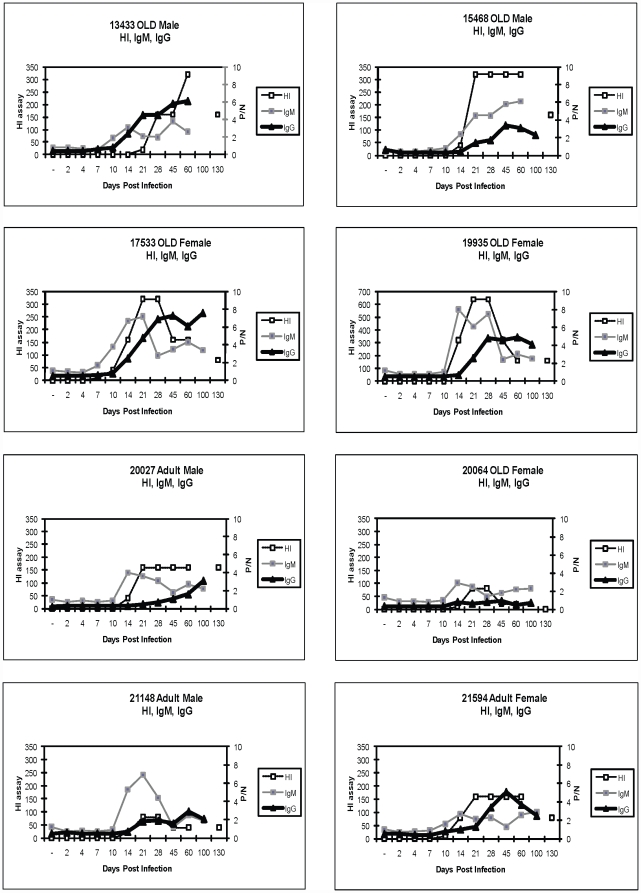
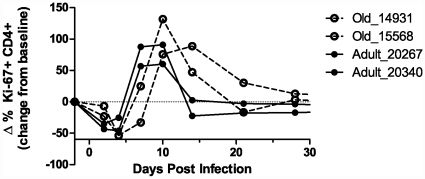
METHODOLOGY/PRINCIPAL FINDINGS: We investigated clinical, immunological and virological correlates of WNV infection in aging non-human primates. Aged (17-30 yrs) and adult (6-9 yrs) Rhesus macaques (RM) were challenged with WNV in the presence or the absence of the mosquito salivary gland extract (SGE) to approximate natural infection. None of the 26 animals exhibited clinical signs of the disease. Quantitative PCR suggested discrete and short-lived viremia, but infectious virus was never isolated. There was markedly increased, age-independent, proliferation of CD3(-) non-B cells, followed by B-cell proliferation, which correlated to the loss of detectable WNV genomes. Moreover, animals primed with mosquito salivary gland extract exhibited reduced circulating WNV RNA. While we found the expected age-associated reduction in T cell proliferation, adaptive immunity did not correlate with infection outcome. That was further confirmed in a cohort of thymectomized and/or CD8 T-cell depleted Cynomolgus macaques (CM; N = 15), who also failed to develop WNV disease.
CONCLUSIONS/SIGNIFICANCE: Results are consistent with strong and age-independent innate resistance of macaques against WNV challenge. This animal model is therefore not suitable for vaccine and therapeutic testing against WNV. However, understanding the basis of their innate resistance against WNV in macaques could provide helpful clues to improve anti-WNV protection of older adults.
西尼罗河病毒(WNV)感染导致脑炎的风险随着年龄的增长而急剧增加。了解这种易感性的基础需要开发合适的动物模型。在这里,我们研究了老年非人灵长类动物对 WNV 的免疫反应。
方法/主要发现:我们研究了衰老非人灵长类动物感染 WNV 的临床、免疫学和病毒学相关性。老年(17-30 岁)和成年(6-9 岁)恒河猴(RM)在存在或不存在蚊子唾液腺提取物(SGE)的情况下接受 WNV 挑战,以近似自然感染。26 只动物均未出现疾病的临床症状。定量 PCR 表明存在短暂的离散病毒血症,但从未分离出传染性病毒。CD3(-)非 B 细胞的增殖显著增加,且与年龄无关,随后是 B 细胞增殖,这与可检测到的 WNV 基因组的丢失相关。此外,用蚊子唾液腺提取物进行初次免疫的动物表现出循环 WNV RNA 减少。虽然我们发现 T 细胞增殖与年龄相关的预期减少,但适应性免疫与感染结果无关。在一组胸腺切除和/或 CD8 T 细胞耗竭的食蟹猴(CM;N = 15)中也得到了进一步证实,这些动物也未能发展出 WNV 疾病。
结论/意义:结果与恒河猴对 WNV 挑战具有强烈且与年龄无关的固有抵抗力一致。因此,该动物模型不适合用于针对 WNV 的疫苗和治疗测试。然而,了解恒河猴对 WNV 固有抵抗力的基础可以为提高老年人对 WNV 的保护提供有用的线索。