Centre National de la Recherche Scientifique, CNRS UMR 8576, UGSF, Université des Sciences et Technologies de Lille, Villeneuve d'Ascq, France.
PLoS One. 2010 Dec 15;5(12):e15424. doi: 10.1371/journal.pone.0015424.
Malaria, an Anopheles-borne parasitic disease, remains a major global health problem causing illness and death that disproportionately affects developing countries. Despite the incidence of malaria, which remains one of the most severe infections of human populations, there is no licensed vaccine against this life-threatening disease. In this context, we decided to explore the expression of Plasmodium vaccine antigens fused to the granule bound starch synthase (GBSS), the major protein associated to the starch matrix in all starch-accumulating plants and algae such as Chlamydomonas reinhardtii.
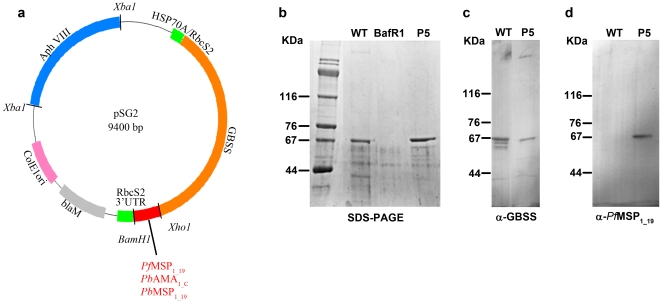
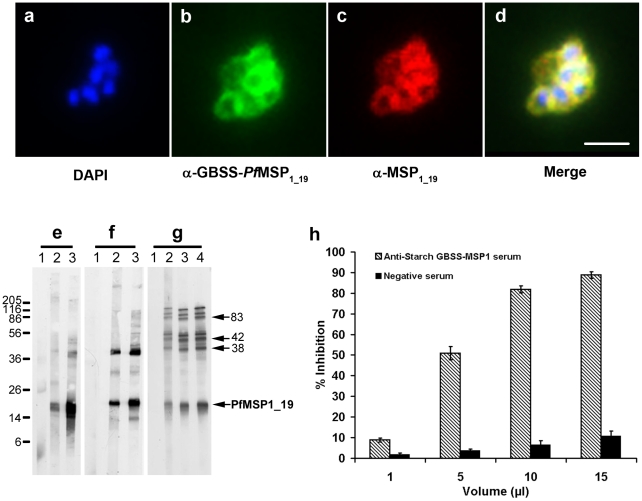
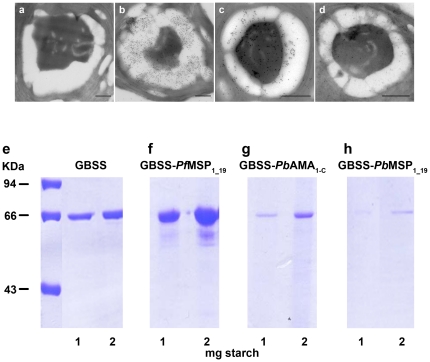
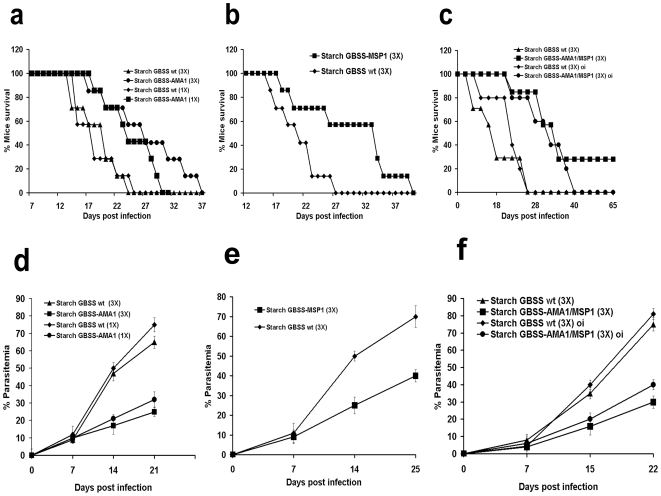
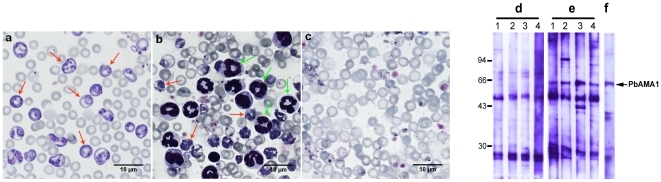
We describe the development of genetically engineered starch granules containing plasmodial vaccine candidate antigens produced in the unicellular green algae Chlamydomonas reinhardtii. We show that the C-terminal domains of proteins from the rodent Plasmodium species, Plasmodium berghei Apical Major Antigen AMA1, or Major Surface Protein MSP1 fused to the algal granule bound starch synthase (GBSS) are efficiently expressed and bound to the polysaccharide matrix. Mice were either immunized intraperitoneally with the engineered starch particles and Freund adjuvant, or fed with the engineered particles co-delivered with the mucosal adjuvant, and challenged intraperitoneally with a lethal inoculum of P. Berghei. Both experimental strategies led to a significantly reduced parasitemia with an extension of life span including complete cure for intraperitoneal delivery as assessed by negative blood thin smears. In the case of the starch bound P. falciparum GBSS-MSP1 fusion protein, the immune sera or purified immunoglobulin G of mice immunized with the corresponding starch strongly inhibited in vitro the intra-erythrocytic asexual development of the most human deadly plasmodial species.
This novel system paves the way for the production of clinically relevant plasmodial antigens as algal starch-based particles designated herein as amylosomes, demonstrating that efficient production of edible vaccines can be genetically produced in Chlamydomonas.
疟疾是一种由疟蚊传播的寄生虫病,仍然是一个主要的全球卫生问题,导致疾病和死亡,这种情况在发展中国家更为严重。尽管疟疾的发病率仍然是人类最严重的感染之一,但目前还没有针对这种危及生命的疾病的许可疫苗。在这种情况下,我们决定探索将疟原虫疫苗抗原与颗粒结合淀粉合成酶(GBSS)融合表达,GBSS 是所有淀粉积累植物和藻类(如莱茵衣藻)中与淀粉基质相关的主要蛋白。
我们描述了含有疟原虫候选疫苗抗原的基因工程淀粉颗粒的开发,这些抗原在单细胞绿藻莱茵衣藻中产生。我们表明,来自啮齿动物疟原虫种的蛋白质的 C 端结构域,如疟原虫伯氏疟原虫顶膜主要抗原 AMA1 或主要表面蛋白 MSP1 与藻类颗粒结合淀粉合成酶(GBSS)融合,可有效地表达并结合到多糖基质上。用工程淀粉颗粒和弗氏佐剂腹膜内免疫小鼠,或用粘膜佐剂共递送工程颗粒喂养小鼠,并通过用致死性疟原虫伯氏疟原虫接种物腹膜内攻击进行挑战。两种实验策略都导致寄生虫血症显著减少,寿命延长,包括通过阴性血薄涂片评估的腹膜内递送的完全治愈。在淀粉结合的恶性疟原虫 GBSS-MSP1 融合蛋白的情况下,用相应淀粉免疫的小鼠的免疫血清或纯化免疫球蛋白 G 强烈抑制体外最致命的疟原虫种的红细胞内无性发育。
该新型系统为生产临床相关的疟原虫抗原铺平了道路,这些抗原作为藻类淀粉基颗粒被指定为淀粉体,证明了在莱茵衣藻中可以通过遗传方法生产有效的可食用疫苗。