Qi Yong, Longo Kenneth A, Giuliana Derek J, Gagne Samantha, McDonagh Tom, Govek Elizabeth, Nolan Anna, Zou Chaoseng, Morgan Kristen, Hixon Jeffrey, Saunders Jeffrey O, Distefano Peter S, Geddes Brad J
Elixir Pharmaceuticals, Inc., 12 Emily St., Cambridge, MA 02139, USA.
BMC Physiol. 2011 Jan 6;11:1. doi: 10.1186/1472-6793-11-1.
We and others have demonstrated previously that ghrelin receptor (GhrR) knock out (KO) mice fed a high fat diet (HFD) have increased insulin sensitivity and metabolic flexibility relative to WT littermates. A striking feature of the HFD-fed GhrR KO mouse is the dramatic decrease in hepatic steatosis. To characterize further the underlying mechanisms of glucose homeostasis in GhrR KO mice, we conducted both hyperglycemic (HG) and hyperinsulinemic-euglycemic (HI-E) clamps. Additionally, we investigated tissue glucose uptake and specifically examined liver insulin sensitivity.
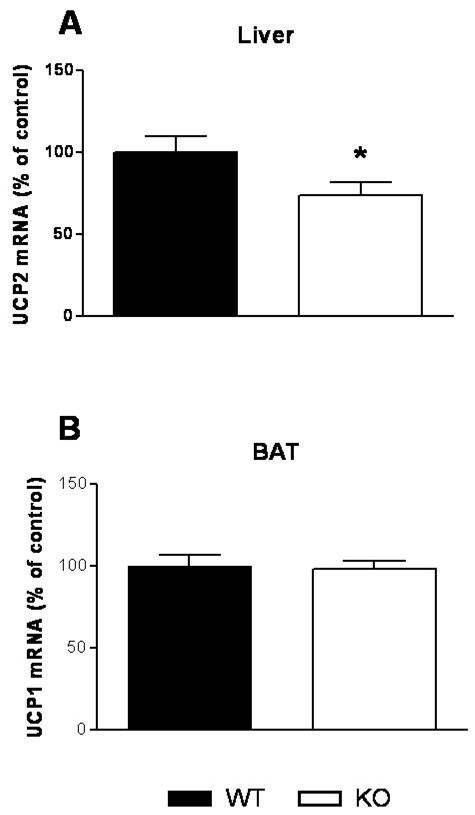
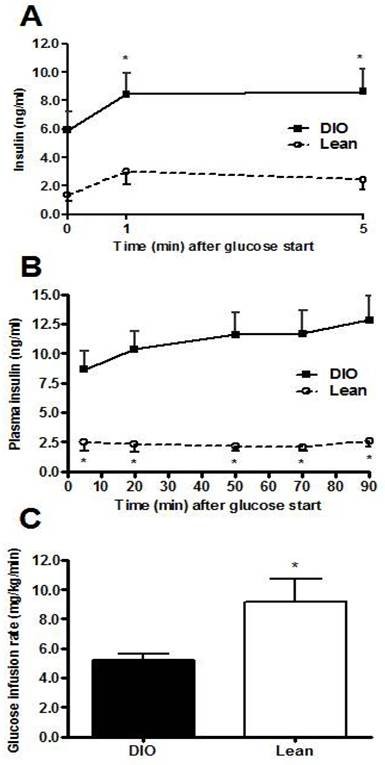
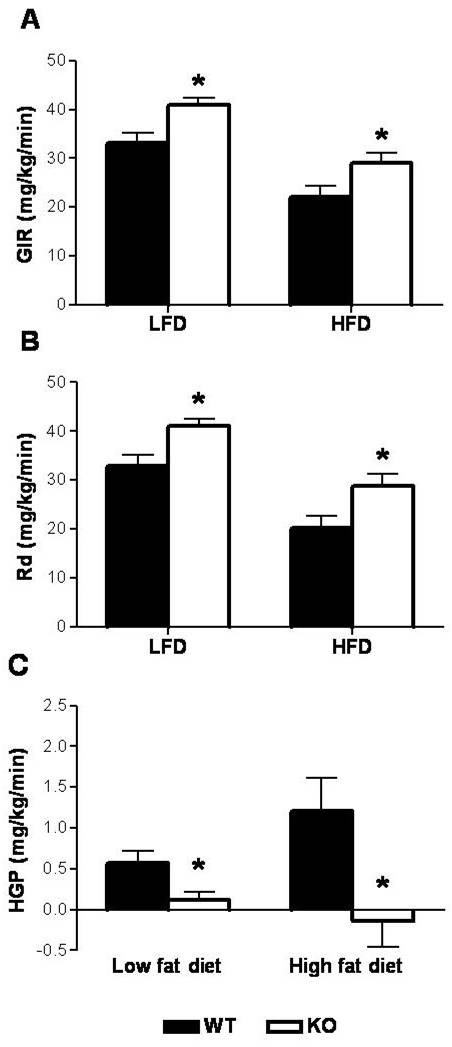
Consistent with glucose tolerance-test data, in HG clamp experiments, GhrR KO mice showed a reduction in glucose-stimulated insulin release relative to WT littermates. Nevertheless, a robust 1st phase insulin secretion was still achieved, indicating that a healthy β-cell response is maintained. Additionally, GhrR KO mice demonstrated both a significantly increased glucose infusion rate and significantly reduced insulin requirement for maintenance of the HG clamp, consistent with their relative insulin sensitivity. In HI-E clamps, both LFD-fed and HFD-fed GhrR KO mice showed higher peripheral insulin sensitivity relative to WT littermates as indicated by a significant increase in insulin-stimulated glucose disposal (Rd), and decreased hepatic glucose production (HGP). HFD-fed GhrR KO mice showed a marked increase in peripheral tissue glucose uptake in a variety of tissues, including skeletal muscle, brown adipose tissue and white adipose tissue. GhrR KO mice fed a HFD also showed a modest, but significant decrease in conversion of pyruvate to glucose, as would be anticipated if these mice displayed increased liver insulin sensitivity. Additionally, the levels of UCP2 and UCP1 were reduced in the liver and BAT, respectively, in GhrR KO mice relative to WT mice.
These results indicate that improved glucose homeostasis of GhrR KO mice is characterized by robust improvements of glucose disposal in both normal and metabolically challenged states, relative to WT controls. GhrR KO mice have an intact 1st phase insulin response but require significantly less insulin for glucose disposal. Our experiments reveal that the insulin sensitivity of GhrR KO mice is due to both BW independent and dependent factors. We also provide several lines of evidence that a key feature of the GhrR KO mouse is maintenance of hepatic insulin sensitivity during metabolic challenge.
我们和其他研究人员之前已经证明,与野生型(WT)同窝小鼠相比,高脂饮食(HFD)喂养的生长激素释放肽受体(GhrR)基因敲除(KO)小鼠具有更高的胰岛素敏感性和代谢灵活性。高脂饮食喂养的GhrR KO小鼠的一个显著特征是肝脂肪变性显著降低。为了进一步阐明GhrR KO小鼠葡萄糖稳态的潜在机制,我们进行了高血糖(HG)钳夹和高胰岛素-正常血糖(HI-E)钳夹实验。此外,我们研究了组织葡萄糖摄取情况,并特别检测了肝脏胰岛素敏感性。
与葡萄糖耐量试验数据一致,在HG钳夹实验中,相对于WT同窝小鼠,GhrR KO小鼠的葡萄糖刺激胰岛素释放减少。然而,仍能实现强劲的第一相胰岛素分泌,表明维持了健康的β细胞反应。此外,GhrR KO小鼠表现出葡萄糖输注率显著增加,维持HG钳夹所需的胰岛素量显著减少,这与其相对较高的胰岛素敏感性一致。在HI-E钳夹实验中,低脂饮食(LFD)和高脂饮食喂养的GhrR KO小鼠相对于WT同窝小鼠均表现出更高的外周胰岛素敏感性,表现为胰岛素刺激的葡萄糖处置(Rd)显著增加,肝葡萄糖生成(HGP)减少。高脂饮食喂养的GhrR KO小鼠在包括骨骼肌、棕色脂肪组织和白色脂肪组织在内的多种组织中,外周组织葡萄糖摄取显著增加。高脂饮食喂养的GhrR KO小鼠丙酮酸向葡萄糖的转化也出现适度但显著的降低,这与这些小鼠肝脏胰岛素敏感性增加的预期相符。此外,相对于WT小鼠,GhrR KO小鼠肝脏和棕色脂肪组织中UCP2和UCP1的水平分别降低。
这些结果表明,相对于WT对照,GhrR KO小鼠葡萄糖稳态的改善表现为在正常和代谢应激状态下葡萄糖处置能力均得到显著提高。GhrR KO小鼠具有完整的第一相胰岛素反应,但葡萄糖处置所需的胰岛素量显著减少。我们的实验表明,GhrR KO小鼠的胰岛素敏感性归因于体重无关和体重相关的因素。我们还提供了多条证据表明,GhrR KO小鼠的一个关键特征是在代谢应激期间维持肝脏胰岛素敏感性。