National Laboratory of Biomacromolecules, Institute of Biophysics, Chinese Academy of Sciences, 15 Datun Road, Chaoyang District, Beijing, 100101, China.
J Biol Chem. 2011 Apr 8;286(14):12101-7. doi: 10.1074/jbc.M110.208934. Epub 2011 Jan 13.
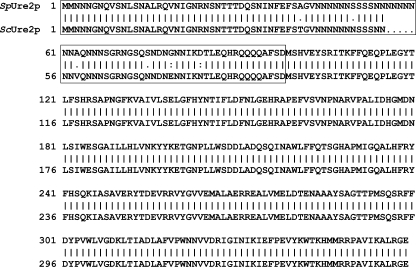
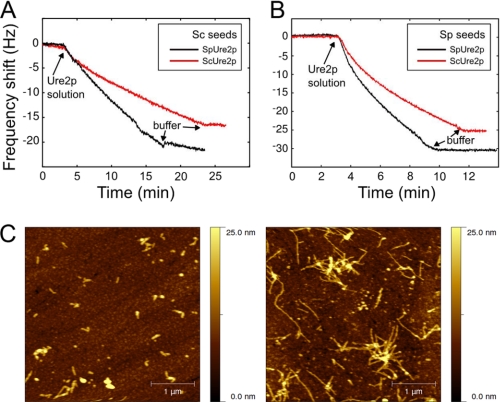
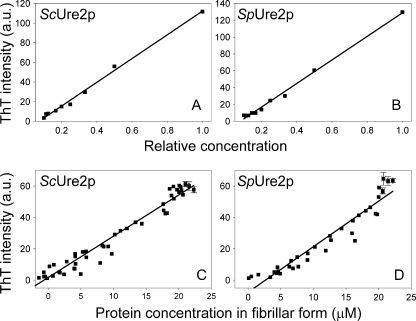
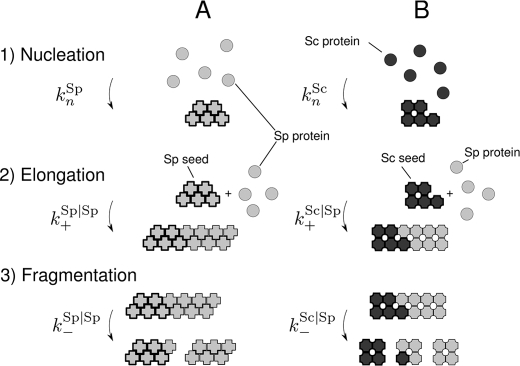
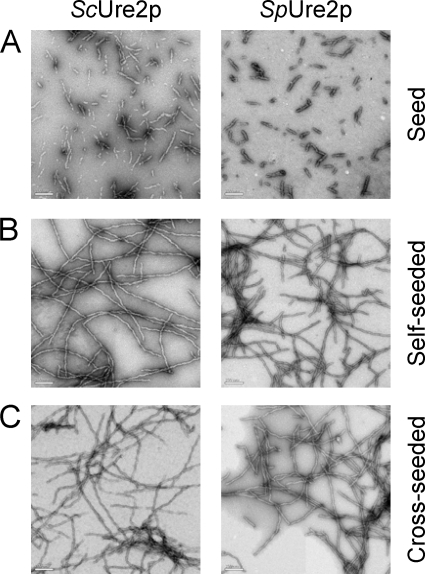
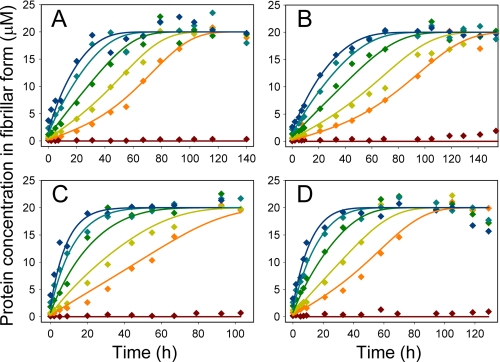
Peptides and proteins possess an inherent propensity to self-assemble into generic fibrillar nanostructures known as amyloid fibrils, some of which are involved in medical conditions such as Alzheimer disease. In certain cases, such structures can self-propagate in living systems as prions and transmit characteristic traits to the host organism. The mechanisms that allow certain amyloid species but not others to function as prions are not fully understood. Much progress in understanding the prion phenomenon has been achieved through the study of prions in yeast as this system has proved to be experimentally highly tractable; but quantitative understanding of the biophysics and kinetics of the assembly process has remained challenging. Here, we explore the assembly of two closely related homologues of the Ure2p protein from Saccharomyces cerevisiae and Saccharomyces paradoxus, and by using a combination of kinetic theory with solution and biosensor assays, we are able to compare the rates of the individual microscopic steps of prion fibril assembly. We find that for these proteins the fragmentation rate is encoded in the structure of the seed fibrils, whereas the elongation rate is principally determined by the nature of the soluble precursor protein. Our results further reveal that fibrils that elongate faster but fracture less frequently can lose their ability to propagate as prions. These findings illuminate the connections between the in vitro aggregation of proteins and the in vivo proliferation of prions, and provide a framework for the quantitative understanding of the parameters governing the behavior of amyloid fibrils in normal and aberrant biological pathways.
肽和蛋白质具有内在的自组装成通用纤维状纳米结构的倾向,这种结构通常被称为淀粉样纤维,其中一些与阿尔茨海默病等医学病症有关。在某些情况下,这些结构可以在活系统中作为朊病毒自我传播,并将特征性状传递给宿主生物。允许某些淀粉样物种而不是其他物种作为朊病毒发挥作用的机制尚未完全理解。通过研究酵母中的朊病毒,在理解朊病毒现象方面取得了很大进展,因为该系统在实验上具有很高的可操作性;但是,对于组装过程的生物物理和动力学的定量理解仍然具有挑战性。在这里,我们研究了来自酿酒酵母和酿酒酵母悖论的 Ure2p 蛋白的两个密切相关的同源物的组装,通过将动力学理论与溶液和生物传感器测定相结合,我们能够比较朊病毒纤维组装的各个微观步骤的速率。我们发现,对于这些蛋白质,片段化速率编码在种子纤维的结构中,而伸长速率主要由可溶性前体蛋白的性质决定。我们的结果进一步表明,伸长速度较快但断裂频率较低的纤维可能会失去作为朊病毒传播的能力。这些发现阐明了体外蛋白质聚集与体内朊病毒增殖之间的联系,并为定量理解控制淀粉样纤维在正常和异常生物学途径中的行为的参数提供了框架。