National Research Centre for the Working Environment, Copenhagen Ø, Denmark.
BMC Musculoskelet Disord. 2011 Jan 14;12:14. doi: 10.1186/1471-2474-12-14.
Neck and shoulder complaints are common among employees in sedentary occupations characterized by intensive computer use. Such musculoskeletal pain - which is often associated with restricted range of motion and loss of muscle strength - is one of the most common conditions treated by physical therapists. The exact mechanism of neck pain is rarely revealed by clinical examination and the treatment has varied from passive rest to active treatments. Active treatments have often been divided into either training of the painful area or the surrounding musculature avoiding direct training of the painful area. Our study investigates the effect of the latter approach.
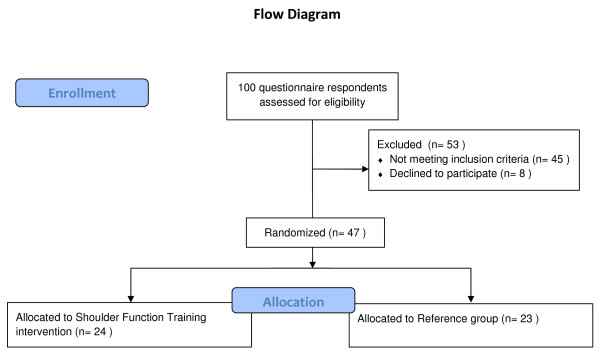
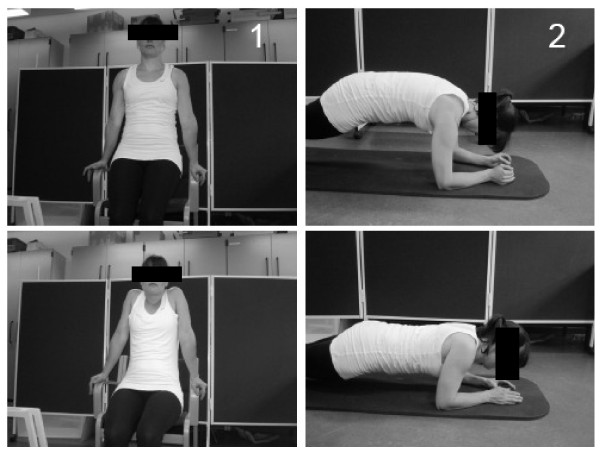
METHODS/DESIGN: A randomized controlled trial of 10 weeks duration is currently being conducted. Employed office workers with severe neck-shoulder pain are randomized to 3 × 20 min shoulder function training with training supervision or to a reference group receiving advice to stay physically active. Shoulder function training primarily focuses on the serratus anterior and lower trapezius muscle with only minimal activation the upper trapezius.An announcement was sent to the administrative section of the university including jobs characterized by intensive computer work. The first 100 positive replies entered the study. Among these inclusion criteria were pain intensity in the neck/shoulder of at least 3 on a 0-9 scale. Exclusion criteria were cardiovascular disease, trauma, hypertension, or serious chronic disease. Before and after the intervention period the participants replied to a questionnaire about musculoskeletal disorders and work disability, and underwent a standardized clinical examination of the neck and shoulder girdle. Further, on a weekly basis the participants log pain intensity of the neck and shoulder during the previous week.The primary outcome measure is pain in the neck and shoulders at week 10 based on the weekly pain registration and results from the clinical examination. Secondary outcomes are strength and work disability.
ClinicalTrials (NCT): NCT01205542.
在以密集使用计算机为特点的久坐职业中,颈部和肩部的投诉很常见。这种肌肉骨骼疼痛 - 通常与运动范围受限和肌肉力量丧失有关 - 是物理治疗师治疗的最常见疾病之一。临床检查很少揭示颈部疼痛的确切机制,治疗方法从被动休息到主动治疗不等。主动治疗通常分为对疼痛区域或周围肌肉进行训练,避免对疼痛区域进行直接训练。我们的研究调查了后一种方法的效果。
方法/设计:目前正在进行一项为期 10 周的随机对照试验。患有严重颈肩痛的在职上班族被随机分配到 3×20 分钟肩部功能训练,有训练监督或参考组,接受保持身体活跃的建议。肩部功能训练主要集中在前锯肌和下斜方肌上,仅最小程度地激活上斜方肌。在大学的行政部门发布了一份公告,其中包括需要密集使用计算机的工作。前 100 个积极回复者进入了研究。这些纳入标准包括颈部/肩部疼痛强度至少为 0-9 量表上的 3。排除标准包括心血管疾病、创伤、高血压或严重的慢性疾病。在干预期间前后,参与者回答了一份关于肌肉骨骼疾病和工作残疾的问卷,并接受了颈部和肩部的标准化临床检查。此外,参与者每周记录前一周颈部和肩部的疼痛强度。主要结局测量指标是第 10 周的颈部和肩部疼痛,基于每周的疼痛登记和临床检查结果。次要结局是力量和工作残疾。
ClinicalTrials(NCT):NCT01205542。