Department of General Biology, Instituto de Ciências Biológicas, Universidade Federal de Minas Gerais, Av, Antônio Carlos, Belo Horizonte, 31,270-901, Brazil.
BMC Microbiol. 2011 Jan 17;11(1):12. doi: 10.1186/1471-2180-11-12.
Bacterial exported proteins represent key components of the host-pathogen interplay. Hence, we sought to implement a combined approach for characterizing the entire exoproteome of the pathogenic bacterium Corynebacterium pseudotuberculosis, the etiological agent of caseous lymphadenitis (CLA) in sheep and goats.
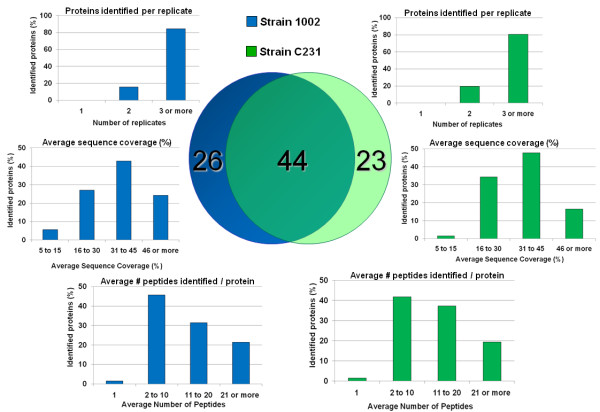
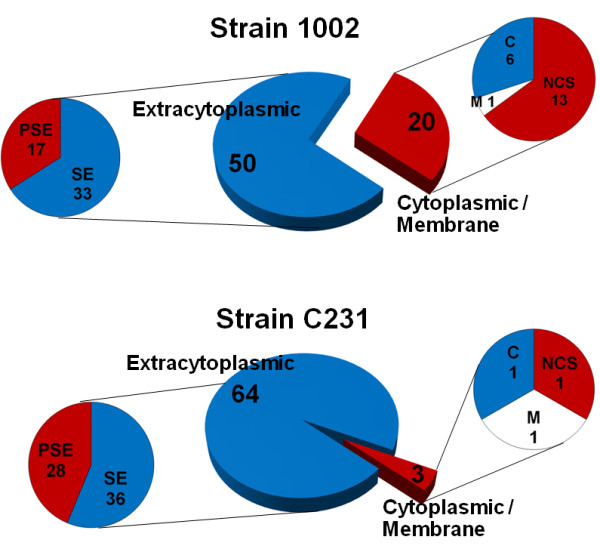
An optimized protocol of three-phase partitioning (TPP) was used to obtain the C. pseudotuberculosis exoproteins, and a newly introduced method of data-independent MS acquisition (LC-MSE) was employed for protein identification and label-free quantification. Additionally, the recently developed tool SurfG+ was used for in silico prediction of sub-cellular localization of the identified proteins. In total, 93 different extracellular proteins of C. pseudotuberculosis were identified with high confidence by this strategy; 44 proteins were commonly identified in two different strains, isolated from distinct hosts, then composing a core C. pseudotuberculosis exoproteome. Analysis with the SurfG+ tool showed that more than 75% (70/93) of the identified proteins could be predicted as containing signals for active exportation. Moreover, evidence could be found for probable non-classical export of most of the remaining proteins.
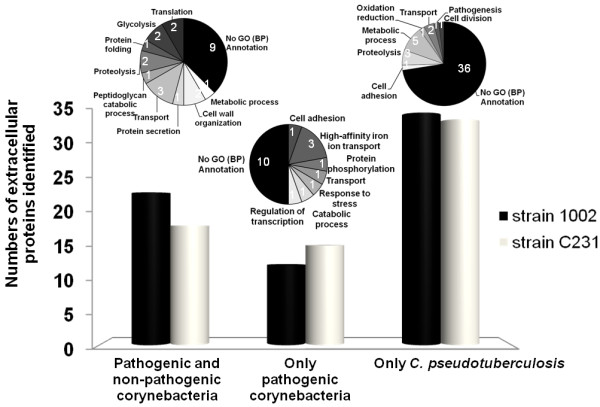
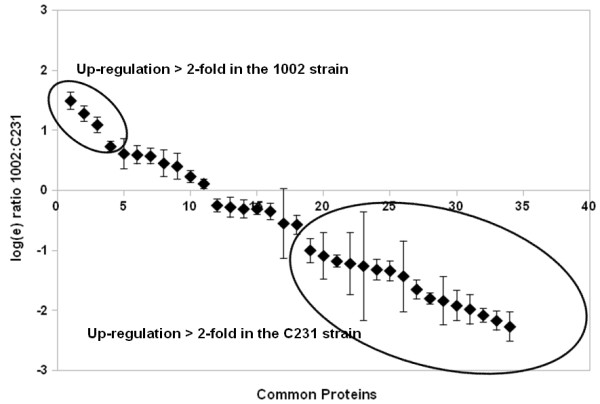
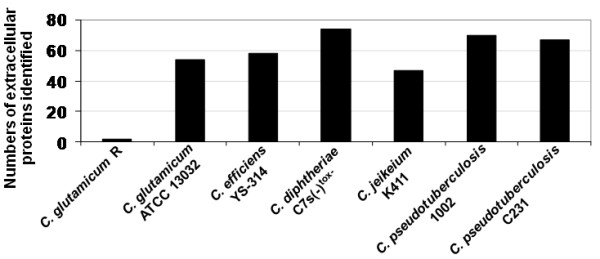
Comparative analyses of the exoproteomes of two C. pseudotuberculosis strains, in addition to comparison with other experimentally determined corynebacterial exoproteomes, were helpful to gain novel insights into the contribution of the exported proteins in the virulence of this bacterium. The results presented here compose the most comprehensive coverage of the exoproteome of a corynebacterial species so far.
细菌分泌蛋白是宿主-病原体相互作用的关键组成部分。因此,我们试图采用一种联合方法来描述致病性棒状杆菌(Corynebacterium pseudotuberculosis)的整个外分泌组,该菌是绵羊和山羊干酪样淋巴结炎(CLA)的病原体。
采用三相分区(TPP)优化方案获得 C. pseudotuberculosis 的外分泌蛋白,并采用新引入的无标记定量 LC-MSE 数据独立 MS 获取方法进行蛋白质鉴定。此外,还使用了最近开发的 SurfG+工具进行鉴定蛋白的亚细胞定位的计算机预测。通过这种策略,共鉴定到 93 种不同的 C. pseudotuberculosis 细胞外蛋白,其中 44 种蛋白在两种不同的菌株中共同鉴定到,这两种菌株分别分离自不同的宿主,构成了 C. pseudotuberculosis 的核心外分泌组。SurfG+工具分析表明,鉴定到的 70/93 种蛋白中的 75%以上可预测为含有主动分泌信号。此外,大多数剩余蛋白也可能存在非经典分泌。
对两种 C. pseudotuberculosis 菌株的外分泌组进行比较分析,以及与其他已确定的棒状杆菌外分泌组进行比较,有助于深入了解分泌蛋白对该菌毒力的贡献。这里呈现的结果是迄今为止对棒状杆菌物种外分泌组最全面的描述。