McGugin Rankin W, McKeeff Thomas J, Tong Frank, Gauthier Isabel
Department of Psychology, Vanderbilt University, Nashville, TN 37203, USA.
Atten Percept Psychophys. 2011 Feb;73(2):309-17. doi: 10.3758/s13414-010-0006-5.
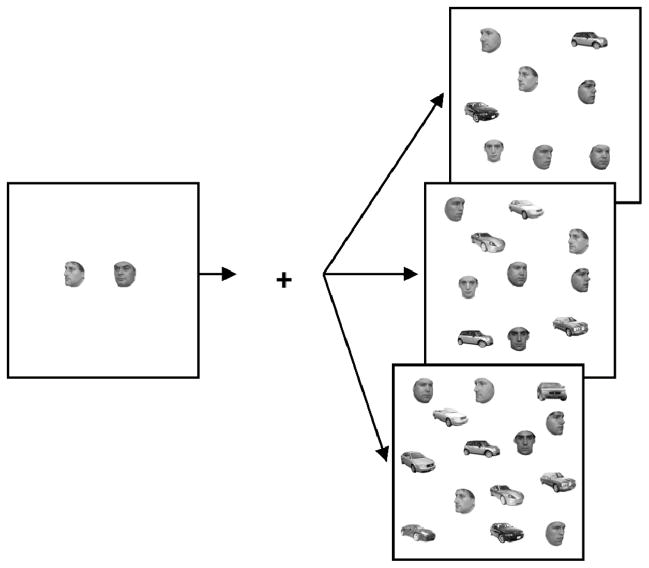
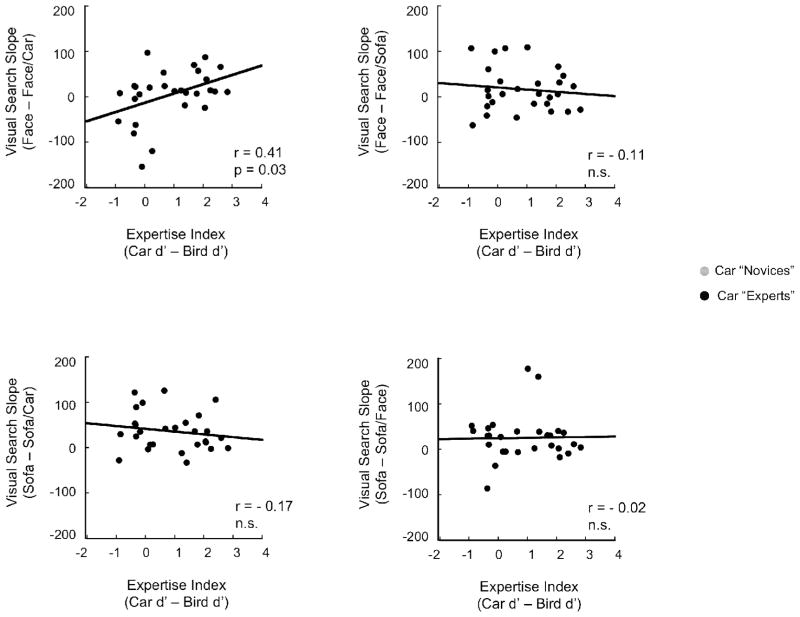
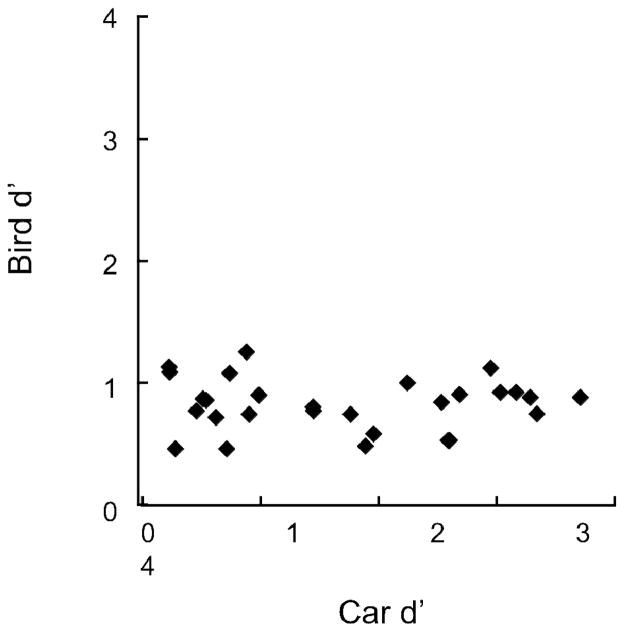
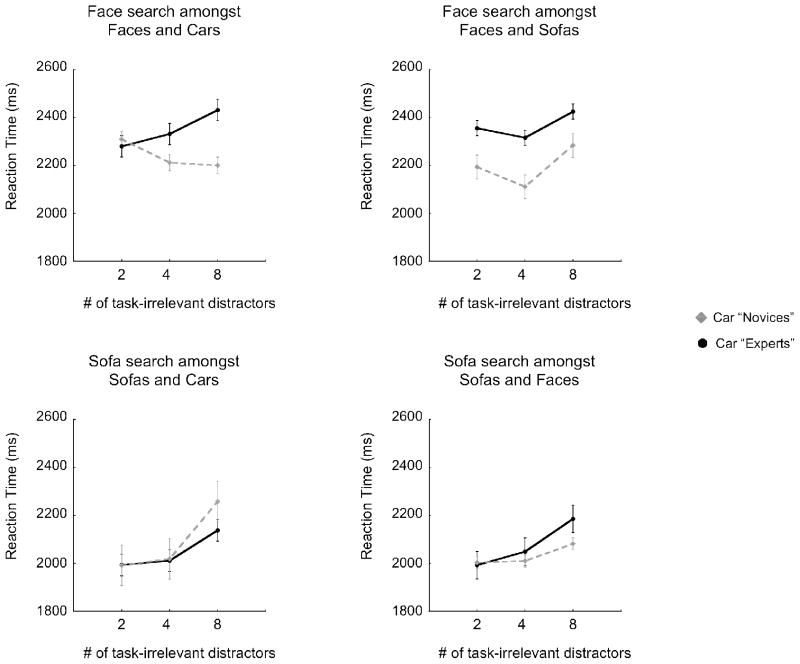
Prior work suggests that nonface objects of expertise can interfere with the perception of faces when the two categories are alternately presented, suggesting competition for shared perceptual resources. Here, we ask whether task-irrelevant distractors from a category of expertise compete when faces are presented in a standard visual search task. Participants searched for a target (face or sofa) in an array containing both relevant and irrelevant distractors. The number of distractors from the target category (face or sofa) remained constant, whereas the number of distractors from the irrelevant category (cars) varied. Search slopes, calculated as a function of the number of irrelevant cars, were correlated with car expertise. The effect was not due to car distractors grabbing attention, because they did not compete with sofa targets. Objects of expertise interfere with face perception even when they are task irrelevant, visually distinct, and separated in space from faces.
先前的研究表明,当交替呈现这两类刺激时,专业领域的非面部物体能够干扰对面部的感知,这表明存在对共享感知资源的竞争。在此,我们探讨在标准视觉搜索任务中呈现面部时,来自专业领域的任务无关干扰物是否会产生竞争。参与者在一个包含相关和无关干扰物的阵列中搜索目标(面部或沙发)。来自目标类别(面部或沙发)的干扰物数量保持不变,而来自无关类别(汽车)的干扰物数量则有所变化。根据无关汽车数量计算得出的搜索斜率与汽车专业知识相关。这种效应并非由于汽车干扰物吸引了注意力,因为它们并未与沙发目标产生竞争。即使专业领域的物体与任务无关、在视觉上有区别且在空间上与面部分离,它们仍会干扰面部感知。