The University of Texas M. D. Anderson Cancer Center, Science Park - Research Division, P.O. Box 389, Smithville, TX 78957.
Cancers (Basel). 2010;2(2):436-82. doi: 10.3390/cancers2020436.
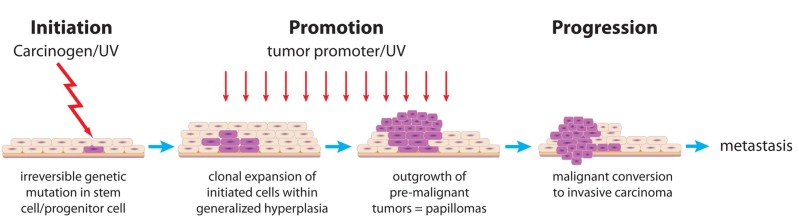
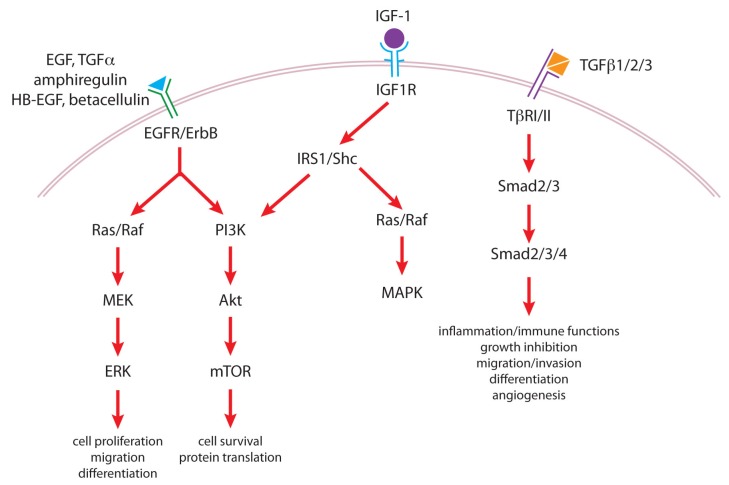
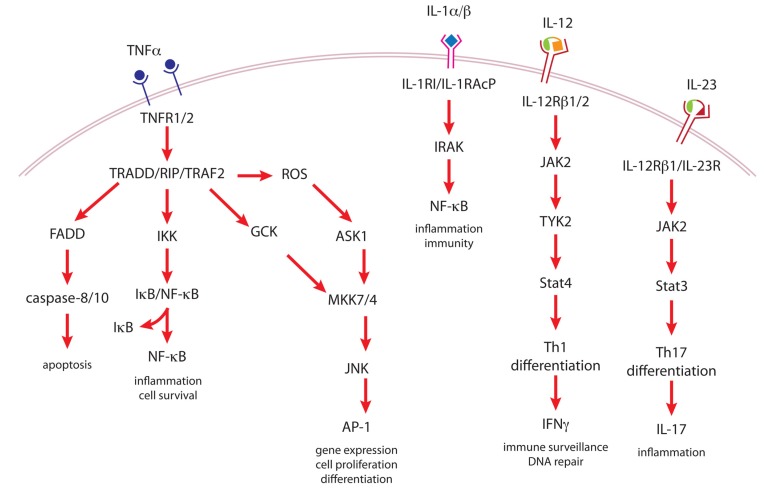
Multiple molecular mechanisms are involved in the promotion of skin carcinogenesis. Induction of sustained proliferation and epidermal hyperplasia by direct activation of mitotic signaling pathways or indirectly in response to chronic wounding and/or inflammation, or due to a block in terminal differentiation or resistance to apoptosis is necessary to allow clonal expansion of initiated cells with DNA mutations to form skin tumors. The mitotic pathways include activation of epidermal growth factor receptor and Ras/Raf/mitogen-activated protein kinase signaling. Chronic inflammation results in inflammatory cell secretion of growth factors and cytokines such as tumor necrosis factor-a and interleukins, as well as production of reactive oxygen species, all of which can stimulate proliferation. Persistent activation of these pathways leads to tumor promotion.
多种分子机制参与了皮肤癌的发生。通过直接激活有丝分裂信号通路或间接响应慢性创伤和/或炎症,或由于终端分化受阻或抗细胞凋亡,来诱导持续增殖和表皮增生,这对于启动细胞的克隆扩增是必要的,这些启动细胞带有 DNA 突变,从而形成皮肤肿瘤。有丝分裂途径包括表皮生长因子受体和 Ras/Raf/丝裂原活化蛋白激酶信号的激活。慢性炎症导致炎症细胞分泌生长因子和细胞因子,如肿瘤坏死因子-α和白细胞介素,以及产生活性氧物质,所有这些都可以刺激增殖。这些途径的持续激活导致肿瘤促进。