Scholten Paul M, Ng Kenneth W, Joh Kiwon, Serino Lorenzo P, Warren Russell F, Torzilli Peter A, Maher Suzanne A
Hospital for Special Surgery, Tissue Engineering, Regeneration, and Repair Program, 535 E70th Street, New York, New York 10021.
J Biomed Mater Res A. 2011 Apr;97(1):8-15. doi: 10.1002/jbm.a.33005. Epub 2011 Feb 9.
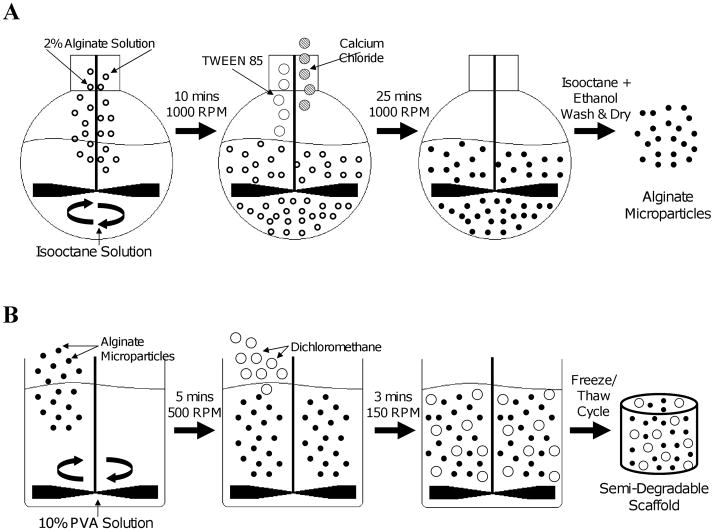
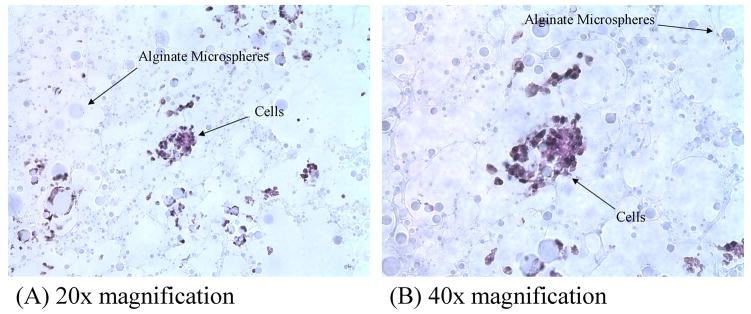
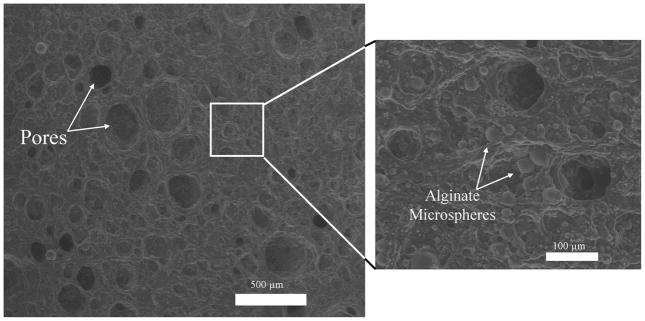
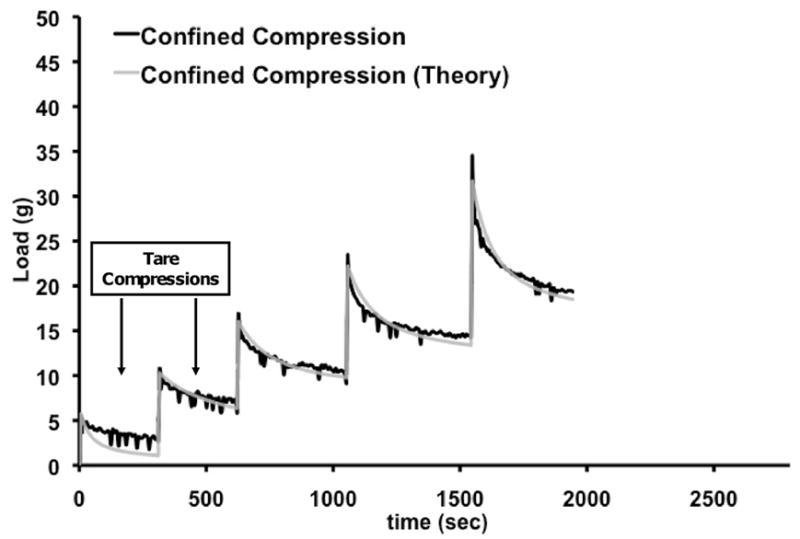
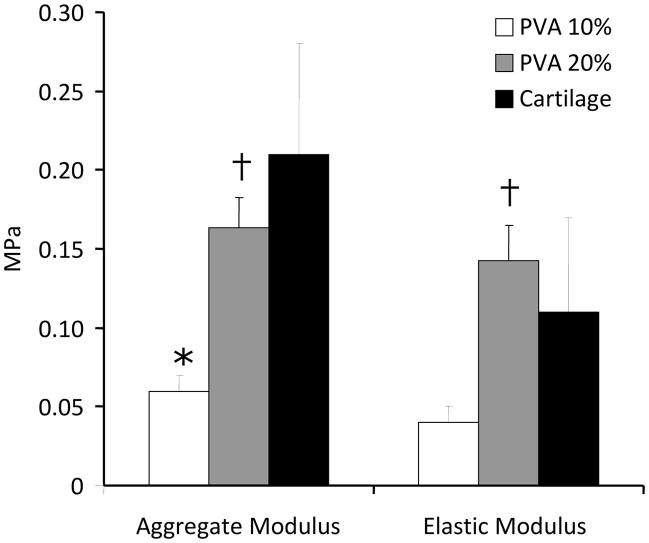
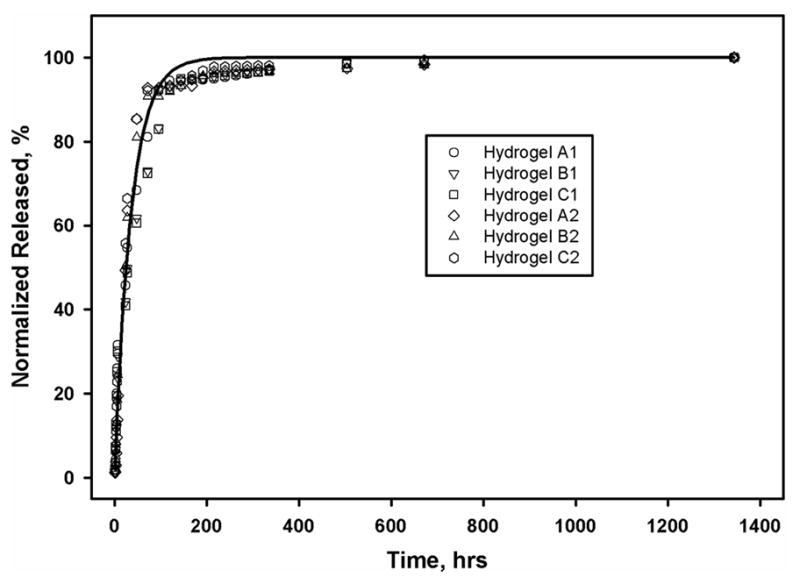
Few options exist to replace or repair damaged articular cartilage. The optimal solution that has been suggested is a scaffold that can carry load and integrate with surrounding tissues; but such a construct has thus far been elusive. The objectives of this study were to manufacture and characterize a nondegradable hydrated scaffold. Our hypothesis was that the polymer content of the scaffold can be used to control its mechanical properties, while an internal porous network augmented with biological agents can facilitate integration with the host tissue. Using a two-step water-in-oil emulsion process a porous polyvinyl alcohol (PVA) hydrogel scaffold combined with alginate microspheres was manufactured. The scaffold had a porosity of 11-30% with pore diameters of 107-187 μm, which readily allowed for movement of cells through the scaffold. Alginate microparticles were evenly distributed through the scaffold and allowed for the slow release of biological factors. The elastic modulus (Es ) and Poisson's ratio (υ), Aggregate modulus (Ha ) and dynamic modulus (ED ) of the scaffold were significantly affected by % PVA, as it varied from 10 to 20% wt/vol. Es and υ were similar to that of articular cartilage for both polymer concentrations, while Ha and ED were similar to that of cartilage only at 20% PVA. The ability to control scaffold mechanical properties, while facilitating cellular migration suggest that this scaffold is a potentially viable candidate for the functional replacement of cartilage defects.
修复或替换受损关节软骨的方法有限。目前提出的最佳解决方案是一种能够承载负荷并与周围组织整合的支架;但到目前为止,这样的构建物还难以实现。本研究的目的是制造并表征一种不可降解的水合支架。我们的假设是,支架的聚合物含量可用于控制其机械性能,而添加生物制剂的内部多孔网络可促进与宿主组织的整合。采用两步油包水乳液法制备了一种与藻酸盐微球结合的多孔聚乙烯醇(PVA)水凝胶支架。该支架的孔隙率为11%-30%,孔径为107-187μm,细胞能够轻松通过支架。藻酸盐微粒均匀分布在支架中,可实现生物因子的缓慢释放。当PVA的重量/体积百分比从10%变化到20%时,支架的弹性模量(Es)、泊松比(υ)、聚集模量(Ha)和动态模量(ED)受到显著影响。两种聚合物浓度下的Es和υ均与关节软骨相似,而仅在PVA为20%时,Ha和ED与软骨相似。能够控制支架的机械性能,同时促进细胞迁移,表明这种支架是软骨缺损功能替代的潜在可行候选材料。