School of Public Health, Queensland University of Technology, Brisbane, Australia.
BMC Cancer. 2011 Feb 23;11:83. doi: 10.1186/1471-2407-11-83.
Cancer survivors face an increased likelihood of being subsequently diagnosed with another cancer. The aim of this study was to quantify the relative risk of survivors developing a second primary cancer in Queensland, Australia.
Standardised incidence rates stratified by type of first primary cancer, type of second primary cancer, sex, age at first diagnosis, period of first diagnosis and follow-up interval were calculated for residents of Queensland, Australia, who were diagnosed with a first primary invasive cancer between 1982 and 2001 and survived for a minimum of 2 months.
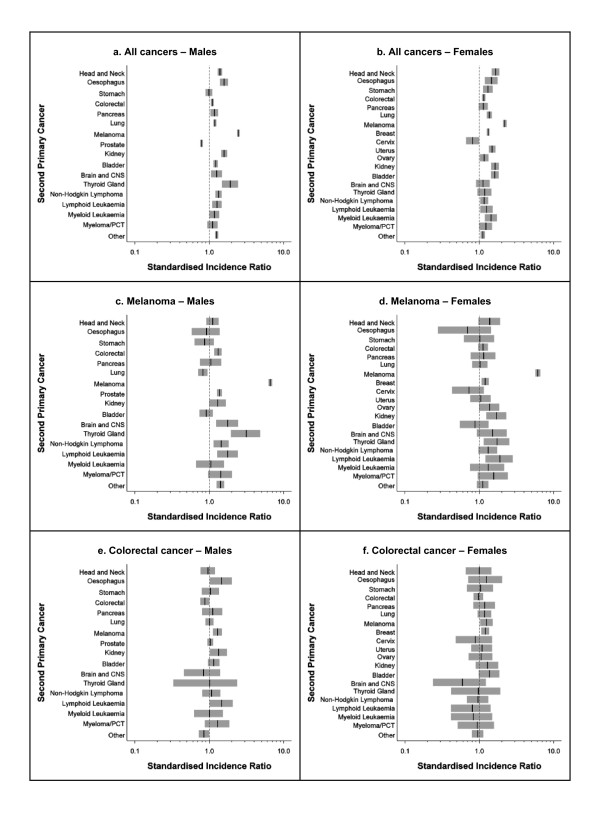
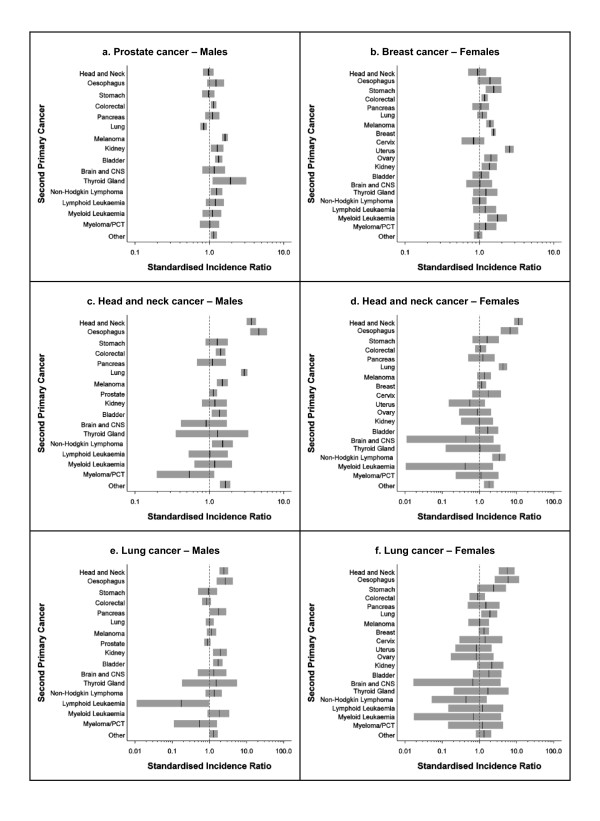
A total of 23,580 second invasive primary cancers were observed over 1,370,247 years of follow-up among 204,962 cancer patients. Both males (SIR = 1.22; 95% CI = 1.20-1.24) and females (SIR = 1.36; 95% CI = 1.33-1.39) within the study cohort were found to have a significant excess risk of developing a second cancer relative to the incidence of cancer in the general population. The observed number of second primary cancers was also higher than expected within each age group, across all time periods and during each follow-up interval.
The excess risk of developing a second malignancy among cancer survivors can likely be attributed to factors including similar aetiologies, genetics and the effects of treatment, underlining the need for ongoing monitoring of cancer patients to detect subsequent tumours at an early stage. Education campaigns developed specifically for survivors may be required to lessen the prevalence of known cancer risk factors.
癌症幸存者随后被诊断出患有另一种癌症的可能性增加。本研究的目的是量化澳大利亚昆士兰州癌症幸存者发生第二原发癌的相对风险。
对 1982 年至 2001 年间在澳大利亚昆士兰州诊断出第一原发浸润性癌症并至少存活 2 个月的居民,按第一原发癌的类型、第二原发癌的类型、性别、首次诊断时的年龄、首次诊断的时期和随访间隔,对标准化发病比进行分层。
在 204962 例癌症患者中,在 1370247 年的随访中观察到 23580 例第二浸润性原发性癌症。研究队列中的男性(SIR = 1.22;95%CI = 1.20-1.24)和女性(SIR = 1.36;95%CI = 1.33-1.39)均发现发生第二癌症的风险显著高于一般人群的癌症发病率。在每个年龄组、所有时间段和每个随访间隔内,观察到的第二原发癌的数量也高于预期。
癌症幸存者发生第二恶性肿瘤的风险增加可能归因于包括相似病因、遗传和治疗影响等因素,这强调了需要对癌症患者进行持续监测,以便及早发现随后的肿瘤。可能需要为幸存者专门制定教育活动,以降低已知癌症风险因素的流行率。