Genentech, Inc., South San Francisco, CA 94080, USA.
J Exp Med. 2011 Mar 14;208(3):417-20. doi: 10.1084/jem.20110367. Epub 2011 Feb 28.
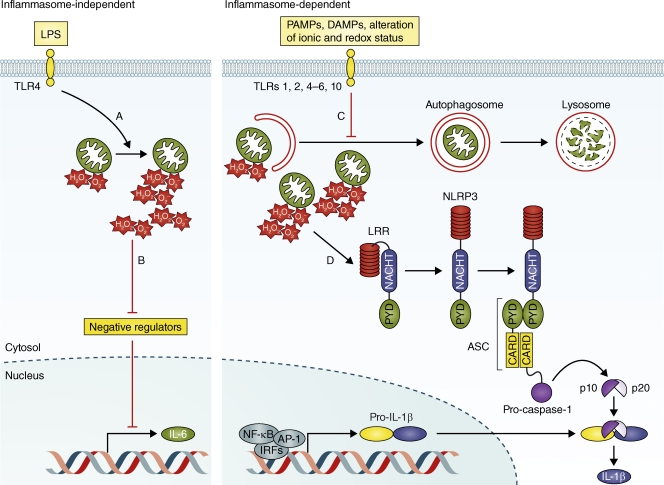
High levels of reactive oxygen species (ROS) are observed in chronic human diseases such as neurodegeneration, Crohn's disease, and cancer. In addition to the presence of oxidative stress, these diseases are also characterized by deregulated inflammatory responses, including but not limited to proinflammatory cytokine production. New work exploring the mechanisms linking ROS and inflammation find that ROS derived from mitochondria act as signal-transducing molecules that provoke the up-regulation of inflammatory cytokine subsets via distinct molecular pathways.
在慢性人类疾病中,如神经退行性疾病、克罗恩病和癌症,观察到高水平的活性氧(ROS)。除了氧化应激的存在外,这些疾病还以失调的炎症反应为特征,包括但不限于促炎细胞因子的产生。新的研究探索了将 ROS 和炎症联系起来的机制,发现来自线粒体的 ROS 作为信号转导分子,通过不同的分子途径引发炎症细胞因子亚群的上调。