Systems Biology Group, Department of Physiology and Medical Physics, Royal College of Surgeons in Ireland, Dublin, Ireland.
Mol Syst Biol. 2011 Mar 1;7:470. doi: 10.1038/msb.2011.2.
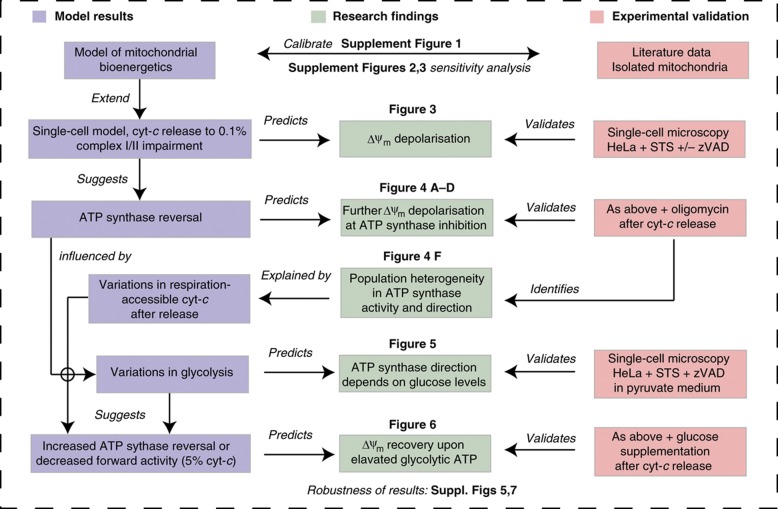
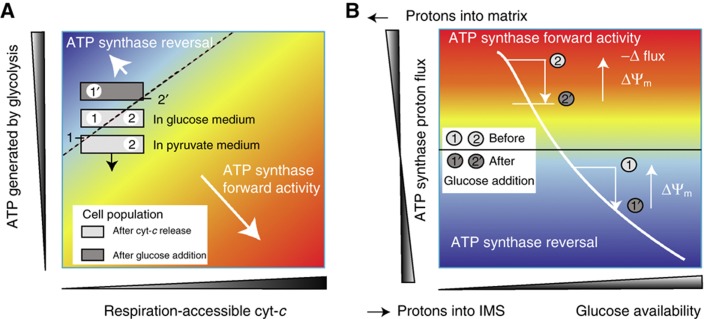
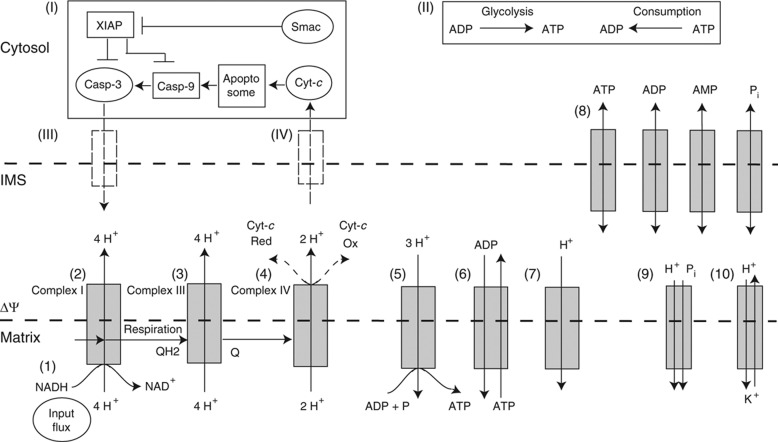
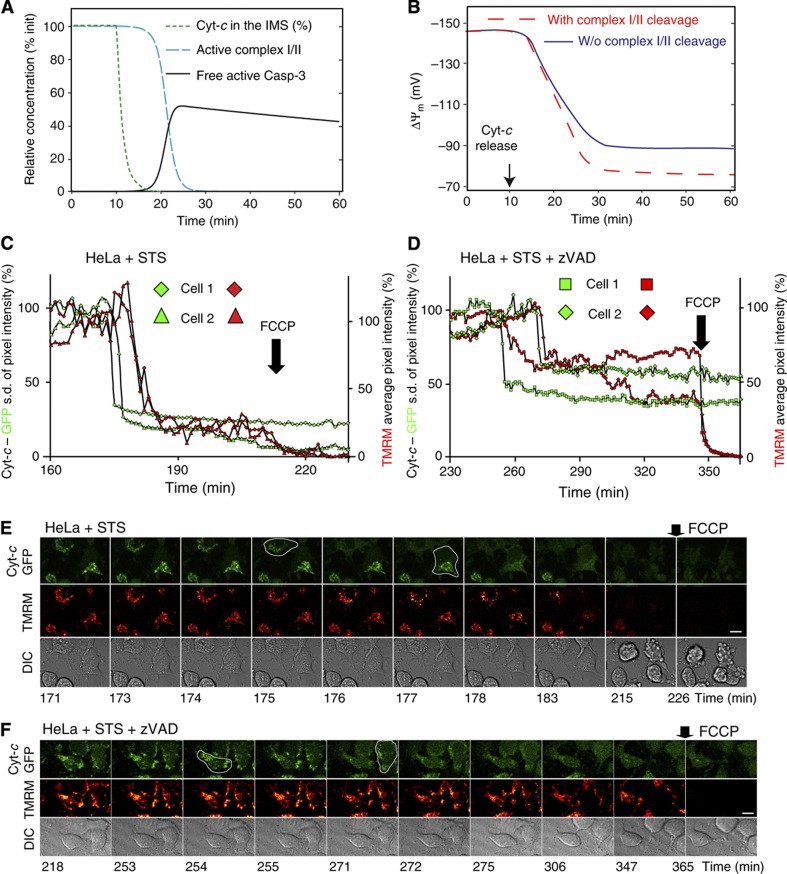
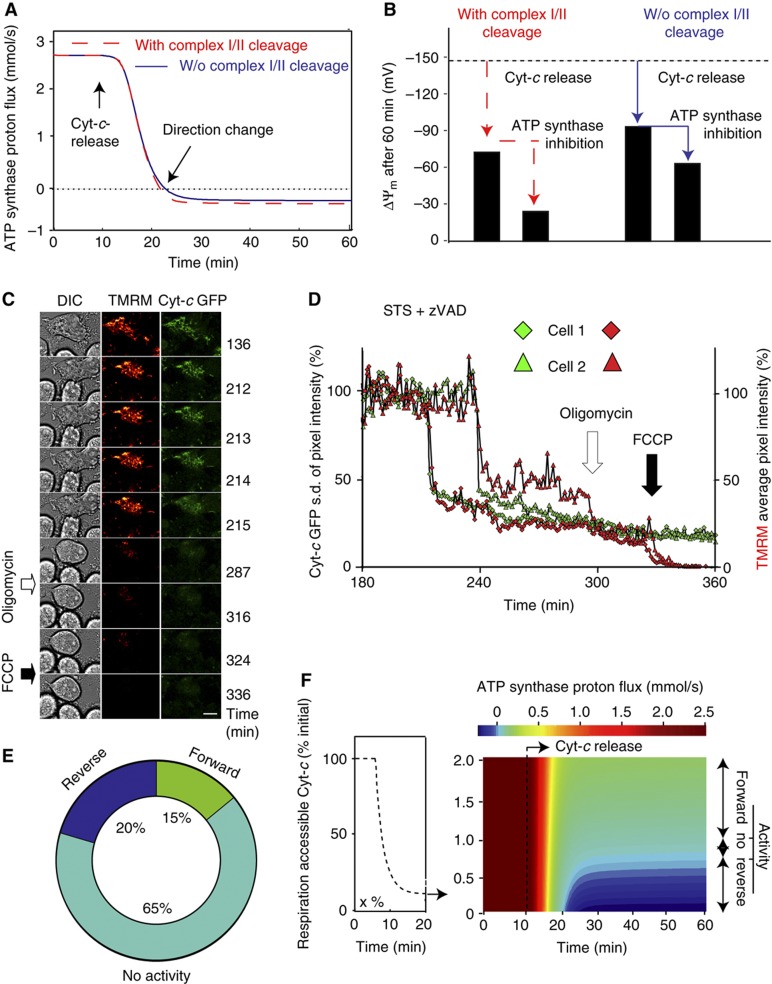
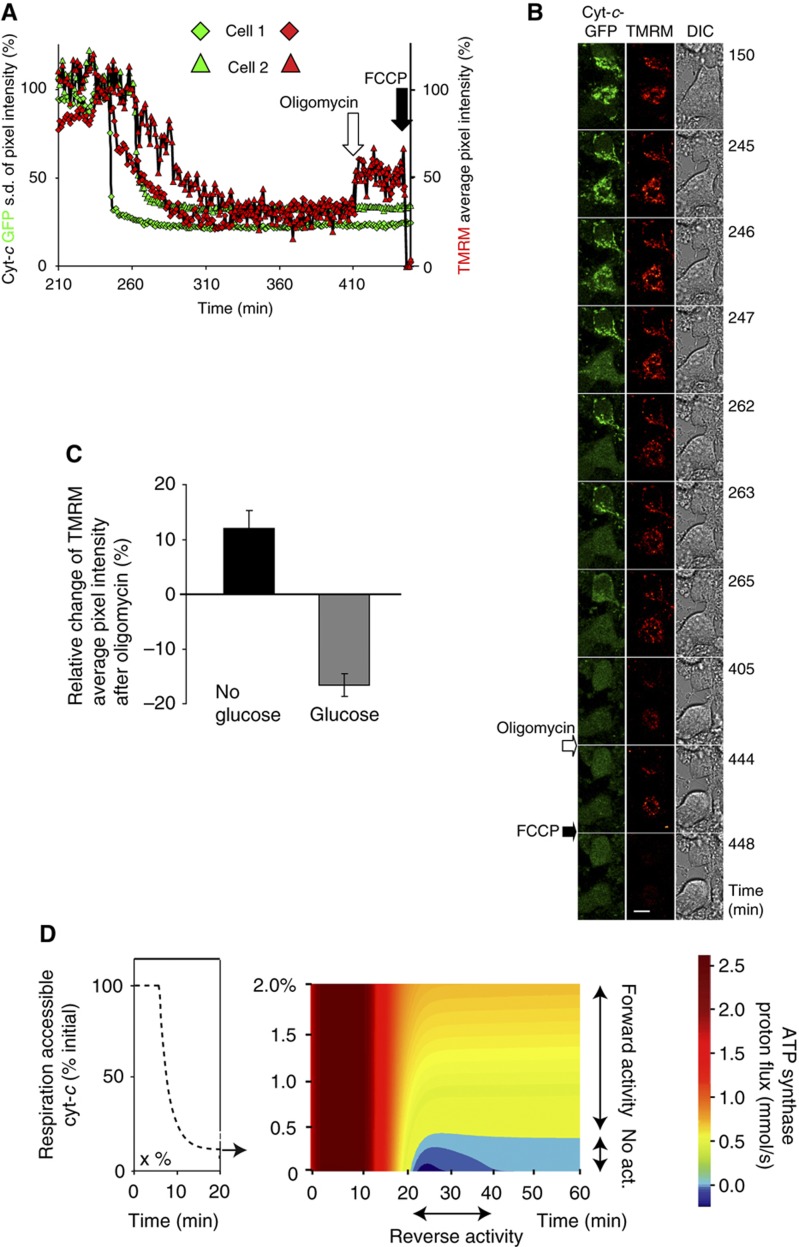
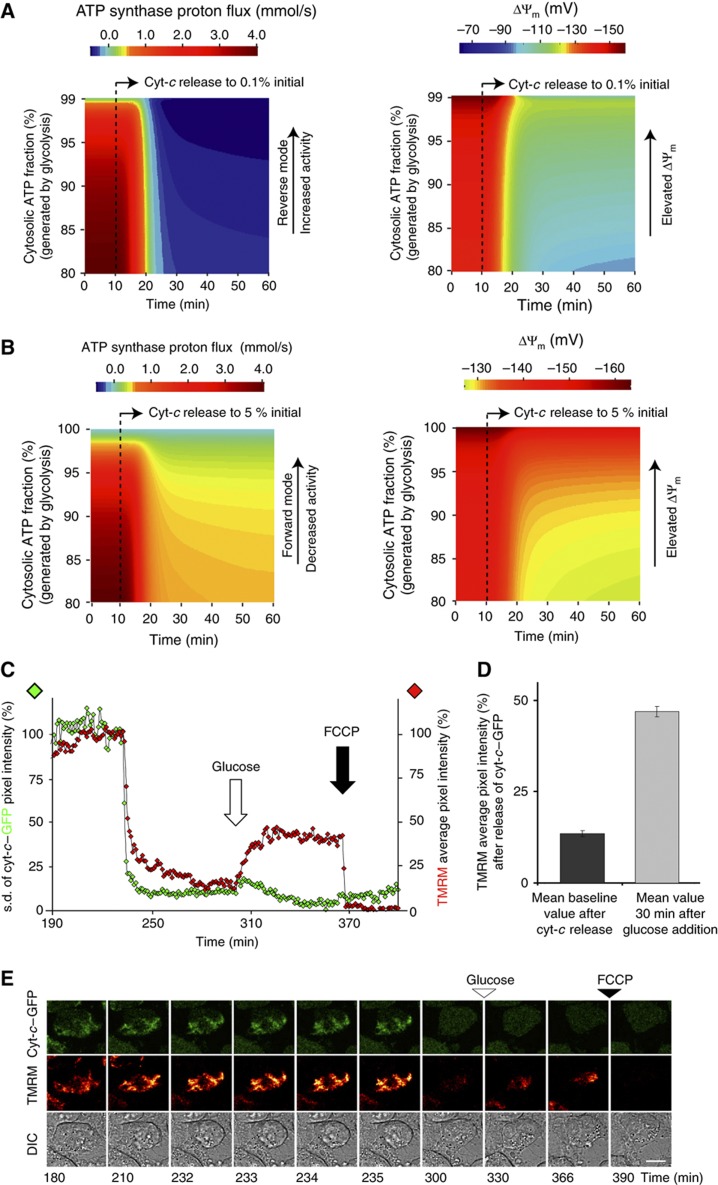
Many anticancer drugs activate caspases via the mitochondrial apoptosis pathway. Activation of this pathway triggers a concomitant bioenergetic crisis caused by the release of cytochrome-c (cyt-c). Cancer cells are able to evade these processes by altering metabolic and caspase activation pathways. In this study, we provide the first integrated system study of mitochondrial bioenergetics and apoptosis signalling and examine the role of mitochondrial cyt-c release in these events. In accordance with single-cell experiments, our model showed that loss of cyt-c decreased mitochondrial respiration by 95% and depolarised mitochondrial membrane potential ΔΨ(m) from -142 to -88 mV, with active caspase-3 potentiating this decrease. ATP synthase was reversed under such conditions, consuming ATP and stabilising ΔΨ(m). However, the direction and level of ATP synthase activity showed significant heterogeneity in individual cancer cells, which the model explained by variations in (i) accessible cyt-c after release and (ii) the cell's glycolytic capacity. Our results provide a quantitative and mechanistic explanation for the protective role of enhanced glucose utilisation for cancer cells to avert the otherwise lethal bioenergetic crisis associated with apoptosis initiation.
许多抗癌药物通过线粒体凋亡途径激活半胱天冬酶。该途径的激活引发了细胞色素 c (cyt-c) 释放引起的伴随生物能危机。癌细胞能够通过改变代谢和半胱天冬酶激活途径来逃避这些过程。在这项研究中,我们提供了线粒体生物能学和细胞凋亡信号的首次综合系统研究,并研究了线粒体 cyt-c 释放在这些事件中的作用。与单细胞实验一致,我们的模型表明,cyt-c 的丧失使线粒体呼吸降低了 95%,并使线粒体膜电位 ΔΨ(m) 从-142 降低到-88 mV,活性半胱天冬酶-3 增强了这种降低。在这种情况下,ATP 合酶被逆转,消耗 ATP 并稳定 ΔΨ(m)。然而,在单个癌细胞中,ATP 合酶活性的方向和水平表现出显著的异质性,该模型通过以下两种情况解释了这一现象:(i) 释放后可获得的 cyt-c 和 (ii) 细胞的糖酵解能力。我们的结果为增强葡萄糖利用对癌细胞的保护作用提供了定量和机制解释,以避免与凋亡起始相关的致命生物能危机。