Tripathi Ramesh Chandra, Sing Neera
Bioinformatics Department, Indian Institute of Information Technology, Allahabad, India.
Bioinformation. 2010 Nov 1;5(5):198-201. doi: 10.6026/97320630005198.
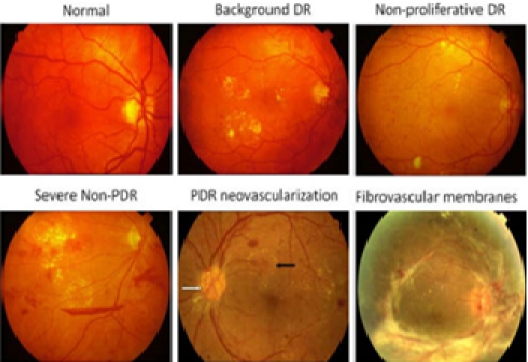
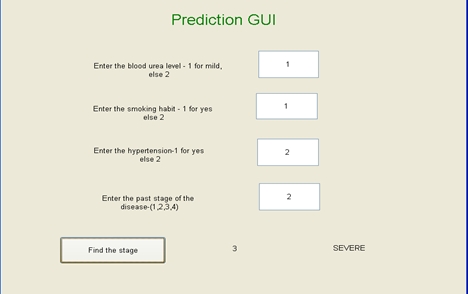
The number of Diabetes patients has risen in both the developing and the developed nations. It is associated with lot complications retinopathy, nephropathy, neuropathy etc. Diabetic retinopathy is one of the leading causes of preventable blindness. Diabetic patients have to be monitored at regular intervals to detect any signs of retinopathy and deterioration of vision and timely intervention. This requires lot of time and cost both on the part of the patient and the specialist. Therefore there is a need to differentiate the ' high risk ' patients from the ' low risk ' patients, so that the high risk ones can be managed more rigorously while the low risk patients can be referred for less frequent screenings and checkups. Data of around 100 patients with Grade 1 retinopathy was collected. Their physiological parameters with their DR grading after 3 years was recorded. Physiological parameters which were having a higher impact on the course of Retinopathy were taken (e.g. Mild blood urea, Hypertension and Smoking in this case). Transition probabilities of going from one stage to other were calculated. Probability of having a single physiological parameter in a given stage of DR at a given point of time was calculated. Probability of various combinations of these physiological parameters in a given stage of disease was calculated. Then by knowing the present stage of that disease future stage (3 years later in this case) of the disease can be predicted. Based on these predictions, the ' high risk ' patients are differentiated from the ' low risk ' patients and are accordingly referred for screenings and interventions.
糖尿病患者的数量在发展中国家和发达国家均有所上升。它与许多并发症相关,如视网膜病变、肾病、神经病变等。糖尿病视网膜病变是可预防失明的主要原因之一。糖尿病患者必须定期接受监测,以检测视网膜病变的任何迹象以及视力恶化情况,并及时进行干预。这在患者和专科医生方面都需要大量时间和成本。因此,有必要区分“高风险”患者和“低风险”患者,以便对高风险患者进行更严格的管理,而低风险患者可转介进行不那么频繁的筛查和检查。收集了约100例1级视网膜病变患者的数据。记录了他们的生理参数以及3年后的糖尿病视网膜病变分级。选取了对视网膜病变病程影响较大的生理参数(例如在这种情况下的轻度血尿素、高血压和吸烟)。计算了从一个阶段转变到另一个阶段的转移概率。计算了在给定时间点糖尿病视网膜病变给定阶段出现单一生理参数的概率。计算了疾病给定阶段这些生理参数各种组合的概率。然后,通过了解该疾病的当前阶段,可以预测该疾病的未来阶段(在这种情况下为3年后)。基于这些预测,区分出“高风险”患者和“低风险”患者,并相应地转介他们进行筛查和干预。