AP-HP, Hôpital Paul Brousse, Service de Biochimie et Biologie Moléculaire, 14 Avenue Paul Vaillant Couturier, Villejuif Cedex 94804, France.
Cell Death Dis. 2011 Jan 13;2(1):e111. doi: 10.1038/cddis.2010.89.
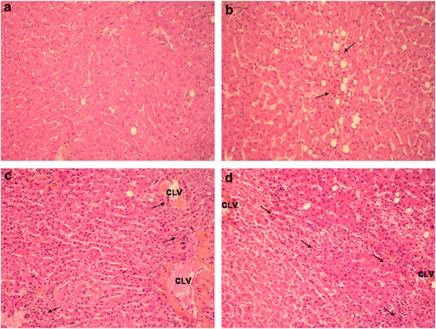
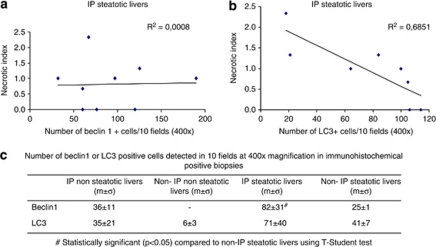
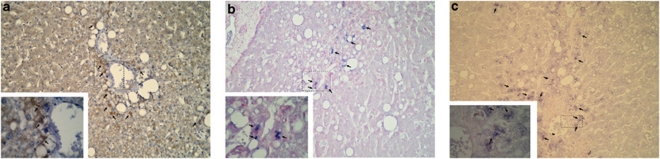
Whether ischemic preconditioning (IP) reduces ischemia/reperfusion (I/R) injury in human normal and fatty livers remains controversial. We compared two independent groups of liver donor transplants with versus without steatosis to evaluate IP consequences. Liver donors with (n=22) or without (n=28) steatosis either did or did not undergo IP before graft retrieval. Clinical data from the recipients, as well as histological and immunohistological characteristics of post-reperfusion biopsies were analyzed. Incidence of post-reperfusion necrosis was increased (10/10 versus 9/14, respectively; P<0.05) and the clinical outcome of recipients was worse for non-IP steatotic liver grafts compared with non-IP non-steatotic grafts. IP significantly lowered the transaminase values only in patients receiving a non-steatotic liver. An increased expression of beclin-1 and LC3, two pro-autophagic proteins, tended to decrease the incidence of necrosis (P=0.067) in IP steatotic livers compared with non-IP steatotic group. IP decreased the incidence of acute and chronic rejection episodes in steatotic livers (2/12 versus 6/10; P=0.07 and 2/12 versus 7/10; P<0.05, respectively), but not in non-steatotic livers. Thus, IP may induce autophagy in human steatotic liver grafts and reduce rejection in their recipients.
缺血预处理(IP)是否能减轻人类正常和脂肪肝中的缺血/再灌注(I/R)损伤仍存在争议。我们比较了两组独立的肝移植供体,一组有脂肪变性,另一组没有,以评估 IP 的后果。有(n=22)或没有(n=28)脂肪变性的肝供体在获取移植物前分别进行或不进行 IP。分析了供体的临床数据,以及再灌注活检的组织学和免疫组织化学特征。与非 IP 非脂肪变性肝移植物相比,非 IP 脂肪变性肝移植物的再灌注后坏死发生率增加(分别为 10/10 与 9/14;P<0.05),且受体的临床结局更差。IP 仅在接受非脂肪变性肝的患者中显著降低转氨酶值。两种促自噬蛋白 beclin-1 和 LC3 的表达增加,倾向于降低 IP 脂肪变性肝与非 IP 脂肪变性肝相比的坏死发生率(P=0.067)。IP 减少了脂肪变性肝中的急性和慢性排斥反应发作的发生率(分别为 2/12 与 6/10;P=0.07 和 2/12 与 7/10;P<0.05),但对非脂肪变性肝没有影响。因此,IP 可能在人类脂肪变性肝移植物中诱导自噬,并减少其受体中的排斥反应。