Biomedical and Environmental Thematic Group, Ifakara Health Institute, PO Box 53, Ifakara, Tanzania.
Proc Biol Sci. 2011 Oct 22;278(1721):3142-51. doi: 10.1098/rspb.2011.0153. Epub 2011 Mar 9.
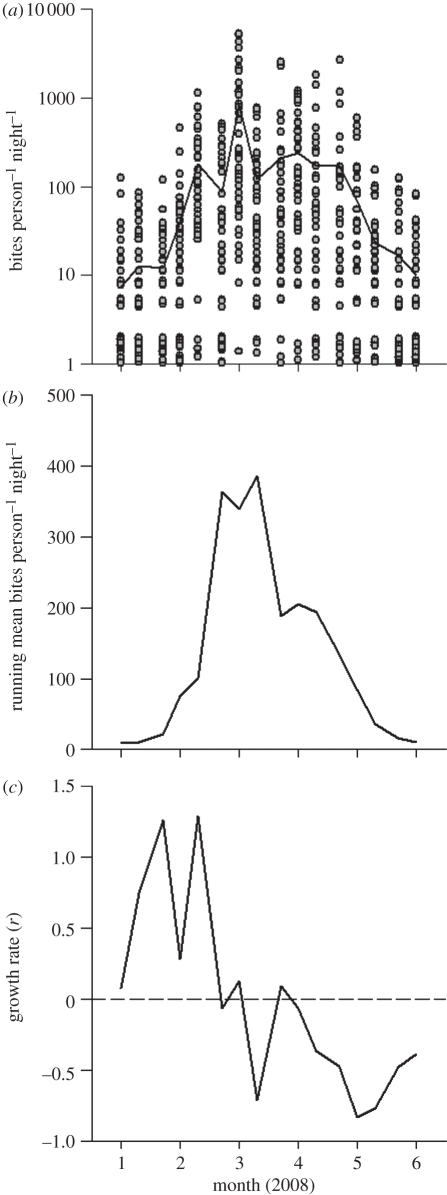
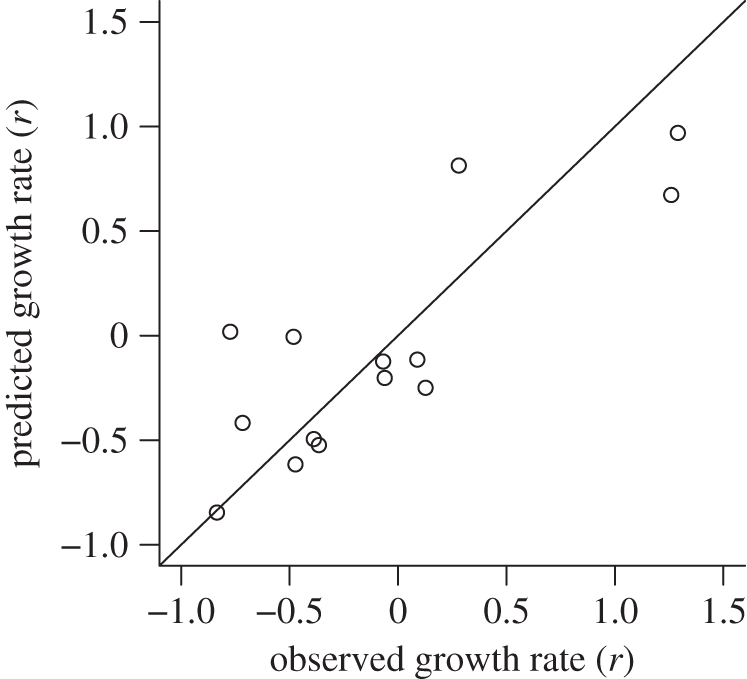
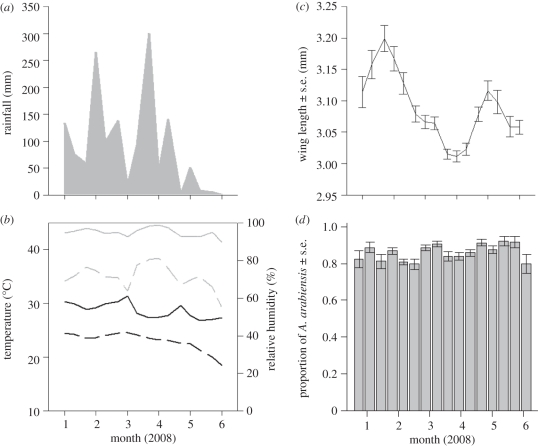
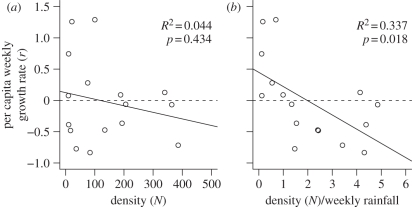
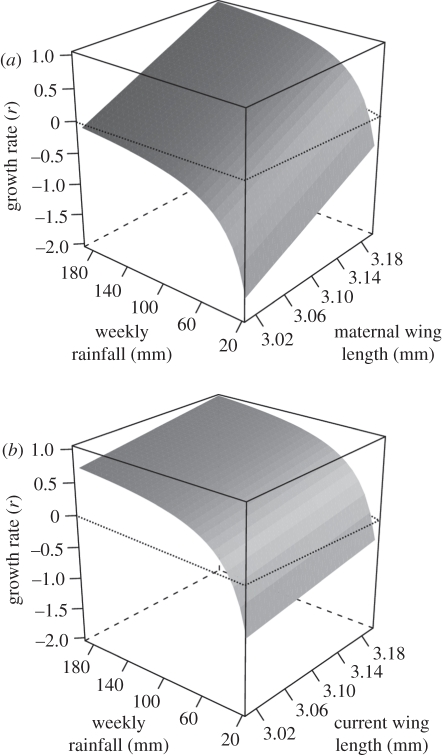
Understanding the endogenous factors that drive the population dynamics of malaria mosquitoes will facilitate more accurate predictions about vector control effectiveness and our ability to destabilize the growth of either low- or high-density insect populations. We assessed whether variation in phenotypic traits predict the dynamics of Anopheles gambiae sensu lato mosquitoes, the most important vectors of human malaria. Anopheles gambiae dynamics were monitored over a six-month period of seasonal growth and decline. The population exhibited density-dependent feedback, with the carrying capacity being modified by rainfall (97% wAIC(c) support). The individual phenotypic expression of the maternal (p = 0.0001) and current (p = 0.040) body size positively influenced population growth. Our field-based evidence uniquely demonstrates that individual fitness can have population-level impacts and, furthermore, can mitigate the impact of exogenous drivers (e.g. rainfall) in species whose reproduction depends upon it. Once frontline interventions have suppressed mosquito densities, attempts to eliminate malaria with supplementary vector control tools may be attenuated by increased population growth and individual fitness.
了解导致疟疾蚊子种群动态的内在因素,将有助于更准确地预测媒介控制效果,以及我们破坏低或高密度昆虫种群增长的能力。我们评估了表型特征的变化是否可以预测冈比亚按蚊复合体蚊子(人类疟疾最重要的传播媒介)的动态。在季节性增长和下降的六个月期间监测了冈比亚按蚊的种群动态。该种群表现出密度依赖的反馈,其承载能力受降雨量(97% wAIC(c) 支持)的影响。母体(p = 0.0001)和当前(p = 0.040)体型的个体表型表达均对种群增长有积极影响。我们基于实地的证据表明,个体适应性会对种群水平产生影响,而且可以减轻其繁殖依赖的外源性驱动因素(如降雨)的影响。一旦一线干预措施降低了蚊子密度,利用补充性的媒介控制工具来消除疟疾,可能会因种群增长和个体适应性增强而减弱。