Perumal Thanneer M, Gunawan Rudiyanto
Department of Chemical and Biomolecular Engineering, National University of Singapore, Singapore.
BMC Syst Biol. 2011 Mar 15;5:41. doi: 10.1186/1752-0509-5-41.
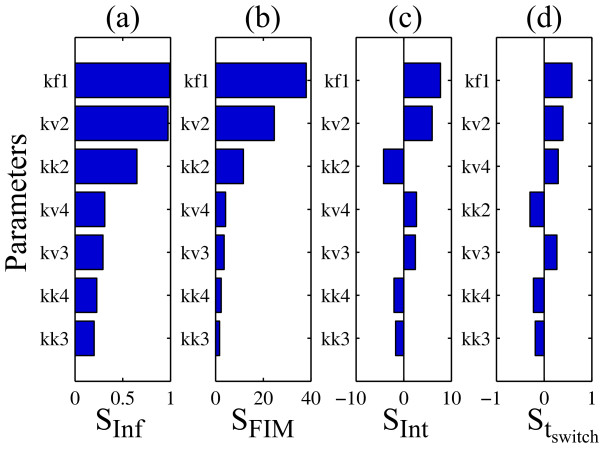
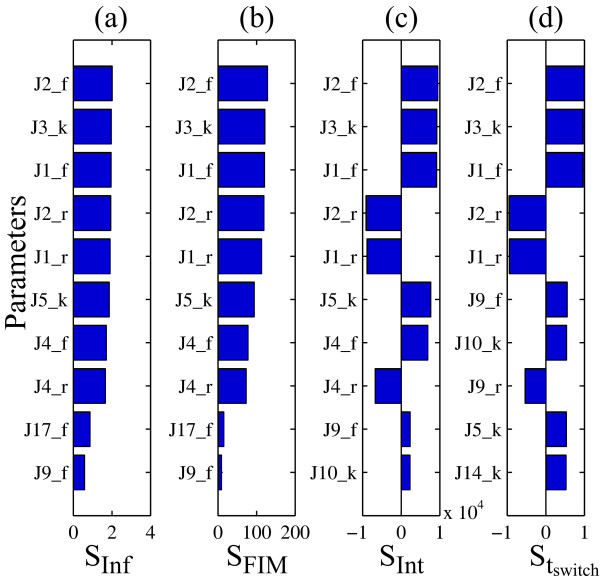
Parametric sensitivity analysis (PSA) has become one of the most commonly used tools in computational systems biology, in which the sensitivity coefficients are used to study the parametric dependence of biological models. As many of these models describe dynamical behaviour of biological systems, the PSA has subsequently been used to elucidate important cellular processes that regulate this dynamics. However, in this paper, we show that the PSA coefficients are not suitable in inferring the mechanisms by which dynamical behaviour arises and in fact it can even lead to incorrect conclusions.
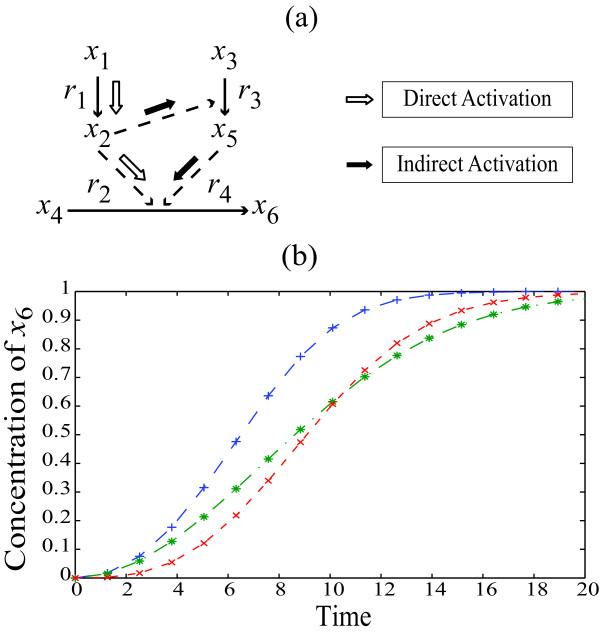
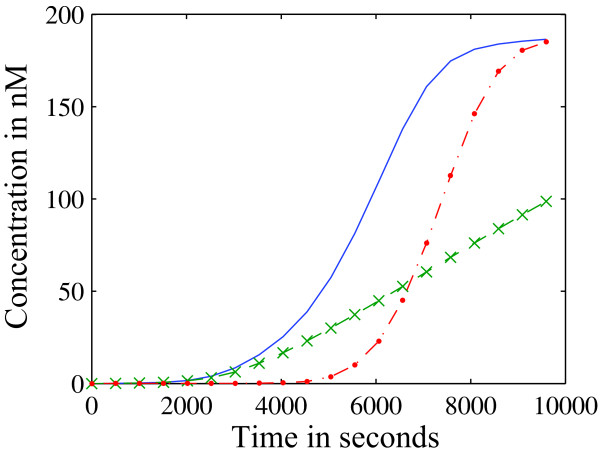
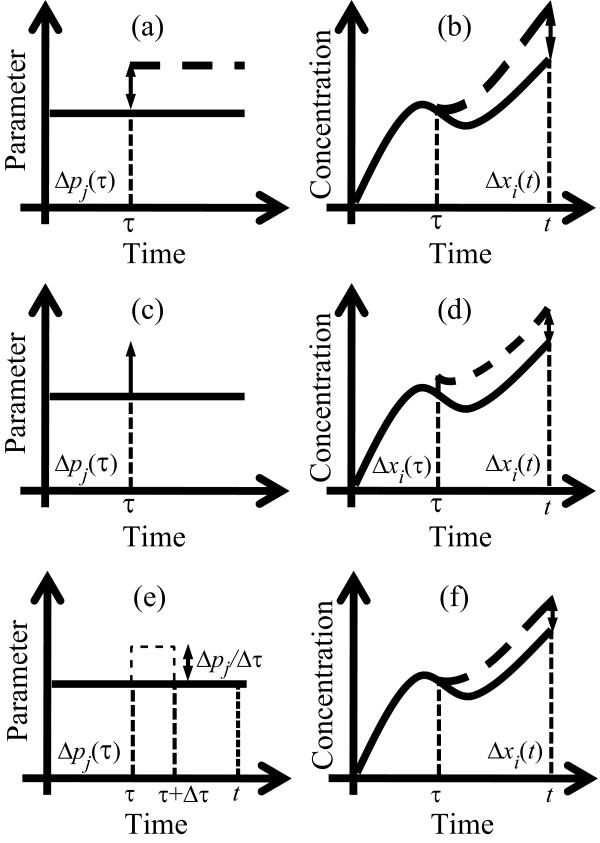
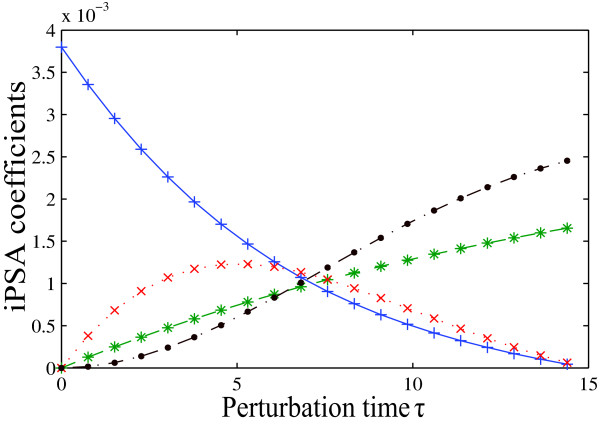
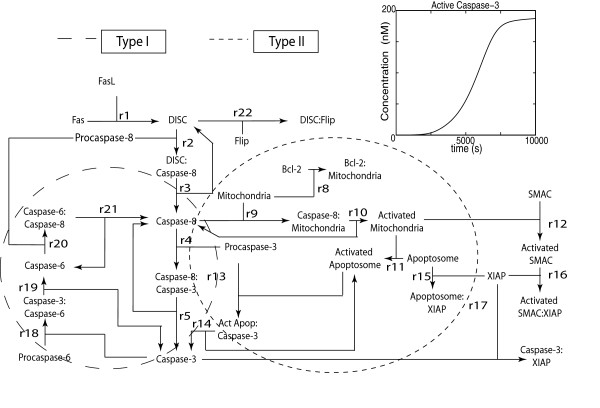
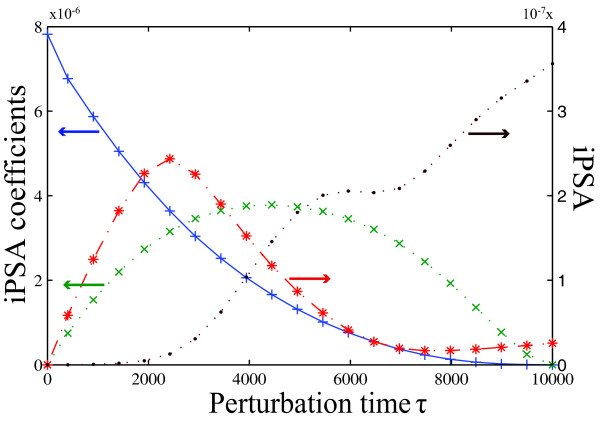
A careful interpretation of parametric perturbations used in the PSA is presented here to explain the issue of using this analysis in inferring dynamics. In short, the PSA coefficients quantify the integrated change in the system behaviour due to persistent parametric perturbations, and thus the dynamical information of when a parameter perturbation matters is lost. To get around this issue, we present a new sensitivity analysis based on impulse perturbations on system parameters, which is named impulse parametric sensitivity analysis (iPSA). The inability of PSA and the efficacy of iPSA in revealing mechanistic information of a dynamical system are illustrated using two examples involving switch activation.
The interpretation of the PSA coefficients of dynamical systems should take into account the persistent nature of parametric perturbations involved in the derivation of this analysis. The application of PSA to identify the controlling mechanism of dynamical behaviour can be misleading. By using impulse perturbations, introduced at different times, the iPSA provides the necessary information to understand how dynamics is achieved, i.e. which parameters are essential and when they become important.
参数敏感性分析(PSA)已成为计算系统生物学中最常用的工具之一,其中敏感性系数用于研究生物模型的参数依赖性。由于许多此类模型描述了生物系统的动态行为,PSA随后被用于阐明调节这种动态行为的重要细胞过程。然而,在本文中,我们表明PSA系数不适用于推断动态行为产生的机制,实际上它甚至可能导致错误的结论。
本文对PSA中使用的参数扰动进行了仔细解读,以解释在推断动态行为时使用这种分析方法所存在的问题。简而言之,PSA系数量化了由于持续参数扰动导致的系统行为的综合变化,因此当参数扰动起作用时的动态信息就丢失了。为了解决这个问题,我们提出了一种基于对系统参数进行脉冲扰动的新敏感性分析方法,称为脉冲参数敏感性分析(iPSA)。通过两个涉及开关激活的例子说明了PSA在揭示动态系统机制信息方面的无能为力以及iPSA的有效性。
对动态系统的PSA系数进行解读时应考虑到该分析推导过程中参数扰动的持续性。应用PSA来识别动态行为的控制机制可能会产生误导。通过在不同时间引入脉冲扰动,iPSA提供了理解动态行为如何实现所需的信息,即哪些参数是至关重要的以及它们何时变得重要。