BaHammam Ahmed S, Almistehi Wael, Albatli Abdurrahman, AlShaya Shaya
University Sleep Disorders Center, College of Medicine, King Saud University, Riyadh, Kingdom of Saudi Arabia.
Ann Saudi Med. 2011 Mar-Apr;31(2):183-6. doi: 10.4103/0256-4947.78207.
There are no published data on the chronotypes of young Saudi adults. This study assessed the distribution of chronotypes in college-aged Saudis.
Cross-sectional survey of college students.
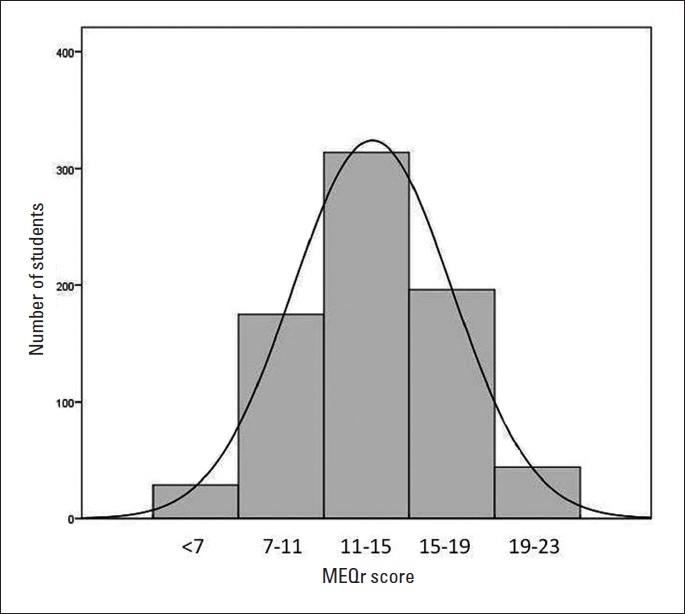
A validated abridged version of the original Horne and Ostberg morningness-eveningness questionnaire (MEQr) was used to assess the chronotype of 759 subjects.
Of 540 (71.1%) males and 219 (28.9%) females participated in this study ( age range, 18-32 years), 138 (18.2%) were "morning-types," 417 (54.9%) were "neither-types" and 204 (26.9%) were "evening-types." There was no significant gender difference in MEQr typology. In Saudis, particularly males, the frequency of morning typology was somewhat higher than that reported for individuals in similar age groups in some Western countries.
Most Saudi college students had no preference for morningness or eveningness and were classified as "intermediate-types." Morningness appears to be slightly more common in Saudis, especially males, than in individuals of some Western societies.
关于沙特年轻成年人的昼夜节律类型,目前尚无公开数据。本研究评估了沙特大学生的昼夜节律类型分布情况。
对大学生进行横断面调查。
采用经过验证的原始霍恩和奥斯特伯格晨型-夜型问卷(MEQr)的简化版,对759名受试者的昼夜节律类型进行评估。
在参与本研究的540名(71.1%)男性和219名(28.9%)女性中(年龄范围18 - 32岁),138名(18.2%)为“晨型人”,417名(54.9%)为“中间型”,204名(26.9%)为“夜型人”。MEQr类型在性别上无显著差异。在沙特人,尤其是男性中,晨型的频率略高于一些西方国家类似年龄组人群的报道。
大多数沙特大学生对晨型或夜型没有偏好,被归类为“中间型”。与一些西方社会的人群相比,晨型在沙特人,尤其是男性中似乎更为常见。