Laboratorio de Bioconservación ante el Cambio Global, El Colegio de la Frontera Sur (ECOSUR), Av. del Centenario Km. 5.5, C.P. 77900, Chetumal, Quintana Roo, Mexico.
J Ethnobiol Ethnomed. 2011 Mar 30;7:12. doi: 10.1186/1746-4269-7-12.
In practically every human culture, the use of arthropods as medicinal resources has been reported. In Mexico, the Mayan people mainly use plants but occasionally also animals and minerals in their medicine. This article is the first to report the traditional use of the tarantula Brachypelma vagans by medicine men in the Chol community, an ancient indigenous group that inhabits the southeastern part of Mexico. We also describe the utility of such arachnids in traditional medicine.
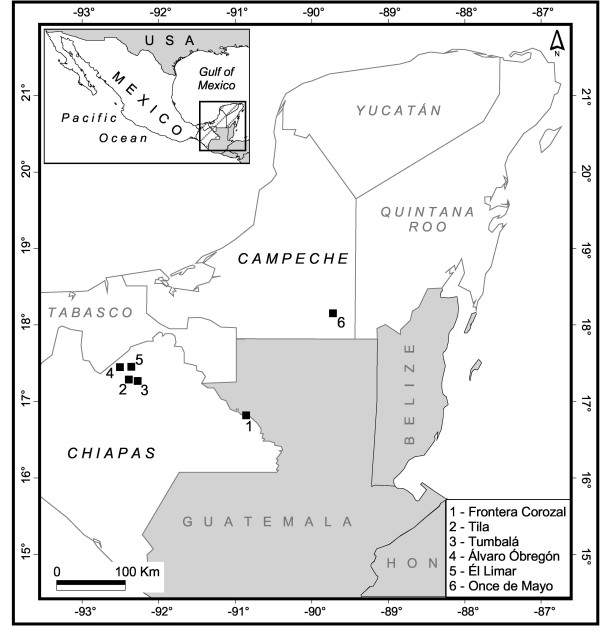
This study was carried out in different Chol communities in the states of Chiapas and Campeche (southeastern Mexico) from 2003 until 2007. We interviewed the local medicine men, patients and non-Chol people in each village visited to collect information about the rituals involved and the effectiveness of this traditional medicine and also their opinion of this traditional medicine.
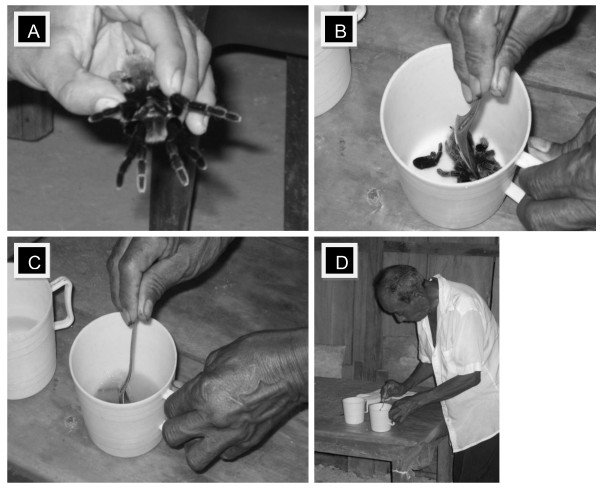
In all independent villages, the people who present an illness called 'aire de tarantula' or tarantula wind with symptoms including chest pain, coughing and asthma, were treated by the medicine man (called 'hierbatero') with a tarantula-based beverage. From village to village, the beverage has a similar base composition but some variations occur in additional ingredients depending on the individual medicine man. Like in all traditional Mayan medicine, the ritual of the ceremony consists of drinking the tarantula-based beverage and this is principally accompanied by chants and burning of incense.
The recipe of the tarantula-based beverage and the procedure of this ritual ceremony were fairly constant in all the villages visited. Our work shows that despite the tarantula's bad image in several cultures, in others positive use is made of these spiders, as in modern medicine.
在几乎每一种人类文化中,都有使用节肢动物作为药用资源的报道。在墨西哥,玛雅人主要使用植物,但偶尔也使用动物和矿物质作为药物。本文首次报道了恰帕斯州和坎佩切州(墨西哥东南部)的 Chol 社区的巫师使用狼蛛 Brachypelma vagans 的传统用法。我们还描述了这些蛛形纲动物在传统医学中的用途。
这项研究于 2003 年至 2007 年在不同的 Chol 社区进行,这些社区位于墨西哥东南部的恰帕斯州和坎佩切州。我们采访了当地的巫师、病人和非 Chol 人,以收集有关仪式、这种传统药物的有效性以及他们对这种传统药物的看法的信息。
在所有独立的村庄,患有“aire de tarantula”或狼蛛风的人都会被巫师(称为“hierbatero”)用一种基于狼蛛的饮料进行治疗。这种饮料的基本成分在不同的村庄基本相同,但根据个人巫师的不同,会有一些额外成分的变化。与所有传统的玛雅医学一样,仪式的仪式包括喝基于狼蛛的饮料,这主要伴随着吟唱和焚香。
基于狼蛛的饮料配方和仪式程序在所有被访问的村庄中都相当一致。我们的工作表明,尽管在许多文化中,狼蛛的形象都很糟糕,但在其他文化中,这些蜘蛛被积极地利用,就像在现代医学中一样。