Instituto de Medicina Molecular, Faculdade de Medicina de Lisboa, Lisbon, Hospital Universitário de Santa Maria, Av, Prof, Egas Moniz, P-1649-028 Lisboa, Portugal.
Malar J. 2011 Mar 31;10:74. doi: 10.1186/1475-2875-10-74.
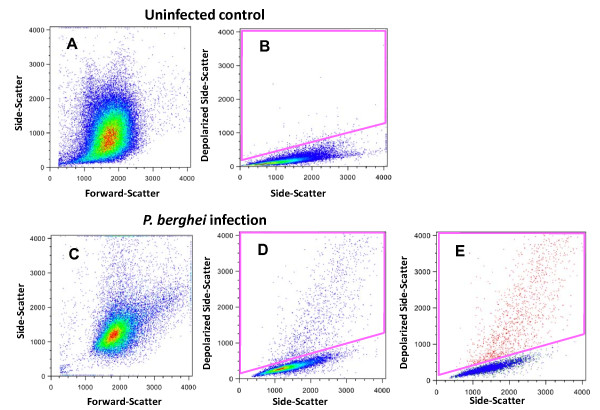
Malaria pigment (haemozoin, Hz) has been the focus of diverse research efforts. However, identification of Hz-containing leukocytes or parasitized erythrocytes is usually based on microscopy, with inherent limitations. Flow cytometric detection of depolarized Side-Scatter is more accurate and its adaptation to common bench top flow cytometers might allow several applications. These can range from the ex-vivo and in-vitro detection and functional analysis of Hz-containing leukocytes to the detection of parasitized Red-Blood-Cells (pRBCs) to assess antimalarial activity.
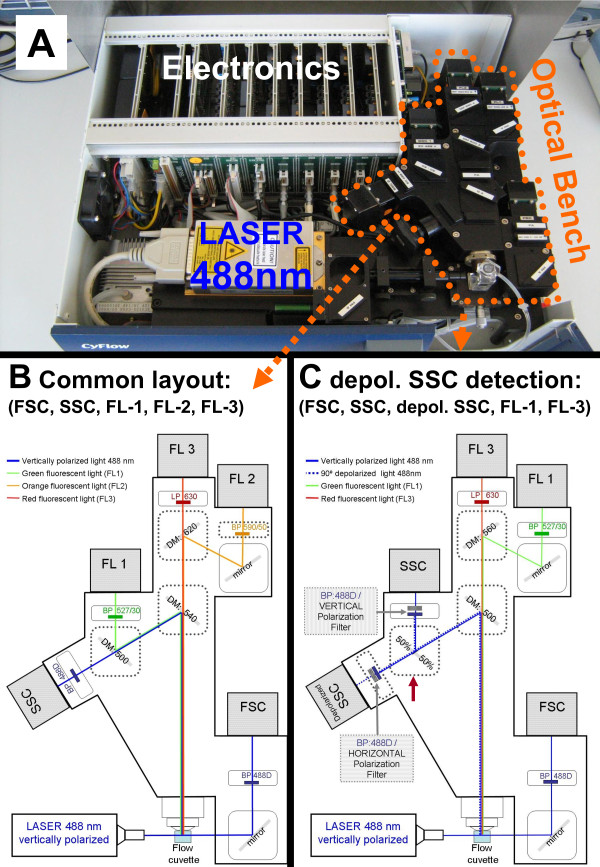
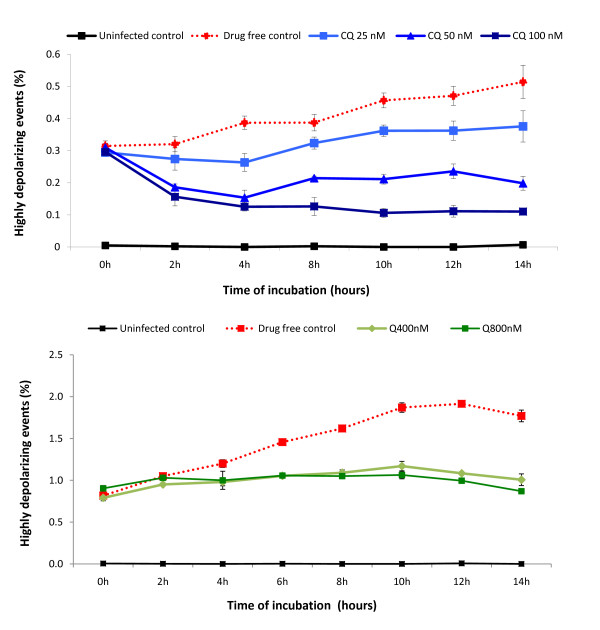
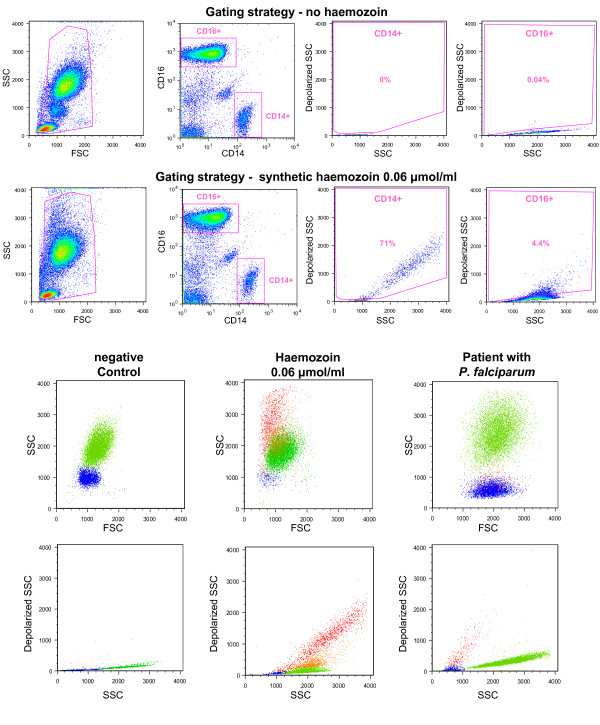
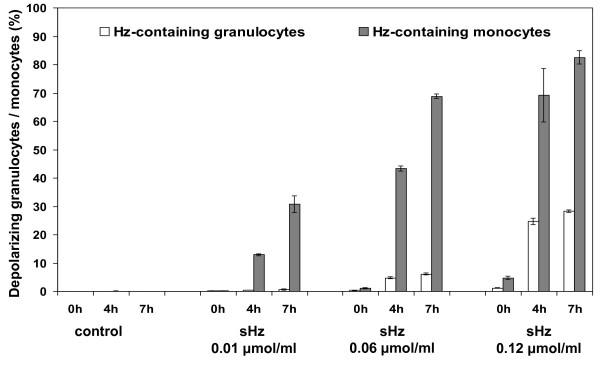
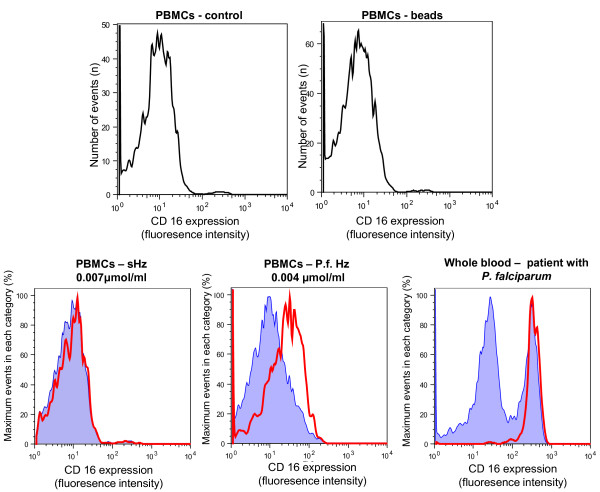
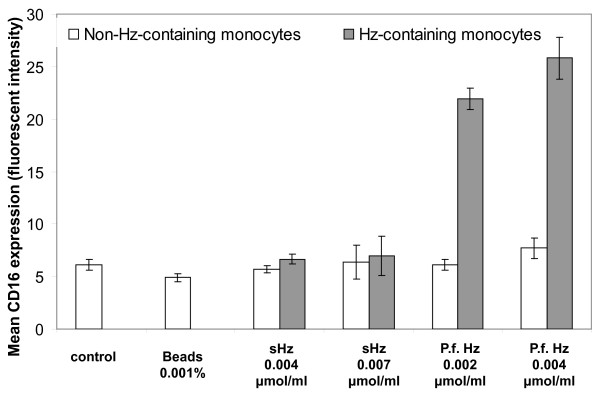
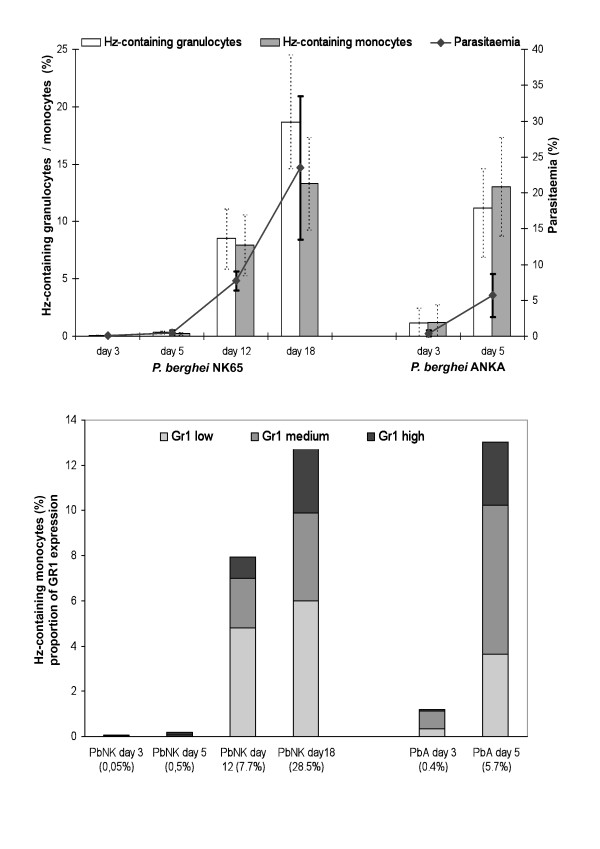
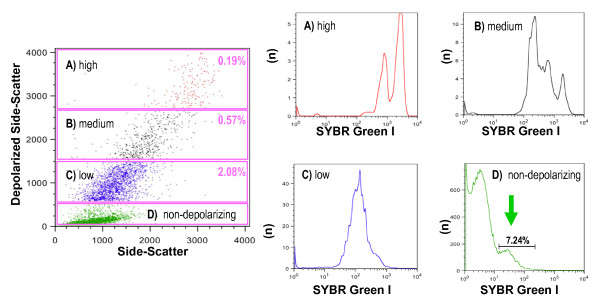
A standard benchtop flow cytometer was adapted to detect depolarized Side-Scatter. Synthetic and Plasmodium falciparum Hz were incubated with whole blood and PBMCs to detect Hz-containing leukocytes and CD16 expression on monocytes. C5BL/6 mice were infected with Plasmodium berghei ANKA or P. berghei NK65 and Hz-containing leukocytes were analysed using CD11b and Gr1 expression. Parasitized RBC from infected mice were identified using anti-Ter119 and SYBR green I and were analysed for depolarized Side Scatter. A highly depolarizing RBC population was monitored in an in-vitro culture incubated with chloroquine or quinine.
A flow cytometer can be easily adapted to detect depolarized Side-Scatter and thus, intracellular Hz. The detection and counting of Hz containing leukocytes in fresh human or mouse blood, as well as in leukocytes from in-vitro experiments was rapid and easy. Analysis of CD14/CD16 and CD11b/Gr1 monocyte expression in human or mouse blood, in a mixed populations of Hz-containing and non-containing monocytes, appears to show distinct patterns in both types of cells. Hz-containing pRBC and different maturation stages could be detected in blood from infected mice. The analysis of a highly depolarizing population that contained mature pRBC allowed to assess the effect of chloroquine and quinine after only 2 and 4 hours, respectively.
A simple modification of a flow cytometer allows for rapid and reliable detection and quantification of Hz-containing leukocytes and the analysis of differential surface marker expression in the same sample of Hz-containing versus non-Hz-containing leukocytes. Importantly, it distinguishes different maturation stages of parasitized RBC and may be the basis of a rapid no-added-reagent drug sensitivity assay.
疟色素(血影蛋白,Hz)一直是各种研究的焦点。然而,含 Hz 的白细胞或寄生红细胞的鉴定通常基于显微镜,存在固有局限性。去极化侧向散射的流式细胞术检测更准确,其适应常见的台式流式细胞仪可能允许多种应用。这些应用范围从含 Hz 的白细胞的体外和体内检测和功能分析,到寄生红细胞(pRBC)的检测以评估抗疟活性。
标准台式流式细胞仪被改编以检测去极化的侧向散射。合成和恶性疟原虫 Hz 与全血和 PBMC 孵育,以检测含 Hz 的白细胞和单核细胞上的 CD16 表达。C5BL/6 小鼠感染恶性疟原虫 ANKA 或 P. berghei NK65,并用 CD11b 和 Gr1 表达分析含 Hz 的白细胞。用抗 Ter119 和 SYBR 绿 I 鉴定感染小鼠的寄生 RBC,并分析其去极化的侧向散射。在与氯喹或奎宁孵育的体外培养物中监测高度去极化的 RBC 群体。
流式细胞仪可以很容易地适应检测去极化的侧向散射,从而检测细胞内的 Hz。新鲜人或鼠血中含 Hz 的白细胞的检测和计数,以及体外实验中的白细胞检测和计数既快速又简单。在人或鼠血中混合含 Hz 和不含 Hz 的单核细胞的 CD14/CD16 和 CD11b/Gr1 单核细胞表达分析中,这两种细胞类型似乎显示出不同的模式。感染小鼠血液中可检测到含 Hz 的 pRBC 和不同的成熟阶段。高度去极化群体的分析包含成熟的 pRBC,可在分别仅孵育 2 小时和 4 小时后评估氯喹和奎宁的效果。
流式细胞仪的简单改装可快速可靠地检测和定量含 Hz 的白细胞,并在同一含 Hz 与不含 Hz 的白细胞样本中分析差异表面标志物表达。重要的是,它区分了寄生 RBC 的不同成熟阶段,并且可能是一种快速无添加试剂药物敏感性测定的基础。