Division of Metabolism, Endocrinology and Nutrition, Diabetes and Obesity Center of Excellence, Department of Medicine, University of Washington, Seattle, WA 98109, USA.
J Proteomics. 2011 Oct 19;74(11):2289-99. doi: 10.1016/j.jprot.2011.04.001. Epub 2011 Apr 9.
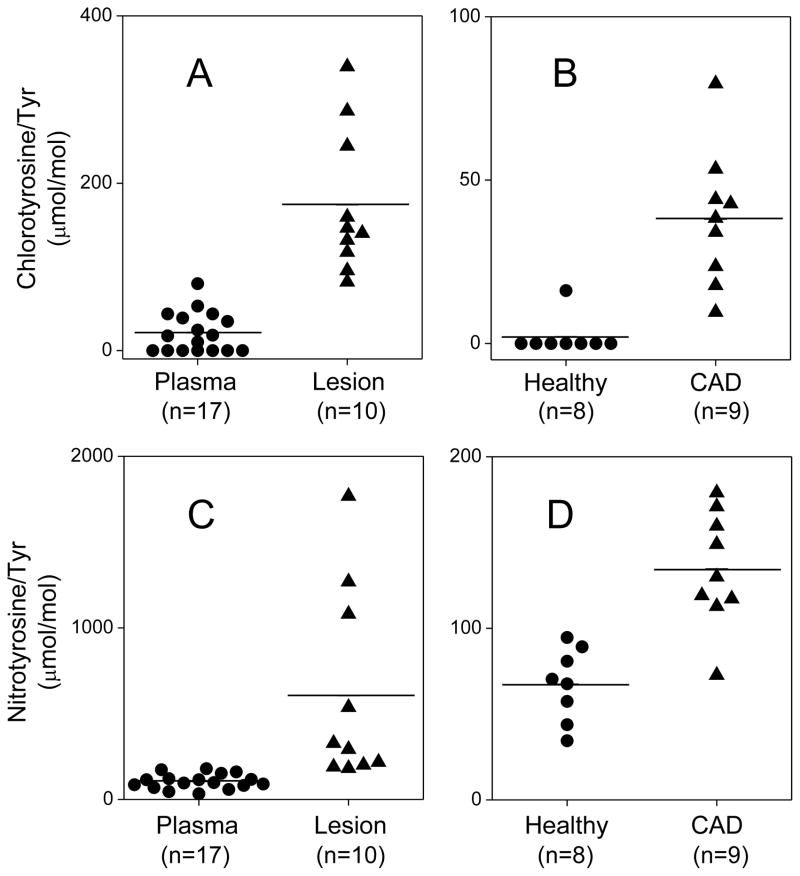
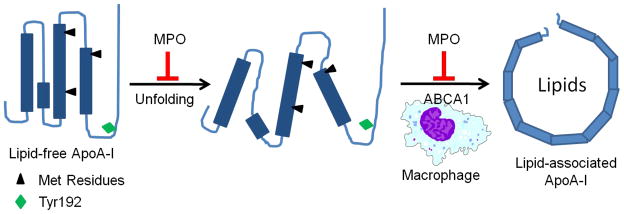
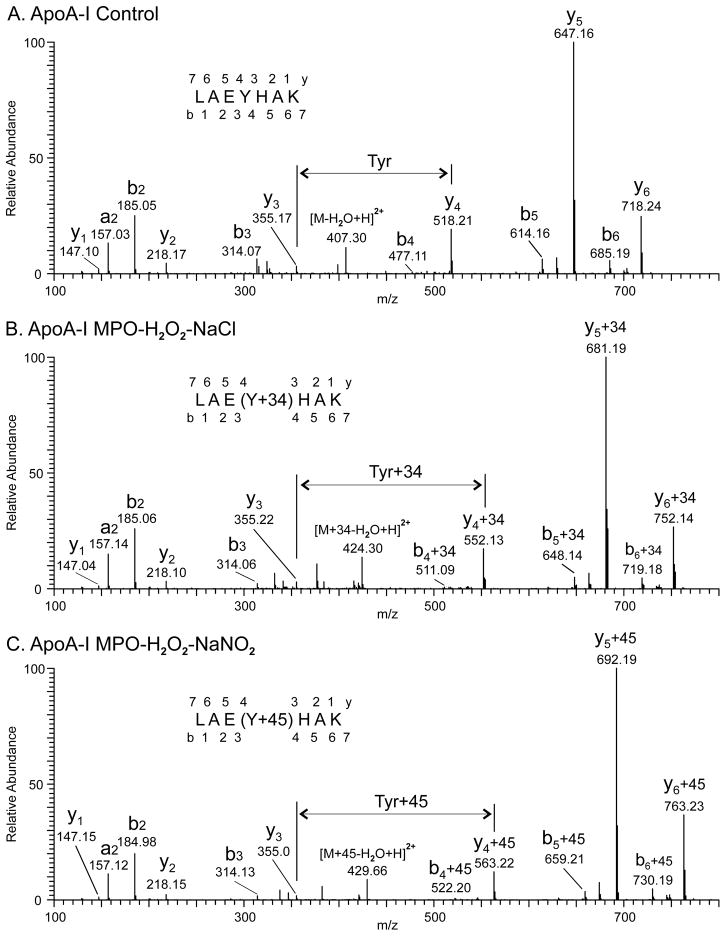
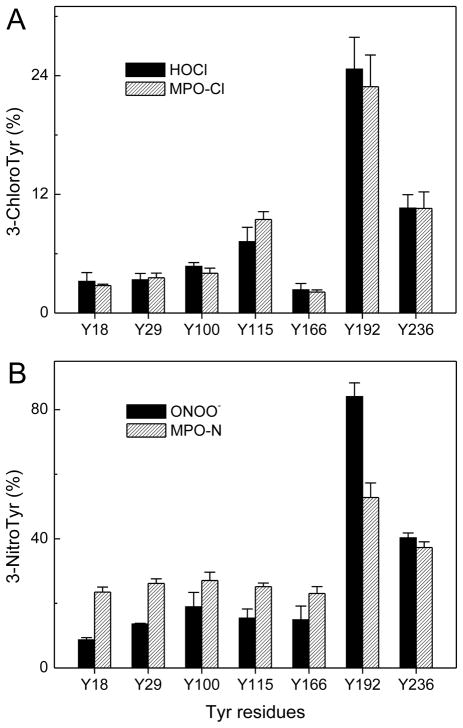
Protein oxidation by phagocytic white blood cells is implicated in tissue injury during inflammation. One important target might be high-density lipoprotein (HDL), which protects against atherosclerosis by removing excess cholesterol from artery wall macrophages. In the human artery wall, cholesterol-laden macrophages are a rich source of myeloperoxidase (MPO), which uses hydrogen peroxide for oxidative reactions in the extracellular milieu. Levels of two characteristic products of MPO-chlorotyrosine and nitrotyrosine-are markedly elevated in HDL from human atherosclerotic lesions. Here, we describe how MPO-dependent chlorination impairs the ability of apolipoprotein A-I (apoA-I), HDL's major protein, to transport cholesterol by the ATP-binding cassette transporter A1 (ABCA1) pathway. Faulty interactions between apoA-I and ABCA1 are involved. Tandem mass spectrometry and investigations of mutated forms of apoA-I demonstrate that tyrosine residues in apoA-I are chlorinated in a site-specific manner by chloramine intermediates on suitably juxtaposed lysine residues. Plasma HDL isolated from subjects with coronary artery disease (CAD) also contains higher levels of chlorinated and nitrated tyrosine residues than HDL from healthy subjects. Thus, the presence of chlorinated HDL might serve as a marker of CAD risk. Because HDL damaged by MPO in vitro becomes dysfunctional, inhibiting MPO in vivo might be cardioprotective.
吞噬白细胞引起的蛋白氧化可能与炎症过程中的组织损伤有关。高密度脂蛋白(HDL)可能是一个重要的靶点,它通过从动脉壁巨噬细胞中去除多余的胆固醇来防止动脉粥样硬化。在人类动脉壁中,富含胆固醇的巨噬细胞是髓过氧化物酶(MPO)的丰富来源,MPO 利用过氧化氢在细胞外环境中进行氧化反应。在人类动脉粥样硬化病变的 HDL 中,MPO 产生的两种特征产物——氯酪氨酸和硝基酪氨酸的水平明显升高。在这里,我们描述了 MPO 依赖性氯化如何损害载脂蛋白 A-I(apoA-I)——HDL 的主要蛋白——通过 ATP 结合盒转运体 A1(ABCA1)途径运输胆固醇的能力。apoA-I 和 ABCA1 之间的错误相互作用与此有关。串联质谱和对 apoA-I 突变形式的研究表明,apoA-I 中的酪氨酸残基通过氯胺中间体在适当相邻的赖氨酸残基上以特异性方式被氯化。从患有冠状动脉疾病(CAD)的受试者中分离出的血浆 HDL 也比健康受试者的 HDL 含有更高水平的氯化和硝化酪氨酸残基。因此,氯化 HDL 的存在可能是 CAD 风险的标志物。因为体外被 MPO 损伤的 HDL 变得功能失调,所以抑制体内的 MPO 可能具有心脏保护作用。