Biocca S, Neuberger M S, Cattaneo A
Institute of Neurobiology, CNR, Roma, Italy.
EMBO J. 1990 Jan;9(1):101-8. doi: 10.1002/j.1460-2075.1990.tb08085.x.
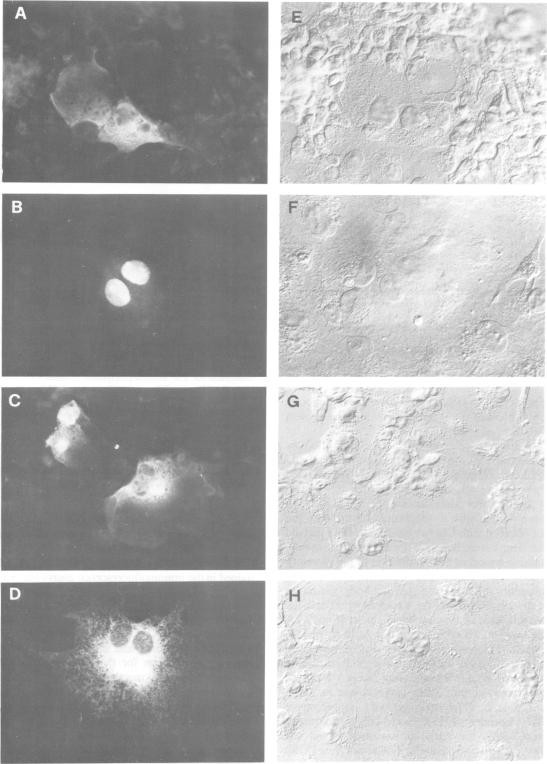
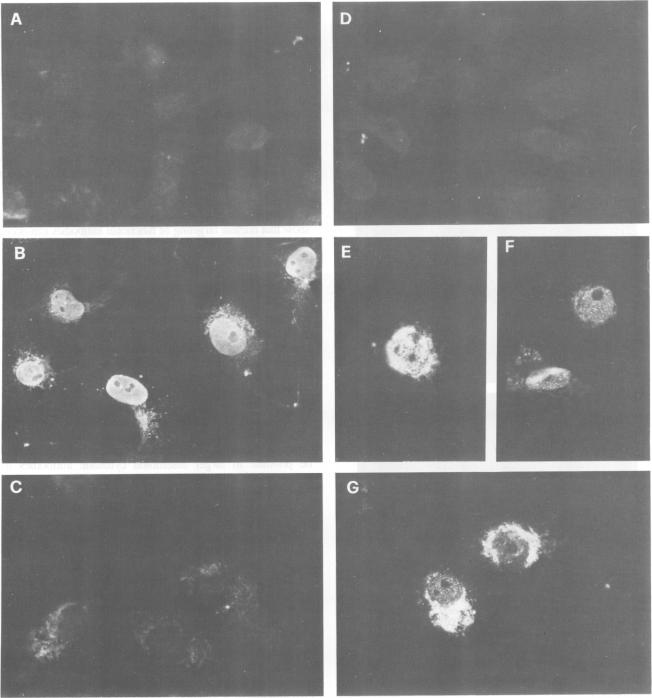
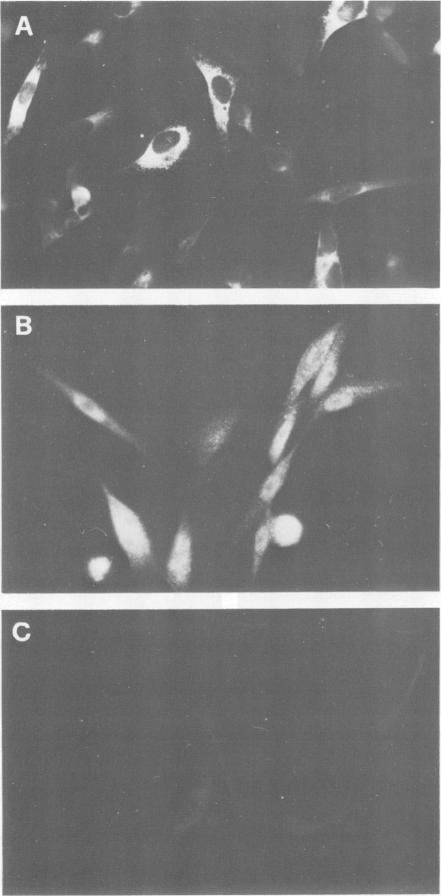
Genes encoding the heavy and light chains of a hapten-specific IgM antibody were modified by site-directed mutagenesis to destroy the hydrophobic leader sequences and allow expression in the cytoplasm of non-lymphoid cells. The in situ assembly of the mutant heavy and light chains was tested in transfected cell lines by immunofluorescence using anti-idiotypic antibodies. A positive diffuse cytoplasmic staining was observed. This demonstrated that the antibody polypeptide chains could assemble in the cell cytoplasm and led us to ask whether antibodies could be further targeted to the nucleus. Mutations were therefore made in which the leader sequence of the light chain was replaced by the nuclear localization signal of the SV40 large T antigen. Transfectants in which the heavy chain lacking the hydrophobic leader was expressed together with a light chain carrying the nuclear localization signal were selected and a nuclear distribution of the assembled antibody was found. Thus, it should prove possible to target a specific antibody to the cell nucleus with the aim of interfering with the function of a nuclear antigen.
通过定点诱变修饰了编码半抗原特异性IgM抗体重链和轻链的基因,以破坏疏水前导序列,并使其在非淋巴细胞的细胞质中表达。使用抗独特型抗体通过免疫荧光在转染细胞系中测试突变重链和轻链的原位组装。观察到阳性弥漫性细胞质染色。这表明抗体多肽链可以在细胞质中组装,并促使我们思考抗体是否可以进一步靶向细胞核。因此进行了突变,将轻链的前导序列替换为SV40大T抗原的核定位信号。选择了表达缺乏疏水前导序列的重链与携带核定位信号的轻链的转染子,发现组装好的抗体呈核分布。因此,应该可以将特定抗体靶向细胞核,以干扰核抗原的功能。